Creating a safe mini sanctuary in the city gives local wildlife a simple way to thrive. This guide explains how small design changes help birds stay longer and feel secure.
Urban people can transform limited space into a living garden. With thoughtful placement of plants and small trees, the home becomes a refuge for many species.
Provide food, water, and shelter and the environment will support nesting and visits through the year. Proper water access and native plant choices boost insect life and offer vital food for each bird species.
Even modest setups attract birds when they include layered greenery and safe perches. This introduction previews practical, professional ways to design a balcony that helps nature flourish in an urban setting.
Essential Principles for Bird-Friendly Balcony Plants
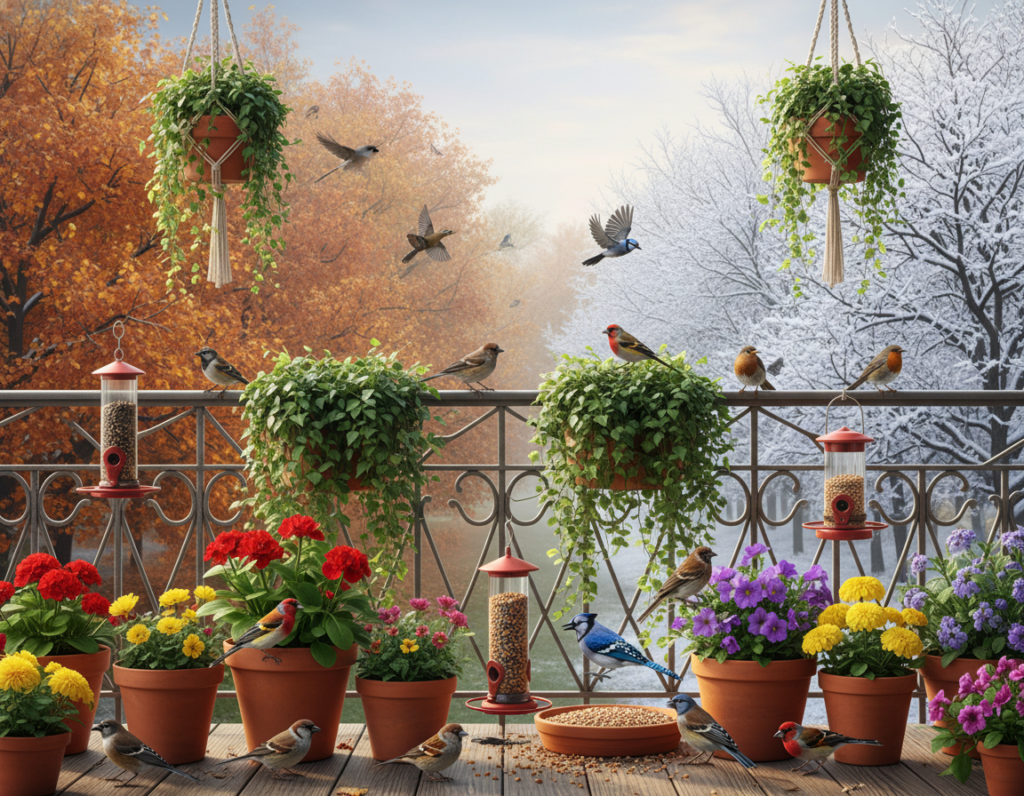
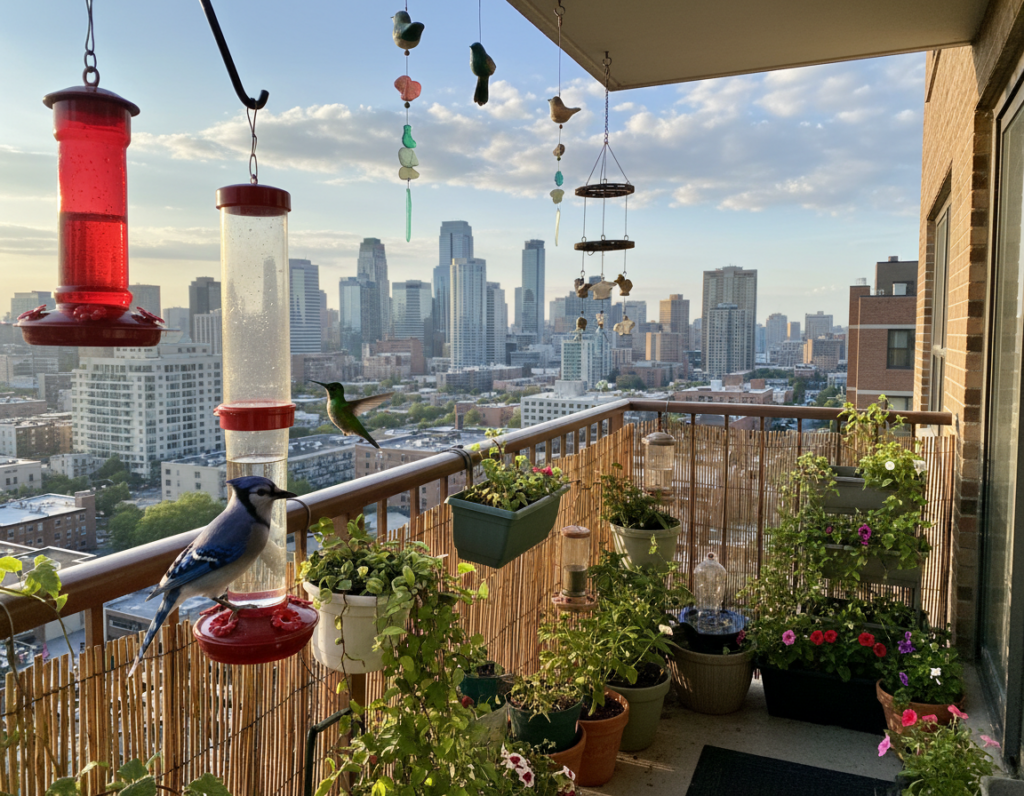
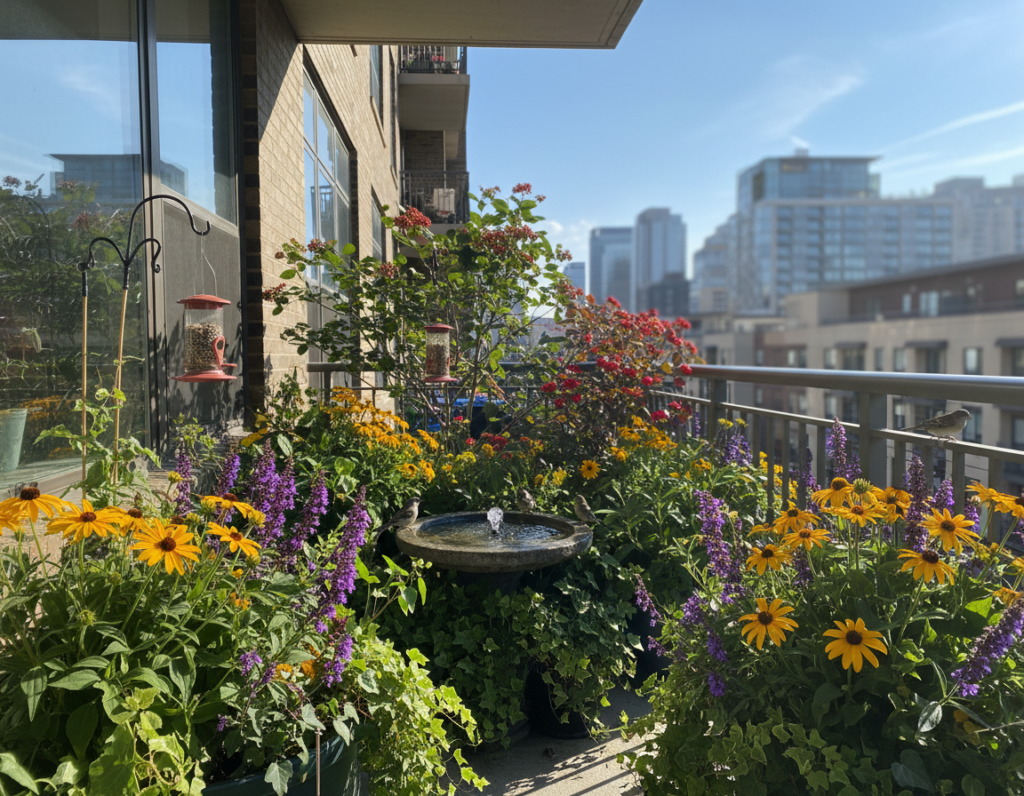
Even a compact ledge became a secure stopover when thoughtful vegetation and water were added. Simple design choices create a safer space that encourages more visits and longer stays.
Creating a Safe Haven
Dense cover and thorny branches protect small species from predators. Bougainvillea offers thick shelter, while small native trees or shrubs add perches and shade.
Perch variety matters: a mix of low shrubs and taller stems gives birds options for rest and lookout points.
Balancing Food and Shelter
Pair feeding sources with protective growth. Sunflowers supply seeds that draw sparrows, finches, and pigeons. Hibiscus and bottlebrush provide nectar for sunbirds and other nectar feeders.
“Provide food, water, and shelter to support nesting and regular visits.”
- Use a diversity of plant species to sustain insects and seed eaters.
- Include berry-bearing shrubs or fruiting trees for seasonal food.
- Keep a steady source of fresh water near cover.
For practical tips on setup and safety, consult a balcony birdwatching guide.
Selecting Vegetation to Attract and Protect Local Species
A careful mix of native trees, flowering perennials, and berry shrubs keeps birds returning.
Prioritize native species that supply the exact fruit, seed, and insect resources local species need. Jeremie Fant, an urban botanist at the Chicago Botanic Garden, notes that serviceberry berries are a favorite of American robins.
Combine food and cover. Choose shrubs that make berries and small trees that offer perches. Add nectar-producing flowers to draw insects and humming species.
- Include berry-bearing shrubs for autumn and summer food.
- Plant a mix of flowering perennials to support insects and nectar feeders.
- Ensure some dense foliage for shelter and nearby access to water.
Diversity matters: a varied garden provides resources across the year and helps species survive seasonal lows. Always match selections to local bird needs so the habitat remains productive and safe.
Optimizing Container Gardens for Safety and Longevity
Smart container design keeps roots healthy and birds visiting through seasonal swings.
Managing Soil and Pot Insulation
Choose deep pots. Jeremie Fant, with 15 years growing native species in containers, recommends containers at least 16 inches deep to support root systems and reduce transplant stress.
Use quality mixes. Start with high-quality potting mixes and add lightweight amendments for drainage and nutrient retention. This helps each plant produce flowers, seeds, and insects that attract birds and support local species.
- Insulate roots against freeze-thaw cycles with coir or foam wraps for longer pot life.
- Select robust species such as Red Columbine (Aquilegia canadensis) that tolerate container conditions and keep the garden productive.
- Keep a routine of soil replenishment so plants have steady access to food and water.
“Proper soil preparation and insulation extend the life of container-grown natives and improve habitat value.”
Optimize space. Thoughtful pot placement and maintenance create a stable microhabitat where birds can find shelter and sustenance year after year.
Conclusion
With patient adjustments, compact outdoor areas will support multiple bird species year after year. ,
Creating a small refuge is a rewarding way for people to help local biodiversity and enjoy nature at home. Careful selection of plants that supply food, water and cover lets many species thrive in tight spaces.
Fifteen years of trial and error by experienced growers show that even modest setups sustain a living ecosystem. As the garden is refined, both birds and neighbors notice improved quality of life and a healthier environment.
Commitment to native choices creates a durable habitat that benefits the entire community of local wildlife.