Transforming a small slab of concrete into a green refuge is both simple and rewarding. Urban residents often think they lack room for a garden, yet local birds will visit even the tiniest outdoor space.
With careful planning, one can design a layout that feels open rather than cluttered. They choose compact planters, vertical elements, and clear walking areas to keep sight lines clean.
Creating a welcoming spot for wild visitors lets people enjoy nature from their home without a yard. This approach attracts local species while preserving a tidy, functional area.
Key advantages include low maintenance, visual appeal, and a reliable way to observe birds up close. Small choices—like native plants and a shallow water dish—make a big difference in a modest space.
Assessing Your Balcony for Bird Potential
Begin by mapping the usable space to understand where birds will feel safest and where plants will grow best. A quick, focused review saves time and prevents crowding.
Evaluating Layout and Sunlight
Note sun patterns across the day. Some plants and small birds prefer full sun; others need partial shade.
- Measure floor area and clear walking paths so the place feels open.
- Pick sunny spots for heat-loving plants and shaded corners for shelter.
- Observe where local birds land or perch to decide feeder placement.
Checking Building Regulations
Review building rules before adding heavy pots or structures. Safety, weight limits, and aesthetic codes vary by complex.
- Confirm allowable fixtures and any prohibited features.
- Ask management about wind screens, hanging planters, and water dishes.
- Document approvals to avoid future removal or fines.
Proper assessment ensures the area supports plants and shelter without becoming crowded. This step helps attract birds while keeping the space safe and compliant.
Selecting Plants for a Bird-Friendly Apartment Balcony
Choose plants that provide food, shelter, and seasonal interest to draw more winged visitors to a small outdoor space.
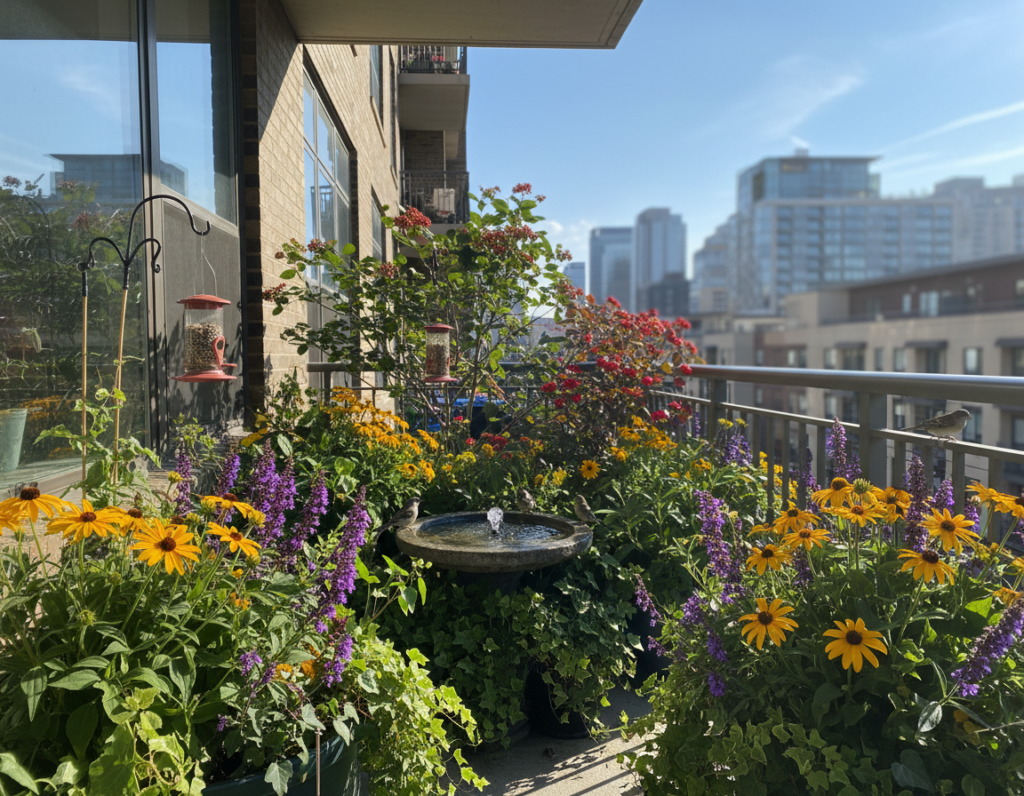
Native species such as Black-eyed Susans and Purple Coneflowers work well in the Northeast. They produce seeds and attract insects that local birds need.
“Container gardening is an excellent way to provide food and nesting opportunities for birds in high-rise buildings.”
- Group containers to create a mini garden that offers better cover and nesting spots than single pots.
- Include herbs and nectar-rich flowers to attract hummingbirds and other species through the seasons.
- Try vertical planting with sunflowers or vining types to add height and a safe hiding place for nests.
Small, varied plantings make the place feel alive without crowding. This approach supplies food, nectar, and shelter while fitting tidy outdoor spaces.
Providing Essential Water and Food Sources
A reliable water source and the right feeders make a big difference when trying to attract local birds. Small choices help create a safe feeding area without crowding the space.
Choosing the Right Feeders
Use high-quality feeders that keep seed dry and limit spills. Hopper or tube types suit many species and reduce waste.
- Seeds: Offer hulled sunflower seeds and mixed seed to attract a variety of birds.
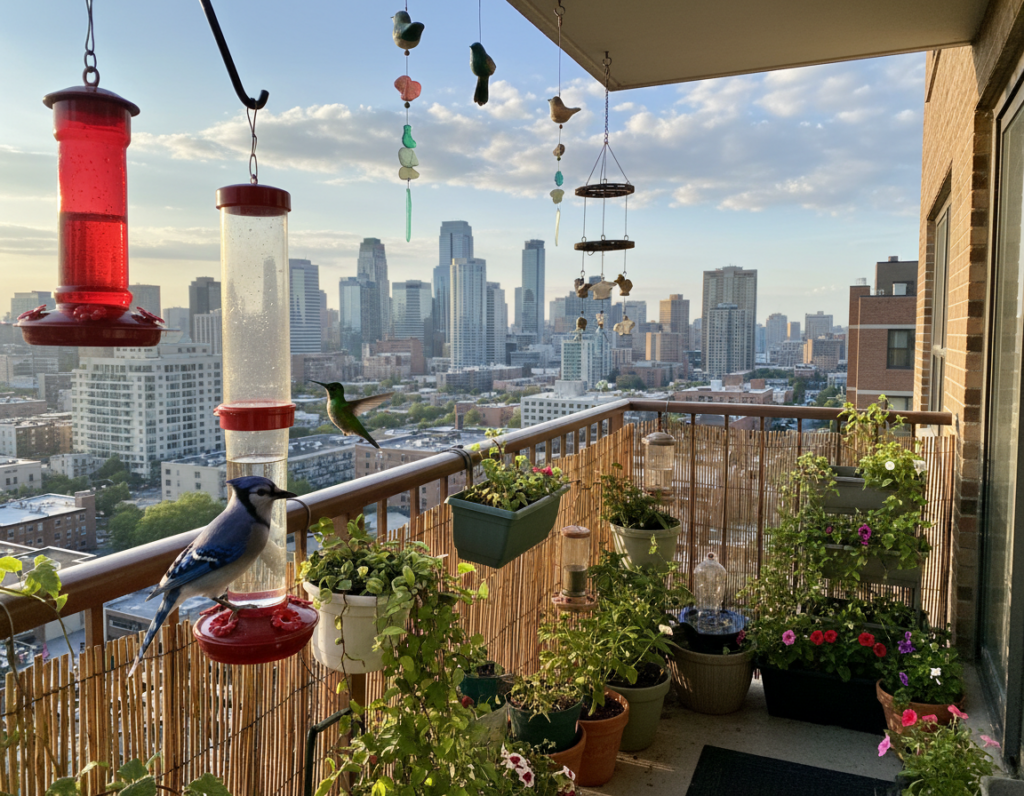
- Nectar: A nectar feeder brings hummingbirds when plants like tubular flowers are nearby.
- Place feeders away from windows and near grouped plants to give birds cover while they eat.
Maintaining Cleanliness
Clean feeders and dishes every one to two weeks to prevent disease. Rinse with hot water and a mild brush; avoid harsh chemicals.
“Emily Voigt used a window-mounted feeder to attract birds at a 25-story unit.”
Regular maintenance keeps the feeding spot safe and welcoming for both fledglings and adults.
DIY Water Features
A shallow bird bath or a small fountain adds sound and movement that attract birds. Lynn P. hosted birds for years by offering water and hulled sunflower seeds.
Consider a recirculating fountain or a shallow dish placed where plants provide cover. These simple features supply drinking and bathing water without taking much room.
For more tips on setup and observation, see balcony birdwatching.
Enhancing Your Space with Bird-Safe Decorations
Small decorative touches can turn a narrow outdoor spot into a welcoming stopover for local birds. Aim for items that add function first, then style. This keeps the area useful and tidy.
Adding Perches and Swings
Natural perches, short branches, and small swings give birds a secure place to rest and observe. Use untreated wood or rope that is free of paint and toxic finishes.
- Place perches near grouped plants and feeders so birds have quick access to cover.
- Choose smooth, rounded branches to avoid sharp edges that could injure a visiting bird.
- Include a shallow water dish or a small fountain nearby to serve as a bath and drinking spot.
- Limit decorations to a few well-spaced pieces to maintain open flight paths and visual space.
- Mix textures and heights to mimic trees and offer a variety of resting spots for different species.
Keep decor simple and safe: non-toxic materials, secure mounts, and easy cleaning. These features make the garden more inviting while preserving room for birds to move and nest.
Prioritizing Bird Safety and Building Compliance
Protecting visiting birds and staying within building rules are the top priorities for urban bird hosts. Windows kill one billion birds annually in the U.S. because reflections confuse birds. Applying film or stickers makes glass visible and cuts strikes.
Check building policies before installing feeders, a bird bath, or water features. Management may restrict heavy pots, hanging fixtures, or messy feeders.
Practical steps keep the place safe and tidy. Use a seed-catcher tray under any feeder to stop spills and meet cleanliness rules.
- Remove hazards like loose wires or sharp decor.
- Clean the bird bath and feeders regularly to prevent disease.
- Place feeders away from windows and near cover, such as small trees or dense plantings.
“Use specialized window treatments to prevent bird strikes.”
For guidance on policy and local codes, consult resources like bird-friendly legislation and codes. Prioritizing safety ensures the space welcomes birds rather than endangers them.
Conclusion: Enjoying Your Urban Bird Sanctuary
Even modest outdoor areas can host a surprising variety of birds when designed for safety and simplicity.
Start with a few plants, a feeder, and a water source to create a small container garden that offers food, nectar, and shelter. Include sunflowers or nectar-rich blooms to attract hummingbirds and other species.
Take time to watch the variety that visits and log sightings with projects like eBird to support local science. These small steps help nature thrive in an apartment or balcony space and connect residents to urban wildlife.
Enjoy the calm moments and the growing list of visitors over time.