Urban residents can turn small outdoor spaces into meaningful havens. Simple tweaks help people support local wildlife while reducing hazards that cause collisions and stress.
A thoughtful approach to decorations and furniture gives bird visitors consistent cues. When a bird finds familiar perches and feeders, it feels calm and returns more often.
Small changes — like choosing muted colors, keeping glass visible, and adding plants — make a big difference. Those moves help a home host wildlife without major expense or effort.
Prioritizing protection supports neighborhood biodiversity. Residents who act thoughtfully foster safer spaces that reduce collisions, lower stress, and invite steady bird activity.
Assessing Your Balcony for Wildlife Potential
Start by scanning the glass and layout around your outdoor space to spot collision risks. Note where reflective panes mirror trees or sky and where transparent sections offer a clear flight path. These two factors — reflection and transparency — drive most bird-window impacts.
Take inventory: list the amount of glass, nearby perches, and open sightlines. Observe at different times of day to see how light changes reflections. This helps decide where to place visual markers or other deterrents.
Keep expectations realistic. BirdSafe and FLAP Canada do not endorse any single commercial glass product as a complete solution. Assessing the space first lets residents plan layered measures that reduce collisions and support local wildlife.
Implementing a Safe Balcony Design for Birds
Turning a small terrace into a thriving wildlife corner starts with offering reliable food, water, and shelter. These three elements form a basic refuge that attracts local wildlife and keeps visitors calm.
Creating a Mini-Habitat
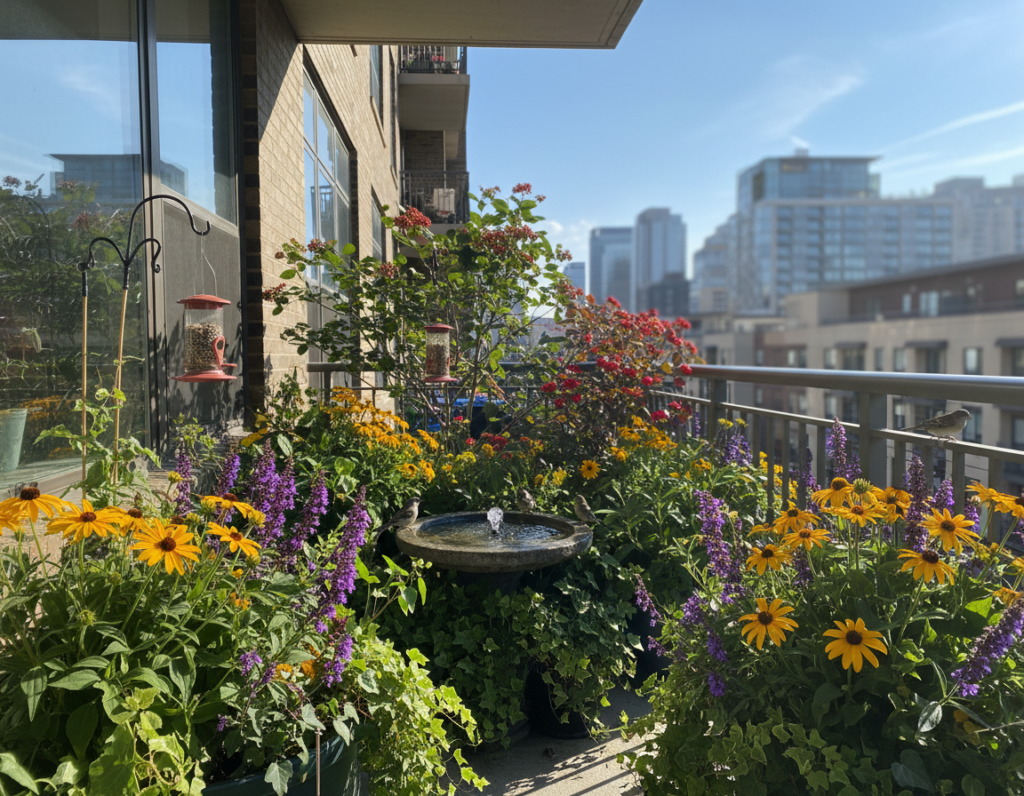
Provide the essentials: add a feeder, a shallow water source, and layered plantings to make a purposeful place. Even a compact rail can host feeders and potted shrubs that offer cover.
- Place food and water near vegetation to give animals quick escape options.
- Include native plants, flowers, and small trees to support insects and seeds.
- Arrange pots so roots have room; stagger heights to create varied perches.
- Keep feeders visible but set back from glass to reduce collision risk.
“The National Wildlife Federation offers a guide to help you learn more about bird feeding and creating a Certified Wildlife Habitat.”
Managing Container Gardening
Container gardening makes it possible to build a lush garden on a railing or small deck. Use pots with adequate drainage holes to prevent standing water and root rot.
In addition, rotate plants seasonally and group species with similar water needs. This keeps the space healthy and attractive to wildlife year-round.
For practical tips on setup and placement, see the balcony birdwatching guide.
Selecting the Right Feeders and Water Sources
Choosing the right feeders and a dependable water source makes a small outdoor space much more welcoming to wildlife. A few simple choices influence which species visit and how often they return.
Attracting diverse species depends on offering variety. Tube feeders suit finches, while hopper feeders work well for cardinals. Add a suet feeder to draw woodpeckers, and scatter seeds to invite ground-feeding birds.
Maintaining hummingbird feeders
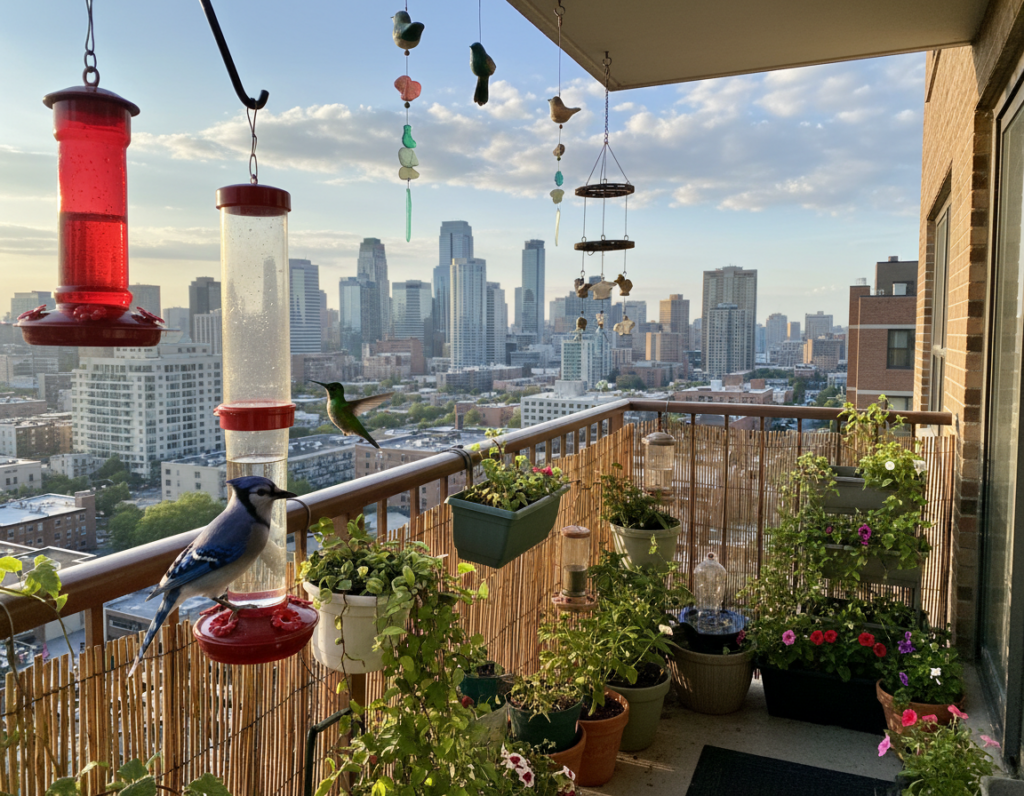
Hummingbirds need clean nectar. Boil 1 cup sugar with 4 cups water and cool to make syrup. Store it in the refrigerator and replace it weekly.
They will refuse spoiled food, so change syrup promptly and rinse the feeder often.
Providing fresh water
Water is a major attractant. A shallow dish or a hanging bird baths offers an easy, low-cost solution for drinking and bathing.
Placement matters: set water near vegetation but away from direct window flight paths. Use deck hooks to hang feeders from a railing and save floor space in a small garden area.
- Mealworms or peanuts attract insect-eating species during migration time.
- Use tube, hopper, and suet feeders to cover many feeding styles.
- Keep food and water fresh to support healthy bird activity.
“Consistent food and clean water make a place more valuable to local wildlife.”
Incorporating Native Plants and Natural Cover
A mix of flowering plants, shrubs, and small trees builds natural shelter and steady food sources for neighborhood wildlife.
Choose balcony-friendly species such as Petunia, Fuschia, Salvia, Lantana, Beebalm, and Snapdragon. These plants supply nectar and attract pollinators while adding visual interest.
Plant shrubs and small trees to create layered cover. That vertical structure gives a quick refuge where birds can perch and scan for predators. A single feeder placed near dense foliage helps visitors access food with nearby escape routes.
Grow host plants for caterpillars and other insects. This supports insects that serve as a protein-rich food source for hungry bird species during nesting and migration.
Small choices matter: native species reduce maintenance and foster natural behavior. Over time, the garden becomes a productive ecosystem that encourages survival skills and steady wildlife visits.
Preventing Window Collisions with Effective Deterrents
Small changes to your glazing can cut collisions dramatically by making glass visible to winged visitors.
Apply markers at the correct spacing. Visual markers work only when placed no more than 10 cm apart vertically or 5 cm apart horizontally. Ensure there are no reflective openings larger than 5 x 5 cm on any pane of glass.
Combine methods for the best results. Installing window screens or using perforated window film lets people keep views while reducing reflection. Translucent ABC Bird Tape transmits light but clearly signals a barrier.
Practical steps
- Apply visual film or tape across the entire pane so no clear flight path remains.
- Use screens or perforated film to cut reflection while preserving sightlines.
- Place feeders and baths within 0.5 meters of the window so a bird cannot build dangerous speed.
- Check spacing to meet the 10 cm / 5 cm guideline and eliminate large reflective gaps.
These deterrents offer a low-cost, effective solution that reduces collisions and keeps neighborhood wildlife visiting more often.
Conclusion
Simple daily habits can turn a modest outdoor space into a reliable refuge for local wildlife.
Combine native plants with a well-placed bird feeder and a shallow bird baths to supply food and water. Place feeders near cover and keep reflective glass marked to reduce collisions.
Maintain feeders and baths regularly, replace seeds and suet on schedule, and clean dishes to prevent spoilage. Small chores keep a garden healthy and consistent over time.
With careful planning and steady care, a compact home space delivers long hours of enjoyment and helps wildlife thrive.