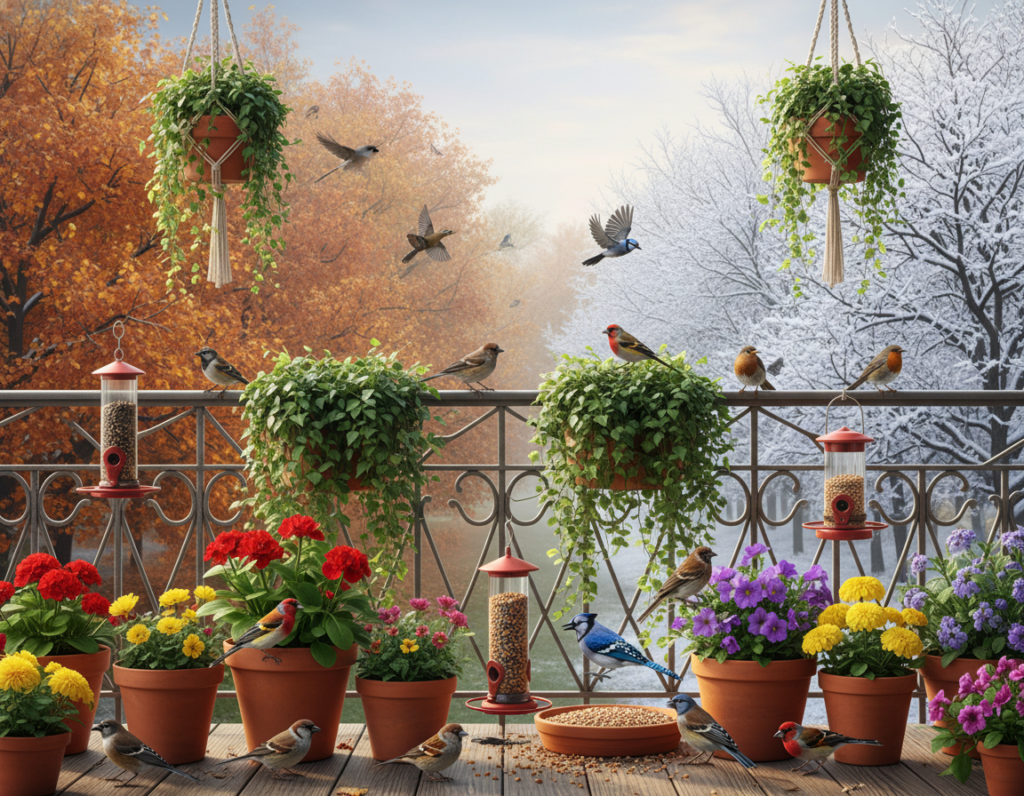
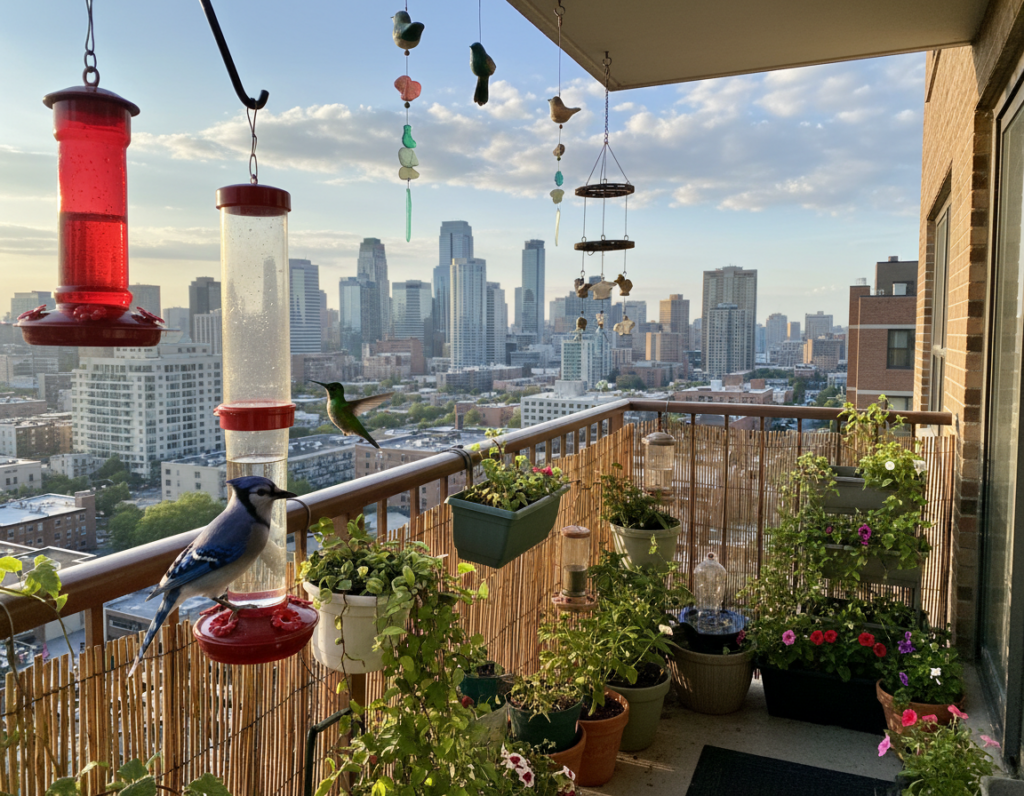
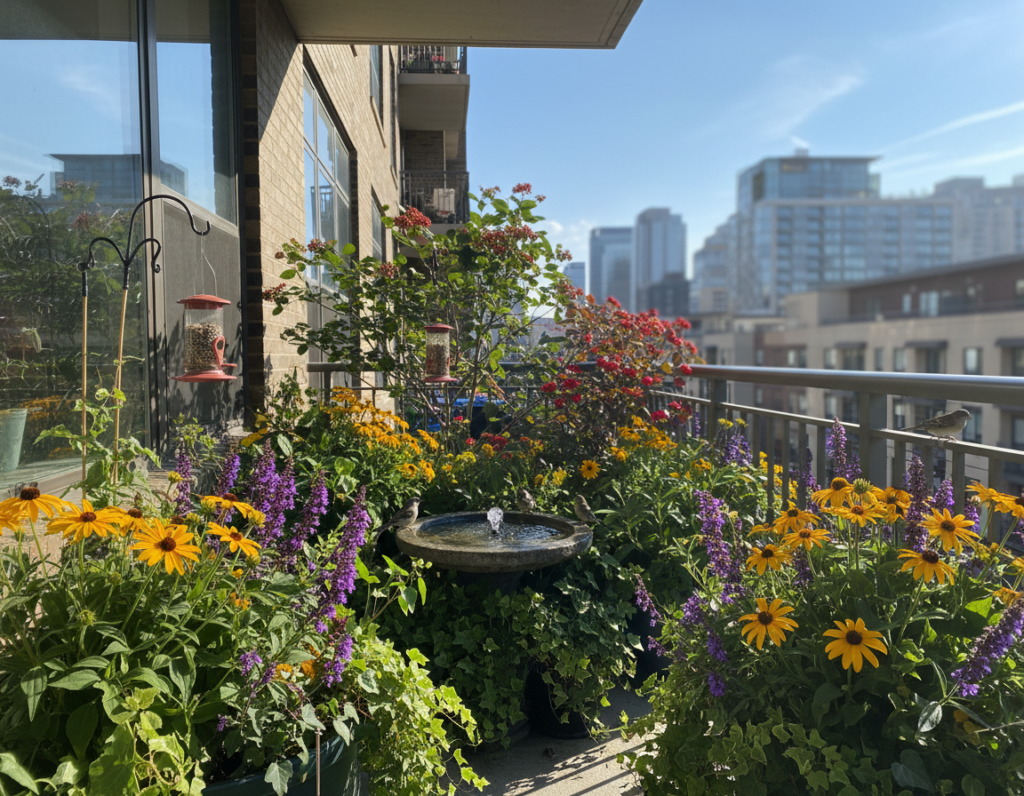
Creating a welcoming balcony can reconnect an apartment dweller with nature in a tiny city yard. Small design choices shape whether local birds see a space as a safe place for nesting or just another noisy ledge. Observing the subtle signs of avian activity and allowing a little time for patterns to unfold helps a resident make smart changes.
Providing food, water, shelter, and thoughtful plants matters. One common error is clutter that creates a mess and scares off a returning bird. The right layout and maintenance can transform a small balcony into a thriving garden habitat.
Simple edits to placement, clean-up routines, and plant choices often yield big results. If unwanted feathered visitors arrive, professional bird control services can offer humane guidance to keep the focus on the right wildlife.
Understanding Why Birds Stop Visiting Balconies
A balcony that once drew regular feathered visitors can lose its appeal when basic needs vanish.
Assess food sources, water, and shelter to see if the space still meets local species’ needs. In many urban areas, inconsistent seed or water offerings drive away regular visitors.
Small changes in design or upkeep can matter. Even a tiny yard or balcony garden becomes a sanctuary when it provides steady water and safe nesting spots.
“I kept trays of fresh water and mixed seed on my 21st-floor apartment for two decades,” said Lynn P. of Toronto.
- Evaluate layout to ensure shelter from wind and predators.
- Keep sources predictable so returning visitors learn to trust the place.
- Match plant choices to the species common in your areas.
For practical steps on managing unwanted activity or improving resource consistency, see how to stop birds from coming to your.
Common Design Mistakes That Deter Avian Visitors
Minor layout choices can reduce regular visits to a small urban balcony. These errors are easy to fix once identified.
Inconsistent Food Sources
Exposed seed or spilled food creates a mess that draws pests and scares off the species residents want to see. Feeders placed too close to doors or walkways also make feeding unpredictable for regular bird visitors.
Emily Voigt proved that feeder placement matters — she fed from 25 stories up in Greenwich Village and kept consistent supplies to attract regular bird activity.
Lack of Shelter and Nesting Spots
Many apartments lack grouped containers or native plants, so the space feels exposed. Without grouped pots and protected plantings, a small garden does not offer enough shelter or nesting cues.
- Group containers to simulate a yard-like patch of refuge.
- Provide sheltered nooks that block wind and rain.
- Include a steady water source in a calm spot near cover.
“To ensure your balcony garden remains a welcoming place, make sure you provide shelter and nesting spots that are protected from the wind and rain.”
Fixing these issues—tidy food handling, consistent refill routines, and adding native plants—helps make the place welcoming again.
Creating a Welcoming Environment for Local Species
Intentional plantings and simple water features turn cramped outdoor spaces into bird-friendly patches. A small, consistent effort makes the balcony a reliable place for urban wildlife. Simple design tweaks supply food, shelter, and calm spots for nesting.
Selecting Native Plant Varieties
Choose native plants that provide seeds, berries, and insect habitat. These plants attract local species and need less care than exotics. Stagger blooms across seasons to keep this garden productive year-round.
Installing Appropriate Water Features
Install a shallow basin or dripper in a quiet corner. Birds need a dependable source to drink and bathe, especially in dense urban areas. A small pump or shallow tray ensures moving water, which they prefer.
Strategic Feeder Placement
Place feeders near shelter but away from high-traffic doors. This gives visitors a safe approach and offers a good view from indoors. Use vertical space—shelves, hanging planters, and trellises—to increase perching spots without crowding the floor.
- Select native plants for natural food and shelter.
- Provide shallow water that is changed regularly.
- Place feeders where birds feel protected but visible.
Essential Safety Measures for Urban Birding
Urban balconies can pose hidden risks that harm returning wildlife unless safety is planned. Simple precautions reduce collisions and keep the area a refuge for neighborhood wildlife.
Building windows kill one billion birds every year in the U.S., so residents must act to protect local life. In an apartment setting, this statistic shows how design choices affect safety.
Preventing Window Collisions
Heidi Trudell recommends applying visible window treatments for strike abatement. These patterns and films help birds recognize glass and avoid impacts.
- Place feeders at least 30 feet from glass or within 3 feet to reduce collision speed.
- Make sure water dishes sit near cover but not where reflections lure birds into windows.
- Apply decals, screens, or external mesh to lower strike risk where flight paths cross.
“Window treatments and smart feeder placement are vital safety steps for urban bird habitats.”
Safety is the foundation of urban birding. Taking these steps ensures the balcony stays a sanctuary rather than a hazard for birds and the people who enjoy them.
Conclusion
Simple, steady care turns a cramped outdoor ledge into a reliable habitat for nearby species.
Maintaining a bird-friendly balcony takes consistent attention to food, water, and shelter. Small fixes to layout and clean routines pay off over time.
Watch for signs of activity and adjust plants and perches to suit local species. This approach keeps the garden space safe and welcoming for every bird visitor.
If persistent problems arise, professional help is available. For Toronto residents, contact Icon Bird at (647) 325 9060 for humane advice and services.
One careful edit at a time can transform a noisy ledge into a lasting, natural place in the city.