Many city dwellers begin birdwatching on a tiny slab of concrete attached to their apartment. They want to enjoy morning coffee and still attract birds to a pleasant garden spot.
Transforming a small balcony into a thriving sanctuary is possible with a simple plan. Careful placement keeps landing zones clear and makes the best use of limited space.
Practical ideas include positioning feeders where flight paths stay open and choosing seating that does not block approach routes. This way, residents can sip coffee and watch birds without disturbing them.
With a few thoughtful steps, even a small outdoor space can host a range of species. The result is a peaceful apartment garden that balances human comfort and wildlife needs.
Assessing Your Balcony Potential
A quick assessment of the outdoor area helps determine what will thrive and where birds will feel welcome. This step saves time and ensures the apartment garden meets both human needs and wildlife access.
Evaluating Space and Layout
Begin by measuring the space. Precise dimensions show where plants will fit and where people can sit without blocking approach routes for birds.
Observe how the sun crosses the area during a typical day. Note sunny spots and places that stay in shade so plants thrive in the right microclimate.
- Measure width and depth to plan safe pathways.
- Mark sunny versus shaded zones at different times of day.
- Use vertical elements like trellises to free floor space and increase planting area.
Checking Building Regulations
Before adding any elements, make sure the installation follows building rules. Confirm weight limits, railing restrictions, and emergency access requirements.
Secure all furniture and planters to prevent accidents. Reliable fastenings protect the home and make the space safer for visiting birds.
Designing a Bird-Safe Balcony Furniture Layout
Careful placement of seating and feeders creates unobstructed approach routes for visiting birds. When arranging an urban patio, keep a clear central corridor so winged visitors can land and take off without sudden obstacles.
Make sure seating sits to one side and leaves open sight lines. Compact pieces work best because they save usable space and reduce hidden gaps where a bird could get trapped.
Avoid placing large items directly in front of primary landing zones. Position feeders away from busy corners and close to shrub cover so birds feel secure while eating.
Place seating slightly away from the sun-drenched spots to enjoy shade during peak hours and to watch birds comfortably. Small adjustments like angling a chair or moving a planter can make a big difference.
- Prioritize open flight paths and clear sight lines.
- Use compact pieces to preserve room for avian activity.
- Check for narrow gaps or hidden traps before finalizing the plan.
Designing with safety in mind encourages frequent visits from local birds and makes the apartment outdoor area more welcoming.
Selecting Weather-Resistant and Comfortable Seating
Select chairs that withstand the elements while letting you shift position to follow visiting birds. Durable, portable seating keeps the viewing spot ready after sun or rain.
Choosing Portable and Compact Options
The GCI Outdoor Kickback Rocker is a solid portable option for birdwatchers who need to change viewing angle quickly. Lightweight chairs let residents move seating to follow activity without crowding the space.
Look for compact pieces that offer some shade and comfort without filling the floor area. Cushions should be weather-resistant so they dry fast and resist mildew.
- Select weatherproof materials for long-term use on a small balcony.
- Favor portable options to adapt to changing bird patterns on the patio.
- Choose compact seating so the apartment outdoor area remains open and inviting to birds.
Incorporating Native Plants for Food and Shelter
Choosing the right native plants gives a small outdoor space year-round food and shelter for local wildlife.
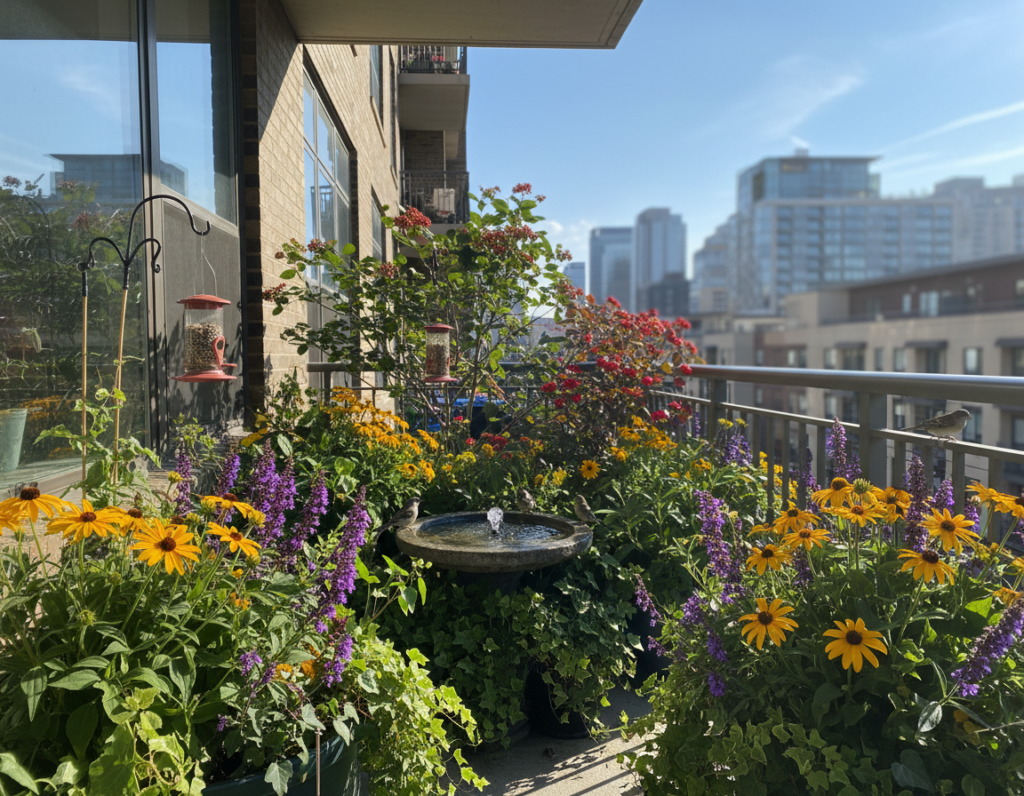
Native species need less care and are better at supporting local pollinators and birds. Black-eyed Susans and Purple Coneflowers work well in the Northeast. In the Southwest, Desert Marigold and Penstemon thrive.
Native Plants vs Ornamental
Native plants provide seed, nectar, and shelter that local species recognize. Ornamental exotics look pretty but often give less food for native birds and pollinators.
Using Climbing Plants
Climbing plants like honeysuckle use vertical space and create secure perching spots. Train them on trellises or rail planters to add shelter without taking floor room.
Attracting Pollinators
Choose a variety of flowering plants to extend bloom times and color. This attracts bees and butterflies, which in turn help attract birds to the garden.
- Use planters filled with native flowering species for color and continuous food.
- Plant a mix of species to support different pollinators and bird diets.
- Maintain planters regularly so food and shelter remain reliable through the season.
Installing Water Features for Avian Visitors
A compact water feature can turn a tiny outdoor space into a reliable bird resource.
Install a shallow basin or small fountain so visiting birds can drink and bathe safely. Many birds love the sound of moving water, so a low-flow pump helps attract more activity without high maintenance.
Choose units made for small patios or rails. Keep the depth shallow enough for a bird to stand in comfortably. Place the feature near low cover so birds feel secure while they use it.
Maintenance is simple but essential:
- Empty and scrub the basin weekly to prevent algae and mosquitoes.
- Refill with fresh water during hot spells to support local birds.
- Use a gentle pump and check it monthly for debris.
Small water features designed for urban living provide a big benefit. A reliable water source makes the balcony garden more attractive to a wider variety of birds and supports local wildlife health.
Strategic Placement of Bird Feeders
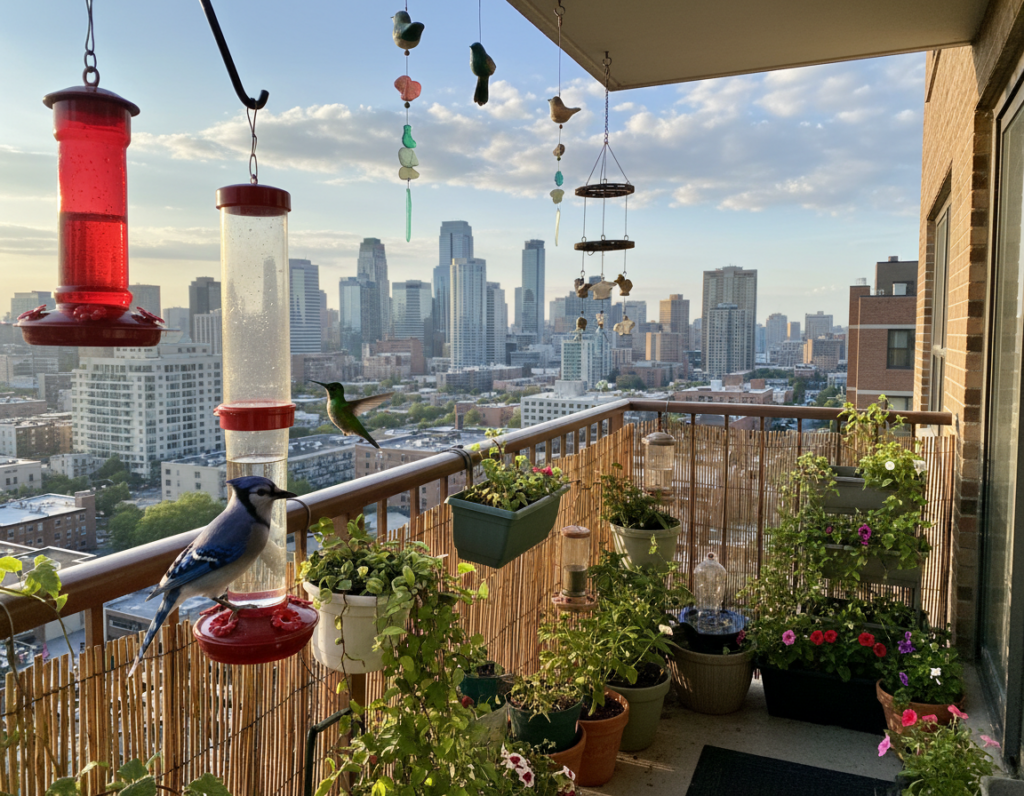
Thoughtful placement of feeders ensures safety and steady visits from local birds. Place feeding stations so birds can approach from open angles and land on nearby perches. This gives them a clear flight path and reduces stress.
Placement Strategies
Put feeders in open spots of the balcony where birds can see predators and people from a distance. Avoid placing a feeder directly next to windows; collisions rise when feeders are too close.
- Use a variety of feeder options—tube, platform, or suet—to attract different species.
- Place feeders near low cover so birds have a quick retreat if needed.
- Keep a consistent supply of seeds so birds return to the apartment area regularly.
Keeping Feeders Clean
Sanitation matters: clean feeders weekly to stop disease. Use a solution of one part bleach to nine parts water, rinse well, and let dry before refilling.
“A clean feeder protects visiting birds and keeps sightings frequent.”
Modern features like the Bird Buddy camera help monitor activity and record species without disturbing the feeding spot.
Enhancing Your Space with Vertical Gardening
Elevating planters and trellises is an efficient way to boost green cover while preserving safe landing areas for birds.
Vertical gardening lets an apartment garden hold more plants without using the floor area that birds need to land and take off. Wall-mounted planters and stacked pots create layers of greenery that act as living shelter and forage spots.
Climbing plants trained on trellises add a lush backdrop and more perches. This approach keeps feeders organized and frees open space for clear flight paths. It also creates a multi-level garden that birds enjoy visiting.
- Use slim rail planters or pocket planters to add vertical plant beds.
- Install a trellis for vines to form quick shelter and perching spots.
- Mix flowering and seed-producing plants to support year-round activity.
Well-planned vertical planting ideas help make a small outdoor area productive, tidy, and inviting to feathered visitors while preserving usable space for people.
Implementing Bird-Safe Window Treatments
Clear glass can hide danger—small visual cues on windows help birds tell the difference between sky and shelter.
Installing visible markers reduces collisions and creates a safer viewing space for everyone. These treatments also help the apartment garden stay welcoming without major changes to the view.
Preventing Window Collisions
“Simple window markers save lives and keep sightings frequent.”
Homeowners should choose decals, screens, or external films that break up reflections. They must make sure these additions do not block the sun needed by balcony plants.
- Place markers at 2–4 inch horizontal or 4–2 inch vertical spacing so birds notice the glass.
- Pick weather-resistant materials that stand up to wind and rain on an exposed area.
- Use low-profile options to preserve the view and keep the planted space bright.
Proper window protection ensures birds can approach feeders and perches safely, encouraging longer visits to the small urban oasis.
Creating a Relaxing Birdwatching Nook
Create a small, peaceful corner where watching local birds becomes part of the daily routine. A well-placed chair and a clear view of the bird feeder setup make long mornings enjoyable.
Add weather-resistant cushions for a pop of color and choose a seat that fits the available room. A small balcony nook works well for a cup of coffee and calm observation.
Keep a tiny shelf or basket for binoculars and a notebook so they are always within reach. Use plants nearby to soften sight lines while leaving the approach to the feeder open.
The Cornell Lab’s NestWatch offers species-specific nest box guidance to attract the right birds to your apartment patio. Follow those placement tips to increase success.
“A quiet, shaded nook helps observers stay still and notice more activity.”
- Place a feeder within easy view but not right against the sitting spot.
- Create shade and comfortable seating for longer observation sessions.
- Keep the area tidy so your home refuge stays inviting to birds.
Engaging with the Local Birdwatching Community
Sharing sightings with local birders helps a small outdoor space punch above its weight for research and learning.
Citizen science projects like eBird and Project FeederWatch let observers submit data from an apartment observation point. These programs convert casual notes into useful records for researchers.
Joining a nearby group provides practical tips and fresh ideas. Workshops and meetups teach different options for attracting more species and keeping feeders healthy.
- Share photos and counts on eBird to help scientists track migration and populations.
- Attend local meetings to learn which birds visit the area and when to expect them.
- Post findings on social media to inspire neighbors and swap practical ideas.
Connecting with others keeps enthusiasts motivated and improves how a tiny space supports wild visitors. Participation turns daily birdwatching into a community benefit.
Maintaining Your Balcony Sanctuary Throughout the Seasons
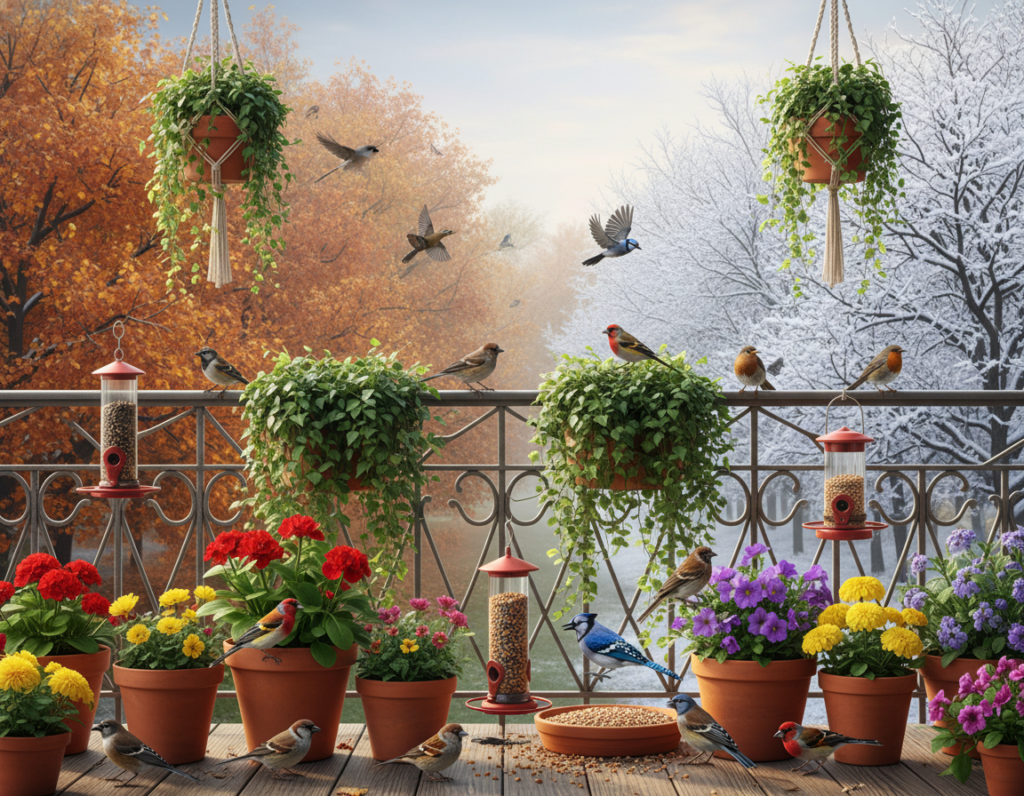
Small seasonal tweaks make a big difference in how well a planted patio supports local species.
In winter, they offer high-energy seeds and keep a shallow source of water ice-free when possible. In summer, fresh water and shaded pots help plants stay healthy during heat spells.
Planting a variety of flowering species extends bloom time. This supports pollinators and provides steady food across the year.
Clean water features and feeders on a regular schedule to prevent disease. Simple monthly checks keep the garden safe and inviting.
In fall, leaving some plant debris creates shelter for insects that many species feed on. In spring, providing nesting materials helps neighbors build homes near the planted area.
“Seasonal care makes a small garden a reliable habitat all year.”
- Plan seed and water supplies by season.
- Rotate potted plants and refresh soil as needed.
- Keep the space tidy but leave natural cover for shelter.
Conclusion
Simple, steady actions turn a tiny outdoor area into a thriving refuge for winged visitors. This approach gives residents a rewarding way to bring nature closer to daily life without major changes.
By applying the practical ideas in this guide, they can attract birds with carefully chosen plants, water, and feeders. Small adjustments keep approach routes clear and make the space welcoming.
Even modest spaces matter. For focused tips on supporting hummingbirds in tight areas, see these balcony hummingbird tips.
Start today and watch how a few thoughtful moves make the outdoor nook a lively place to observe bird life.