Designing a welcoming outdoor space begins with thoughtful choices that reduce heat and remove hazards for visiting birds. They need shade, cooler surfaces, and simple, non-toxic options that limit injury and stress.
By spending a little time to evaluate the surface, planter choices, and shade options, a homeowner can turn a small balcony into a reliable refuge. This approach balances curb appeal with practical safety steps that protect feathered neighbors.
This guide outlines a clear solution for selecting materials and layout cues that keep the outdoor space cooler in peak sun. It helps people create a healthy home habitat that supports local birds throughout the hottest months.
Understanding the Importance of Bird-Safe Balcony Materials
A few simple swaps in flooring and shade can drastically cut heat stress for birds in summer.
Recognizing the importance of safe, cool surfaces helps protect local bird populations. Hot decks and reflective panels can injure feet and raise body temperature quickly. Choosing options that stay cooler reduces that risk.
Protecting birds from toxic or overheating surfaces is a basic duty for residents who want a truly friendly outdoor space. When a ledge offers shade and non-toxic finishes, birds can rest and forage with less stress.
“Safe resting spots in the city give birds the pause they need to thrive during hot afternoons.”
Practical steps include selecting cooler flooring, adding shade, and avoiding harmful coatings. These actions support avian health and help offset urban heat impacts.
- Reduce surface temperature with shade and breathable coverings.
- Avoid finishes that emit fumes or absorb heat rapidly.
- Provide multiple cool perches so birds can choose a safe spot.
For more guidance on protective installations and nets, see the protection net guide that explains safe options and durability.
Assessing Your Balcony Space for Bird Safety
A careful walkthrough that logs sun exposure and wind corridors reveals most risks to visiting birds. This brief review helps shape a plan that keeps the area cooler and less hazardous for wildlife.
Evaluating Layout and Sun Exposure
Note where direct sun falls during the hottest hours. Some surfaces heat quickly and can harm a bird’s feet. Mark shaded zones, hot patches, and tight gaps that might trap small birds.
Checking Building Regulations and Safety Codes
Before adding fixtures, check local regulations for the building and any rules specific to balconies on the property. Many tall buildings restrict attachments to prevent debris in high wind.
- Inspect for hazards: sharp edges, loose screws, or small openings that birds could enter.
- Map wind patterns: strong gusts can turn unsecured items into dangerous debris.
- Confirm compliance: follow building rules so bird-friendly changes stay legal and safe.
“A short, methodical assessment prevents avoidable harm and creates a tailored plan that works with local conditions.”
Selecting Bird-Safe Balcony Materials for Summer Comfort
Choosing cooler, non-toxic finishes makes a small outdoor ledge far more hospitable to visiting bird on hot afternoons.
Light-colored composite decking or sealed natural wood reflects heat and stays cooler under direct sun. These options reduce surface temperature so birds can land without burning their feet.
Texture matters. Surfaces should offer grip without rough abrasiveness. That prevents slips and injured toes while avoiding hot, abrasive patches.
Durability and aesthetics must balance with safety. Choose weather-resistant, non-toxic finishes that resist fading and chemical off-gassing.
- Prefer breathable boards that reflect sunlight rather than absorb it.
- Pick finishes designed for outdoor use and low heat retention.
- Consider soft-touch mats in shaded spots for extra comfort.
“A cooler, well-textured space encourages birds to visit more often and reduces heat-related stress.”
Practical solutions focus on long-term safety and appeal. Thoughtful selection of materials and options creates a welcoming, sustainable area for birds through the hottest months.
Implementing Effective Bird-Safe Glass Solutions
Clear glass creates a deadly illusion for flying birds; simple visual treatments make that barrier apparent and prevent collisions. Property owners can apply proven patterns and coatings to reduce strikes on glass used around outdoor views.
The Two by Four Rule
The 2×4 rule places markers two inches apart horizontally or four inches vertically. This spacing gives birds a clear visual cue and has been validated by field studies.
First Surface Treatments
First surface products, such as AviProtek, work on the outer glass face. They alert a flying bird before impact and outperform decals placed on interior glass.
“Dr. Daniel Klem’s research shows collisions kill up to 1 billion birds every year.”
Effectiveness of Patterns
Pattern visibility to birds matters more than to the human eye. Subtle dots or lines can stop strikes while keeping the view intact.
- Many cities adopt measures like Toronto’s TGS and New York Local Law 15 to require these solutions on new buildings.
- Applying tested patterns on balcony glass is a proactive approach for dense urban areas and small projects alike.
- When installed correctly, these measures cut the impact of reflections in varied weather and lighting conditions.
Utilizing Protective Netting for Balcony Safety
Protective netting provides a practical shield that keeps birds safe while preserving open airflow and views. Choosing the right netting is a simple, long-term approach to reduce collisions and prevent debris from falling through gaps.
Durability and UV resistance matter. High-quality nets made from nylon or polyethylene resist fraying and keep their strength under sun exposure. Low-grade options can begin to fail within a single year, so quality affects lifespan and effectiveness.
Durability and UV Resistance
When installed correctly, professional netting products can last 5 to 7 years under normal conditions. The installation process must ensure tension is correct so nets withstand wind and accidental impacts.
- Inspection: check for frays or tears regularly to prevent damage.
- Installation: follow a careful process or hire technicians to avoid gaps and loose anchors.
- Long-term value: investing in higher quality nets reduces replacement costs and keeps the area safer for birds.
“Proper netting is a proven protection method used on projects worldwide.”
Choosing Non-Toxic and Cool Flooring Options
Selecting cool, non-toxic flooring is a simple yet powerful step to protect birds on hot days. The right floor can cut surface heat and reduce chemical exposure where they land and forage.
Light-toned stone, sealed natural wood, and certain composite boards reflect sunlight and keep the floor temperature down. These options help prevent thermal stress and make the space more inviting.
Texture matters. Choose a surface that offers grip without abrasive roughness. Good traction reduces slips and foot injuries for small birds.
- Health and safety: prefer low-VOC or certified non-toxic finishes to avoid fumes when birds peck or preen.
- Easy cleaning: pick materials that allow quick removal of droppings to prevent bacteria build-up.
- Durability: investing in high-quality flooring is a long-term solution that keeps the outdoor area pristine and safe.
“A cool, well-maintained floor is an effective way to support local bird health while keeping a tidy outdoor space.”
For guidance on non-toxic choices and buying tips, consult this guide to buying non-toxic flooring.
Incorporating Bird-Friendly Plants and Greenery
Strategic plant choices turn limited outdoor spaces into thriving mini-habitats for visiting birds. Native species give familiar food and shelter, so birds use the area more often.
Native Species Selection
Select shrubs, grasses, and flowering plants local to your region. Native plants attract the insects birds need and reduce maintenance.
Key elements include berry-bearing shrubs and native perennials that offer cover and nesting material. These choices improve bird safety and resilience.
Vertical Gardening Techniques
Use trellises, wall planters, or stacked pots to maximize limited balcony space. Vertical layers create shaded corridors and perching spots for small birds.
- Install lightweight planters to add height without blocking airflow.
- Choose vines and small trees that provide shelter and cooling shade.
- Arrange plant groups to create dense cover where birds can rest safely.
A well-planned garden cools the area, supplies food sources, and enhances the look of a home. Thoughtful placement on a balcony supports local bird populations and improves urban green spaces.
Creating Cooling Water Features for Avian Visitors
A shallow water source on a sunny ledge can transform a hot urban spot into a cool oasis for visiting birds.
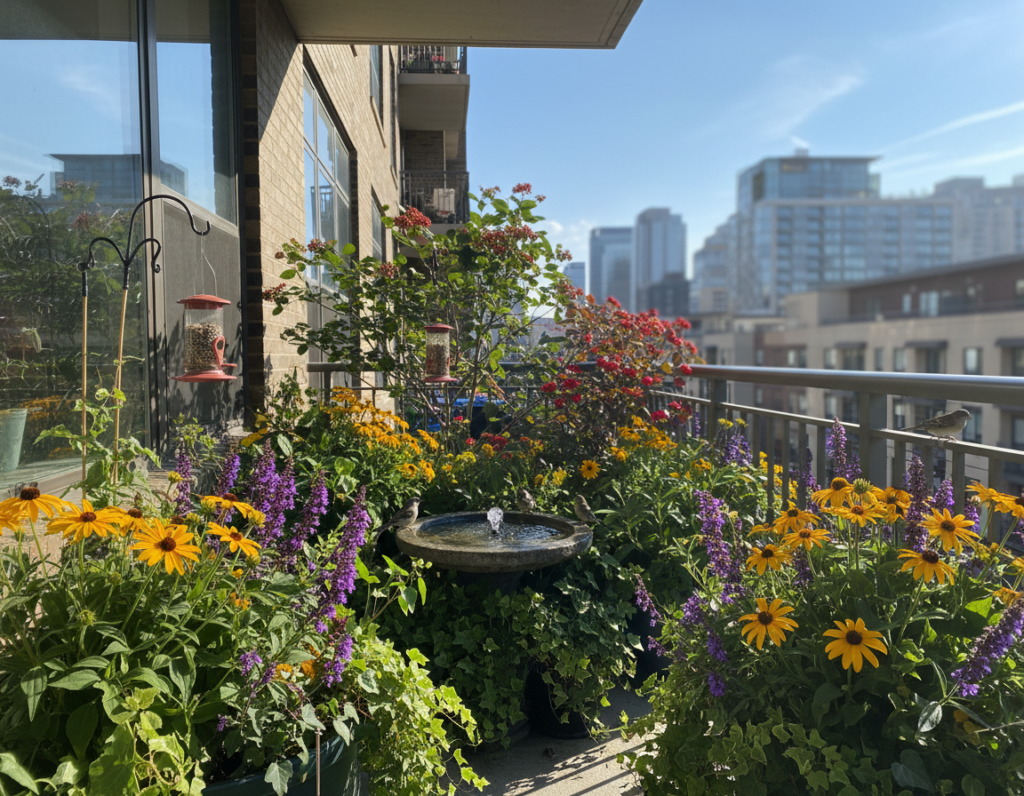
Provide a reliable basin. A terra cotta saucer or shallow birdbath gives birds a safe place to drink and bathe without drowning risks.
Place the dish in shade to keep the water cool and inviting during long summer afternoons.
Keep it clean. Change the water daily and scrub the basin weekly to limit germs and droppings. This simple care preserves health and supports ongoing visits.
- Try a small solar fountain; moving water draws attention and helps birds cool faster.
- Even compact spaces can host a saucer or pump that fits a narrow ledge.
- Regular refills ensure the feature remains a dependable resource all season.
“Offering clean water turns a small outdoor place into a vital oasis that supports local bird survival.”
Managing Potential Hazards and Maintenance
Routine checks keep urban perches safe and stop small hazards from becoming major threats. A clear process helps building owners spot wear and tear before it causes harm to birds or the structure.
Regular Inspection Protocols
Inspect monthly for loose fasteners, frayed netting, and sharp edges. Check feeders and perches for stability and signs of damage.
- Document inspections and note the age and quality of each installed item to track when replacement is due.
- Clean droppings and debris promptly to reduce health risks and preserve surface condition.
- Address any structural issue immediately to prevent long-term damage and bigger problems down the line.
- After storms, do a full check each season and keep a watchful eye year-round for new hazards.
“Consistent maintenance is the simplest, most effective solution to reduce impact on local wildlife and extend the life of installations.”
Removing sharp objects and toxic substances is a priority. These safety measures protect bird health and maintain a high-quality, long-lasting outdoor space for residents and wildlife alike.
Engaging with Local Bird Conservation Efforts
Working with nearby conservation teams makes it easier to match home improvements to the needs of local bird populations. This collaborative approach helps residents act effectively and respond to issues they see today.
Local groups run practical projects that offer guidance on safe perches, water sources, and window treatments. They share field-tested tips that fit the climate and laws of each city.
Joining these efforts also builds community. Volunteers swap advice, report hazards, and scale actions so that isolated fixes become coordinated protections.
- Access checklists that improve safety for visiting birds.
- Attend workshops to learn durable, low-maintenance solutions.
- Share results with neighbors to spread effective practices.
“Small, steady contributions from many households create measurable benefits for urban bird populations.”
By partnering with local conservation groups, residents support broader habitat safety and encourage lasting change across the neighborhood.
Conclusion
Small, steady changes to an outdoor ledge yield big gains for local bird health and comfort. Transforming a balcony into a friendly refuge improves the safety and quality of life for visiting birds while preserving the resident’s view.
By choosing cooler finishes and keeping up with regular maintenance, a homeowner helps their home remain a secure, low-stress spot for wildlife. Simple routines reduce wear and keep surfaces in good condition.
Remain alert to common hazards like reflective glass, loose debris, or neglected droppings. These checks support building-wide efforts and underline the importance of ongoing care in the community.
With modest effort and regular attention, any resident can create a lasting, bird-friendly space. Thank you for taking the time to protect local birds and improve neighborhood habitat.