They can keep a small urban setup tidy with a few simple steps that fit the week. Regular attention helps protect local birds and prevents waste from building up around trays and feeders.
Practical tips include wiping the railing and floor, replacing soggy seeds, and choosing durable feeders that justify the price. Using a vinegar solution is a safe way to disinfect without harsh chemicals.
Photography by Garry Gavan shows how compact designs save space and reduce debris. Rebecca Matthews’ images help people identify common visitors, from hummingbirds to finches, so they can match seed types and feeder styles.
They should check rental rules before mounting a feeder and pick tools and materials that weather well. Small, weekly tasks keep the space inviting and support healthy birds in any home.
Preparing Your Balcony for Bird Visitors
Preparing a small outdoor spot for visiting birds starts with checking rules and choosing safe perches. First, confirm any property guidelines so a feeding setup follows lease and municipal limits. Many complexes restrict certain feeder types or mounting methods, so verification saves time and expense.
Assessing Property Guidelines
They should review lease terms and ask a building manager if unsure. This step clarifies what types of feeders and hanging hardware are allowed. It also helps avoid fines and neighbor complaints.
Selecting Appropriate Feeder Locations
Choose a sheltered spot that gives birds a clear view for safety. Placing feeders near plants and flowers creates a natural habitat and encourages more visits during spring and summer.
- Safe distance: Keep feeders away from predator access points.
- Variety: Mix feeder types and foods like sunflower seeds and nectar to attract more species.
- Durability: Consider price versus lifespan; quality units last longer.
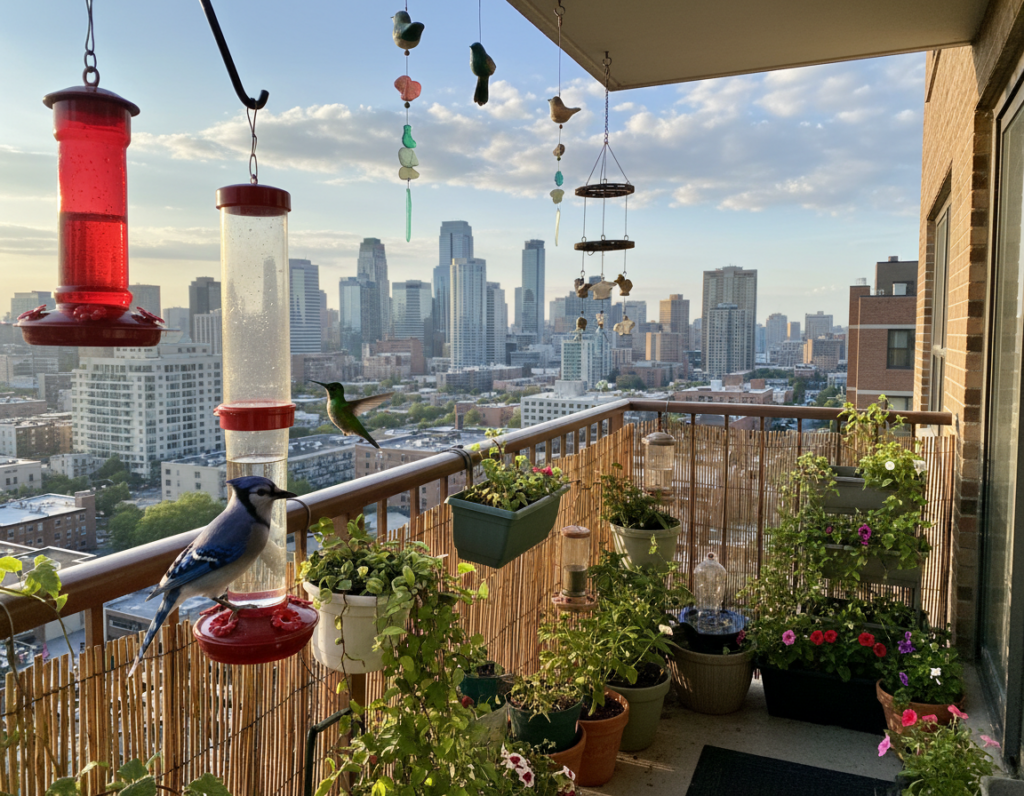
The Droll Yankees Classic Hummingbird Feeder is a well-known option for those aiming to attract hummingbirds in the fall. Adding grass or soft nesting materials nearby can encourage birds to build a home close to a small garden or terrace. This page offers practical layout tips to maximize how many birds visit while keeping the space functional for years.
Essential Tools for a Clean Balcony Bird Feeding Area
A compact kit of reliable tools makes routine upkeep much faster and safer.
Must-have items include a soft-bristled brush, durable sponges, and a microfiber E-Cloth. Zac Kieffer reviewed updated protocols on Oct 6, 2025, and recommended soft brushes for scrubbing a bird feeder without damage.
E-Cloth products last about 300 washes and let users wipe surfaces with plain water. This reduces chemicals and protects visiting birds and nectar feeders.
- High-quality brushes and sponges to remove droppings and stuck seed.
- A disassemblable feeder saves time and lowers replacement price long-term.
- Routine checks for wear ensure tools work when a quick tidy is needed.
“Using the right tools, such as an E-Cloth, is vital for maintaining a hygienic setup,” — Zac Kieffer.
This page outlines the specific tools that keep a small balcony and its feeders safe from moldy seeds. Proper gear makes maintenance quick and helps local birds stay healthy.
Establishing a Weekly Cleaning Routine
A short, weekly routine keeps feeders and surrounding surfaces safe and inviting for local birds.
Removing Loose Debris
Each week, they should remove loose debris and empty trays before starting. Clearing dropped seeds and husks prevents pests and mold.
- Step 1: Remove any items and sweep crumbs into a bag for disposal.
- Step 2: Use a plastic scraper to lift stuck waste without damaging the railing.
- Step 3: Check seed ports and replace any spoiled seeds, especially during summer.
Applying Safe Cleaning Solutions
They should scrub feeders with warm water and a mild, bird-safe solution. A 1:9 vinegar-to-water mix works well for sanitizing surfaces.
Price-friendly materials like vinegar and dish soap keep maintenance low-cost and effective.
Scrubbing and Rinsing Surfaces
After soaking, scrub with a soft brush and rinse thoroughly to remove residue. Always let items dry before refilling food or water.
For more guidance on proper hygiene and schedules, consult the feeder hygiene guide on this page.
Managing Water Sources and Birdbaths
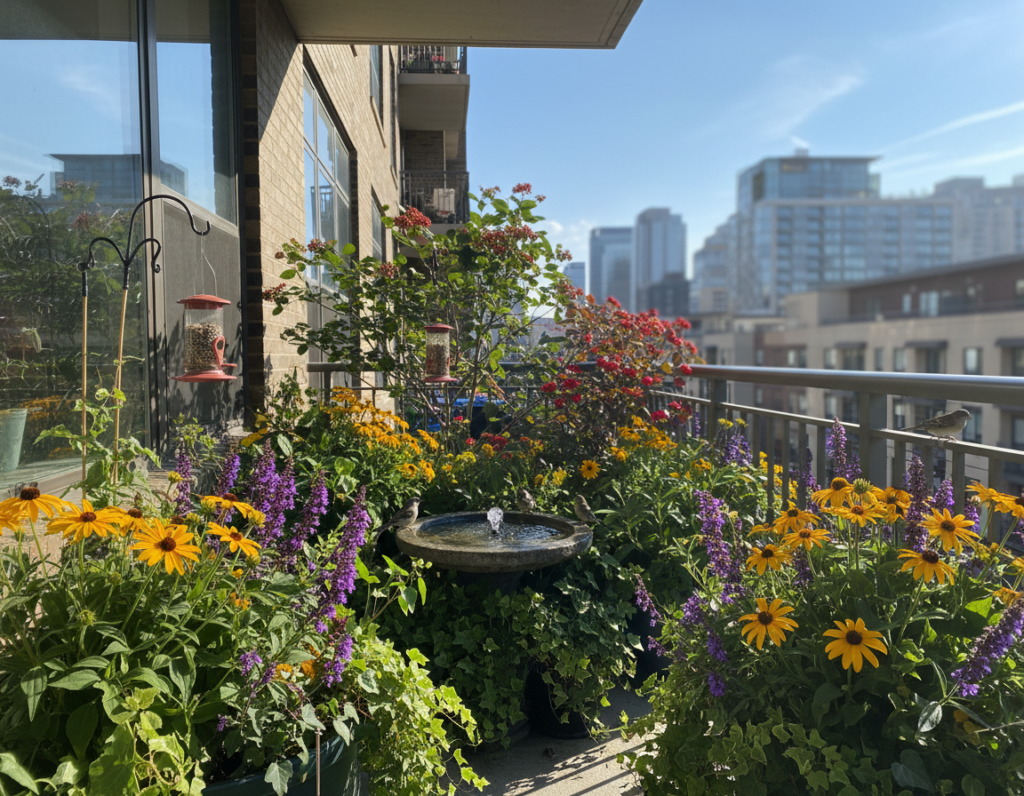
Provide fresh water year-round to support local birds, especially when natural sources dry up. A reliable water source helps birds hydrate and bathe, and it makes patios and small terraces more inviting for wildlife.
Maintaining Fresh Water Hygiene
Depth matters. Keep the bath at about 2–3 inches so most species can drink and splash safely. Shallow bowls or a low basin work well for this purpose.
Swap water weekly to stop mosquito larvae from developing; larvae typically hatch in 7–10 days. Refreshing the supply also reduces algae and odors that deter visitors.
Place the vessel in shade to slow evaporation and keep water cool through summer. Using a mister, small fountain, or shallow tray attracts more types of birds and encourages hummingbirds and finches to visit during spring and fall.
- Weekly refresh: Replace water every 7 days.
- Variety: Combine a shallow bowl with a dripper or mister to draw different species.
- Investment: The modest price of a good birdbath is worth the extra visits and enjoyment.
“A simple, well-kept water source makes a balcony a reliable stop for local birds.”
Preventing Mess and Deterring Pests
Stopping spills and pests starts with simple habits that fit into a weekly maintenance plan.
They should place a tray under each feeder to catch falling seeds and reduce floor waste. A shallow tray is an easy way to keep the balcony neat and limit pest attraction.
If droppings or spills appear, wipe the spot with a solution of warm water and vinegar. This bird-safe mix sanitizes without harsh chemicals and dries quickly before refilling water or food.
Keep the space free of clutter and trim nearby plants so rodents and insects have fewer hiding places. During summer, inspect feeders for ants or wasps and remove spoiled seeds promptly.
- Use trays: catch seeds and lower cleanup time.
- Natural deterrents: peppermint oil or mesh guards keep pests away.
- Low price fixes: inexpensive guards and regular checks beat costly infestations.
“Small, consistent steps make a big difference for local birds and the quality of the feeding setup.”
Final Thoughts on Maintaining Your Bird Haven
<!– Meta: –>
Regular attention, clear rules, and sensible purchases help residents enjoy local wildlife without extra hassle. They should follow simple tips to keep feeders and water fresh, and to make visits safer for birds.
Consistency is the best solution. A weekly check of mounts, stations, and food supplies saves time and reduces the long-term price of replacements.
This page offers the essentials to manage a small garden spot at home through spring and summer. Respect property orders as we expand habitats so neighbors stay happy.
The reward is simple: the joy of watching diverse birds visit, and the pride in a low-cost sanctuary that lasts.