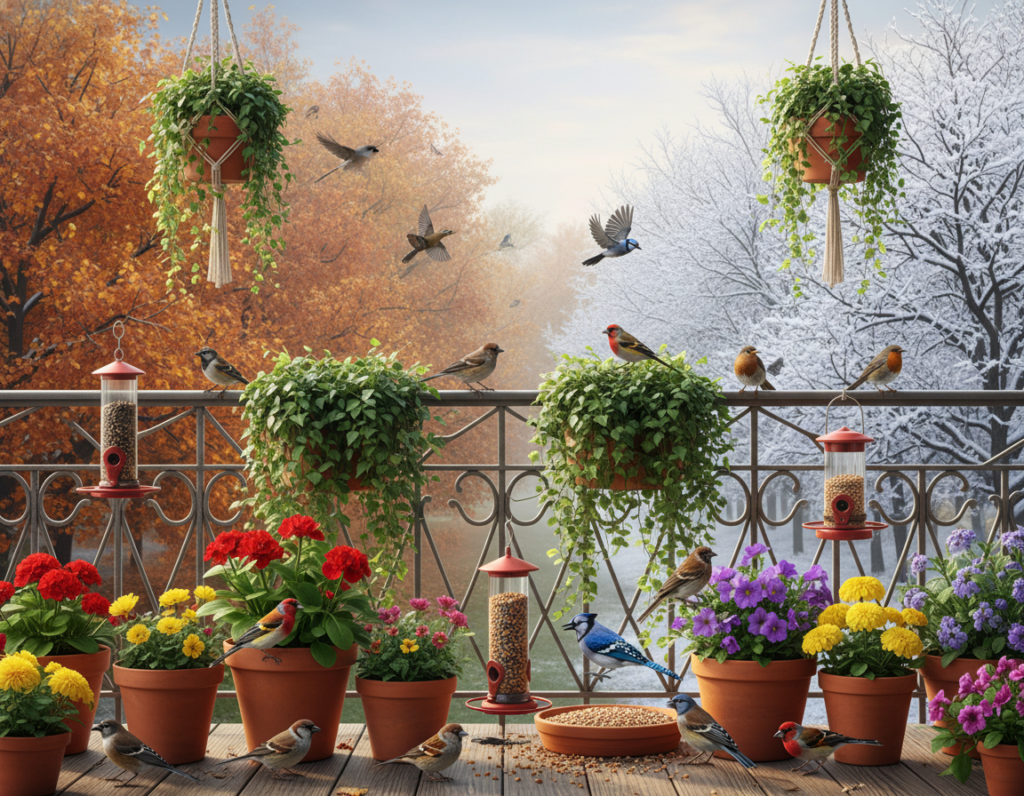
Urban birdwatching helps residents reconnect with nature without a yard. Even in dense city blocks, people notice that birds already live around them and turn an apartment into a quiet wildlife refuge.
This post addresses a common problem: urban isolation and lack of green space. It shows practical steps to transform limited outdoor areas into welcoming habitats.
Apartment dwellers can attract birdlife by offering easy essentials: food, water, and simple shelter. Attention to placement and routine makes a compact setup effective.
Readers in the United States will find clear, usable guidance and a link to more ideas at this related guide. The goal is simple: make a small balcony area feel inviting to local avian visitors and enjoy daily wildlife moments.
Key takeaways: Urban residents can create thriving bird habitat in tight outdoor spaces; provide food, water, and shelter; small changes yield big rewards.
Assessing Your Apartment Balcony Potential
Begin by measuring the available outdoor and ledge areas to determine the best layout for plants and feeders. Record width, depth, and access points. This quick survey makes planning realistic and efficient.
Observe sunlight at different times of the day. Note morning, midday, and evening light. Choose plants that match those light patterns so the local wildlife will find food and shelter in a natural rhythm.
Consider prevailing wind direction and weather exposure. High-rise ledges and balconies can still host wildlife if they are sheltered from strong gusts and heavy rain.
- Measure and map usable space.
- Track sunlight at set times.
- Note wind and weather patterns.
“Different balconies create unique microclimates; evaluate yours before adding habitat elements.”
Good assessment ensures the place will be safe and inviting. With basic measurements and weather notes, an apartment plan can maximize potential and comfort for birds.
Navigating Building Rules and Neighbor Relations
Tenants should always confirm building rules before adding feeders. Start by reading lease language and any management bulletins. If policies are unclear, ask the property manager for written guidance.
Even though a lease may not mention bird activity, telling neighbors about plans avoids surprises. A quick conversation can head off a dispute and build goodwill.
When feeders are allowed, prioritize cleanliness to limit seed scatter and droppings. Regular sweeping and a tray under a feeder cut nuisance and reduce pest risk.
- Check written rules and ask management.
- Discuss intent with neighbors above and below.
- Use trays or catcher mats to control seed husks.
- Schedule routine cleaning to prevent complaints.
Proactive communication prevents most problems. A considerate apartment birder keeps shared spaces tidy and follows any restrictions on the balcony. This approach keeps neighbors happy and preserves access when feeders are allowed.
Designing Small Balcony Resting Spots for Birds
Designing a compact refuge relies on vertical solutions and careful placement to make the most of every inch. Tenants should add hanging baskets, trellises, and narrow shelving to create layered perches and hiding places.
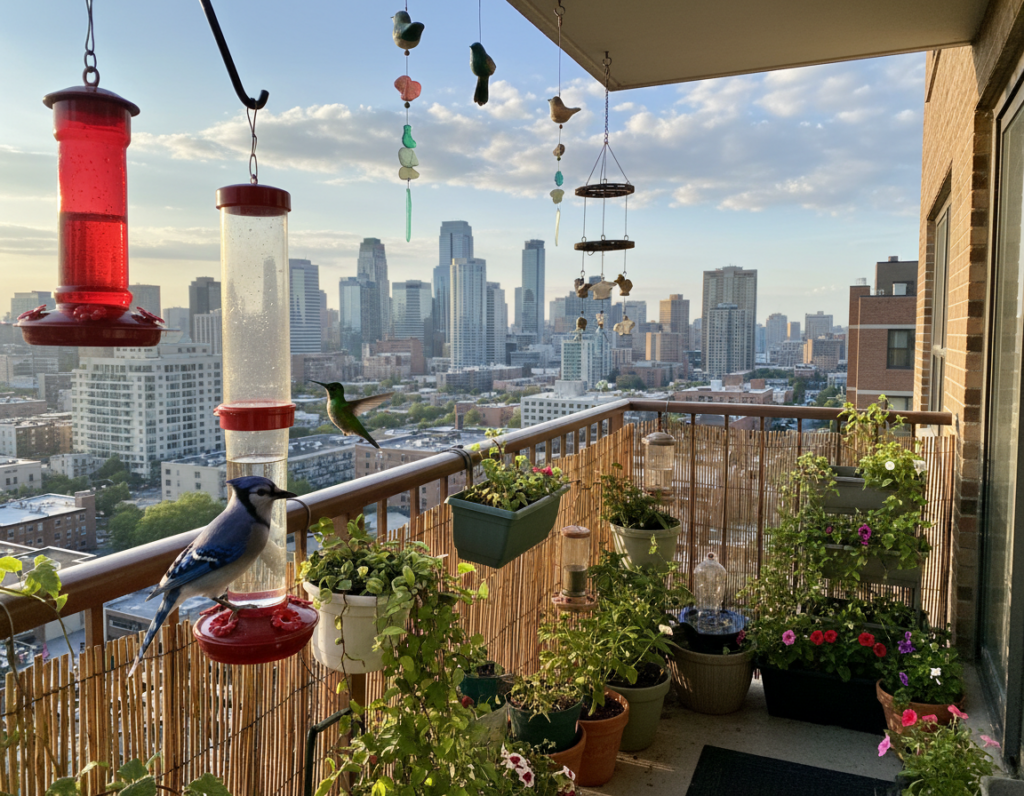
Use compact feeders that attach to the railing. Choose models with seed trays or suction mounts that fit securely and reduce spill. A single railing feeder plus a hanging tube saves room and attracts a range of species.
Balance residents’ style with wildlife needs. Low-maintenance native plants and potted shrubs give food and cover while keeping the area tidy. Strategic grouping of greenery and feeders encourages frequent visits.
- Prioritize vertical elements to expand usable habitat.
- Select stable, weatherproof feeder mounts.
- Keep pathways clear to maintain neighbor access.
“Structural complexity—layers, perches, and sheltered spots—creates the best outcomes in compact urban habitats.”
Selecting Native Plants for Urban Wildlife
Native plants make container gardening efficient and naturally attractive to local birds. They supply familiar food, nectar, and shelter. That reduces maintenance and helps wildlife adapt quickly to an apartment setting.
Choose plants that bloom in spring and support insects as an extra protein source. A mix of seed-producing grasses, native shrubs, and flowering perennials creates year-round interest. This variety helps multiple species visit and stay.
Maximizing Vertical Space
Climbers and trellised native vines add perches and shelter without taking floor area. Hanging pots and stacked containers increase planting density while keeping walking space clear.
- Use vertical planters with native vines to add perches.
- Mix nectar plants and seed-bearing species to provide varied food.
- Rotate containers seasonally to keep the garden attractive in spring and beyond.
“A container garden of regionally adapted plants supports diverse species with minimal upkeep.”
Incorporating Water Features in Compact Spaces
Offering clean, accessible water turns a tight outdoor area into a dependable oasis that local winged visitors quickly learn. A shallow source is especially effective on hot days and encourages regular visits.
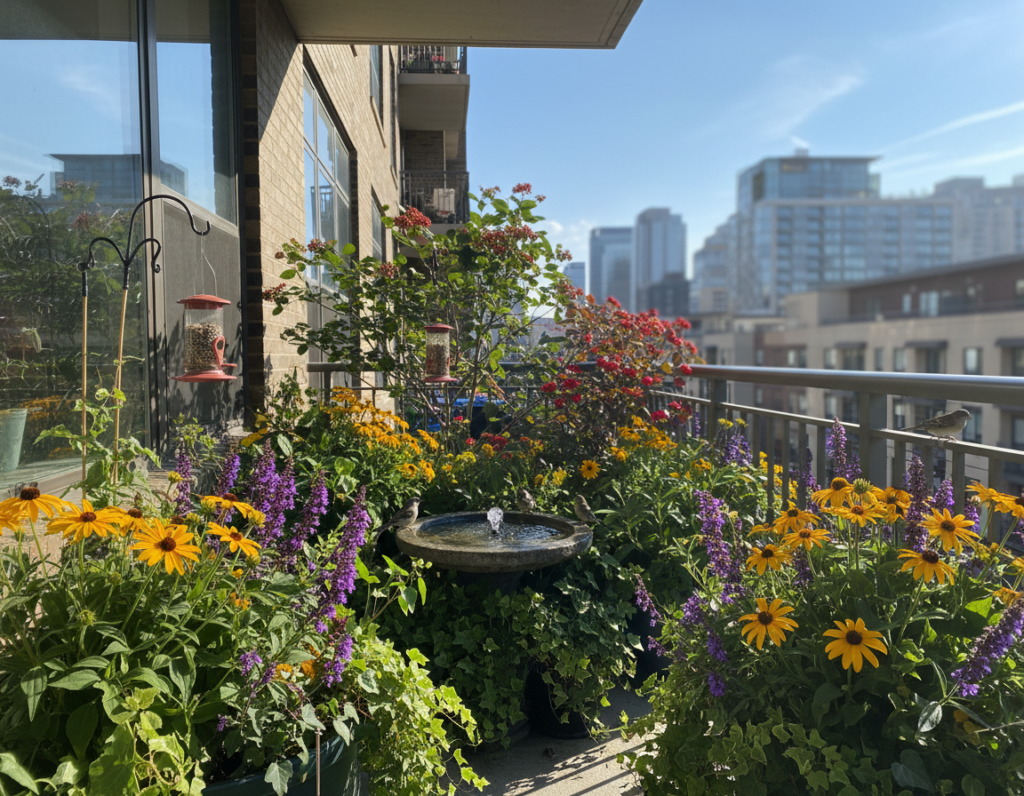
Use a shallow container or saucer as a functional birdbath. Add stones or pebbles to create a range of depths so different species feel safe while drinking or bathing.
Consider a small, bubbling fountain if space allows. Moving water catches attention and helps mask urban noise. It also reduces mosquito risk when filtered and changed often.
Maintain hygiene: refresh the water every few days and scrub the basin weekly. Consistent, clean water makes the area a reliable stop for birds navigating the urban landscape.
- Use a shallow container with depth variation.
- Add a bubbler or tiny pump for motion.
- Clean and refill water every few days.
Strategic Placement of Bird Feeders
Thoughtful feeder layout turns a tight outdoor area into a dependable viewing station. Proper placement helps attract a wider variety of species and improves safety for visiting wildlife.
Choosing the Right Feeder Types
Use feeders that limit spill and waste. Tube and hopper models that hold hulled sunflower seeds reduce mess and cut droppings on neighboring railings.
Even though attraction is the goal, no-waste food keeps pests away and keeps neighbors happy.
Placement Strategies
Place at least one feeder within feet of a window to observe mourning doves and songbirds up close. Vary heights to let different species feed comfortably.
Mount a feeder on a railing or hang it near branches so birds feel secure. Keep feeders apartment-friendly by avoiding locations that drop seeds onto shared spaces.
DIY Feeder Ideas
Simple DIY tray feeders or recycled bottle tube feeders work well when secured to railings. Use drip trays beneath feeders to catch husks.
For more layout options, consult this feeder layout guide.
“Keeping feeders clean and well-placed encourages repeat visits and a healthy urban bird population.”
Maintaining Hygiene to Prevent Mess
Maintaining feeder hygiene reduces disease risk and cuts down on spilled seeds and droppings. Use a solution of one part bleach to nine parts water to scrub each feeder at least once a week. Rinse thoroughly and let parts dry before refilling.
Regular removal of old seeds and debris keeps the feeding area tidy. A neat balcony prevents buildup of mess and helps maintain good relations with neighbors. It also limits pests that eat spoilage and spread disease.
During hot summer weather, check food daily and discard any wet or moldy seed. Clean basins and trays often so visiting birds stay healthy. A tidy feeder station makes this hobby pleasant in an apartment setting.
“Consistent cleaning protects wildlife and preserves the shared outdoor space.”
- Scrub feeders weekly with bleach solution; rinse well.
- Remove old seeds and droppings to reduce mess.
- Inspect during summer to avoid spoiled food and illness.
Implementing Essential Bird Safety Measures
Window collisions kill an estimated 1,000,000,000 birds in the U.S. each year. Apartment residents who host feeders and plants can reduce that toll with simple actions.
Make glass visible. Install decals, external screens, or patterned films that break up reflections. Apply markers at close intervals so flying wildlife sees the barrier and avoids impacts.
Bird-Safe Window Treatments
Choose treatments rated for effectiveness and weather durability. External options work best at high-rise windows where reflections are strongest. Indoor decals help when exterior fixes are not allowed by management.
Securing Feeders and Nearby Hazards
Anchor any feeder mounts and fasten branches so they cannot fall in storms. Remove loose wires and sharp items from railings and ledges. These steps prevent injury and keep the building environment safe.
“Protecting birds from window strikes is a critical responsibility for any apartment dweller who maintains a birding setup.”
- Use visible patterns on windows.
- Secure feeder mounts and potted branches.
- Clear loose debris and hazards from balconies and windowsills.
Engaging with the Local Birdwatching Community
Connecting with local enthusiasts enhances the apartment birding experience. Joining groups brings practical tips and shared observation data. This makes each post meaningful and useful to researchers and neighbors.
Participating in citizen science is simple. Use tools like eBird and Project FeederWatch to log sightings. These platforms like eBird collect observations that help track migration and seasonal change.
Participating in Citizen Science
Residents can record observations on set days or any week they choose. Apps such as Merlin Bird ID and the Audubon Bird Guide aid identification. Many volunteers use 8×40 or 8×42 binoculars to better see the variety species that visit their balcony and building ledges.
Sharing Observations Online
Sharing photos and notes on social media or local forums connects others and builds community. This way, a single apartment setup becomes part of a larger effort. It also helps neighbors learn safe feeder maintenance and spot trends in spring and beyond.
“Citizen science turns casual sightings into lasting data.”
- Log sightings on platforms like eBird.
- Use ID apps to confirm species.
- Share results with local groups and neighbors.
Conclusion
Creating a bird-friendly nook in an apartment brings nature closer to everyday life. This post outlines simple, practical steps that anyone can apply in limited outdoor areas.
By adding food, water, and safe perches, residents can support local birds and enjoy regular visits. Take the time to observe patterns and adjust care routines as seasons change.
This post encourages steady effort and mindful maintenance. With consistent attention, an urban dwelling becomes a small but meaningful refuge that connects people to the natural world each day.