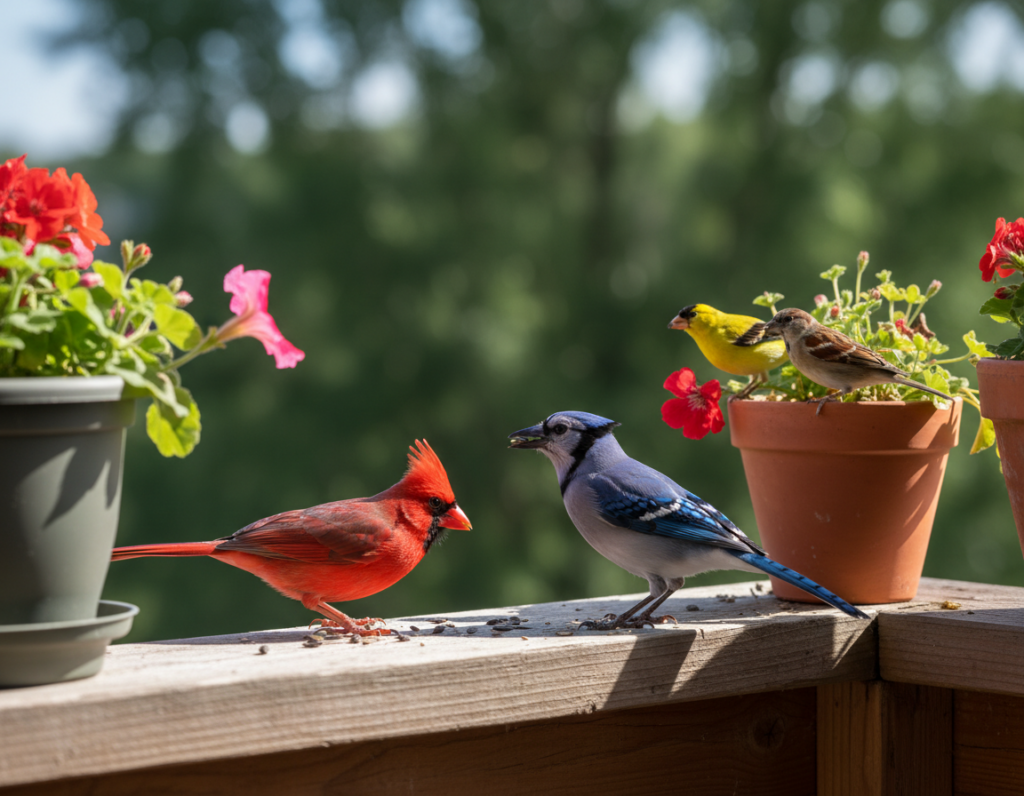
This introduction explains why studying birds in cities matters. Nearly 20% of described bird species are now found in cities, a fact that shifts how researchers view wildlife in human spaces. The guide highlights the forces that let certain species persist and the drivers that lead others to decline.
Researchers examine feeding, nesting, and movement to learn which traits help survival. They analyze how noise, light, and pollution shape reproductive success and daily life. Observations of diet and nest site choice reveal how birds adapt to people and predators.
By tracking populations and changes in diversity, scientists can advise planning that supports wildlife. This section sets the stage for practical steps to observe feeding, resting, and flight, and for understanding how development and habitat fragmentation affect many birds in American cities.
Understanding Urban Bird Behavior Patterns
Observations of foraging, roosting, and movement across built areas help reveal which species adapt.
The great tit (Parus major), the house sparrow (Passer domesticus), and the blackbird (Turdus merula) lead studies that compare life in cities and rural areas. Ethology shows how inherited traits and social organization shape responses to new environments.
Many birds hatch with instinctive actions, like gaping for food, while others learn to use novel food sources through trial and error. Researchers from the British Trust for Ornithology supply long-term data on feeding, nesting, and breeding in changed habitats.
Animals in towns must weigh human presence against predator risk when choosing nests or feeding spots. Understanding these choices lets scientists track how populations react to habitat fragmentation and rapid development.
By linking life history traits to tolerance of noise, light, and pollution, research pinpoints which features boost reproductive success in modern landscapes.
- Common study species highlight differences in diet and survival.
- Ethology clarifies instinct versus learned responses.
- Data guide management of habitats in cities.
The Evolution of Avian Adaptations in Cities
Shifts in land cover and human presence drove measurable changes in how some birds find food and choose nests.
Historical Context
Early naturalists like John James Audubon began recording observations in the 1800s, focusing on anatomy and seasonal life. By the 20th century, research moved toward how species adjust to changing environments.
The United Nations projected that urban land cover would triple from 2000 to 2030. This growth changed habitats and challenged the survival of many species worldwide.
Modern Evolutionary Drivers
Today, the conversion of green space to impervious surfaces forces shifts in feeding and nesting strategies. Artificial light and noise alter breeding timing and reduce reproductive success for some populations.
Predictable food sources from people favor certain species that exploit human waste and feeders. At the same time, habitat fragmentation lowers diversity and selects for traits that help survival in novel conditions.
Understanding these changes helps conservationists design urban areas and management plans to support healthy populations and long-term life-history resilience.
Instinctive Versus Learned Behaviors
Innate skills and experience combine to shape how species find food and avoid threats in built areas.
Instinctive actions appear without practice. Examples include the skilled weaving of nests and simple feeding reflexes. These traits help many populations reproduce quickly in new habitats.
Learned behaviors arrive through observation. Song, mimicry, and the use of nest boxes or feeders often depend on social learning. Such flexibility lets some birds adapt to novel food sources and human presence.
Predator awareness usually combines both types. Young animals watch adults and then refine escape tactics when facing new threats in cities.
- House sparrows (Passer domesticus) show both innate and learned traits to exploit food sources.
- Noise and light can alter how species learn songs and find mates.
- Research links these differences to reproductive success and survival amid habitat fragmentation.
“Studying how instincts and learning interact reveals which traits support life in modern landscapes.”
How Birds Perceive Human Presence
Measuring how close a human can approach before a bird flees gives scientists a window into tolerance and risk assessment. This simple test links individual reactions to broader questions about survival in built landscapes.
Flight Initiation Distance as a Metric
Flight Initiation Distance (FID) quantifies the space animals keep from people. Samia et al. used FID across 32 species to compare fear levels. Symonds and colleagues applied the same method to 42 European species and found shorter FIDs in many city populations, suggesting reduced fear where people are common.
Researchers use FID to track how exposure to people changes time spent feeding and how often nests are abandoned. The presence of people can force species to alter foraging routes and diet choices to reduce risk.
- FID helps compare boldness across species and populations.
- Shorter FIDs often indicate habituation to people in certain areas.
- Monitoring FID informs management that aims to protect diversity and reproductive success.
For more detail on meta-analyses and methods, see the flight initiation distance studies, which summarize how FID reveals differences in tolerance among many birds.
The Role of Fear and Boldness in Urban Survival
Fear and boldness shape which individuals thrive where concrete meets green. In many cities, these traits determine access to food and safe nest sites. Bold animals often approach people and tolerate noise and traffic more than shy ones.
Carrete and Tella found that breeding pairs of burrowing owls (Athene cunicularia) were noticeably more fearless in urban habitats than rural pairs. That fearless tendency helps some species exploit human-derived food sources and novel roosts.
Research on great tits shows bold individuals sometimes have different reproductive success compared to shy ones. The balance between caution and risk-taking affects survival, especially where predators and people both occur.
Understanding fear lets scientists predict how populations will respond to development and habitat fragmentation. Managers can use these insights to plan spaces that support diversity and long-term survival.
- Boldness can increase access to reliable food sources.
- High traffic areas may select for less fearful individuals.
- Balancing risk and reward influences reproductive success and population trends.
“Traits like boldness help explain why certain species persist while others decline in changing landscapes.”
Foraging Strategies and Anthropogenic Food Sources
Access to predictable, people-provided food changes which species persist and how they forage. Many animals in urban areas rely on steady leftovers, feeders, and waste instead of varied natural diets.
Urban Exploiters
House-associated species like the house sparrow often dominate where human food is common. Rodewald and Arcese showed Northern cardinals had reduced variability in reproductive contributions when they used city food sources.
Predictability of Resources
Predictable food reduces search time and can promote bolder foraging near people. Research from the Phoenix metro area documents how different species use anthropogenic food across varied urban areas.
Nutritional Tradeoffs
Steady diets can lack diversity. Studies of tits and sparrows report fatty acid profiles linked to inflammation or oxidative stress.
- Predictable food can boost short-term survival but may lower long-term health.
- Changes in diet affect reproductive success and overall diversity.
- Analyzing foraging strategies helps managers design habitats that support healthier populations.
“Understanding how food sources alter diet and health is key to conserving species in modern landscapes.”
The Impact of Artificial Light at Night
The glow from streetlamps and storefronts changes daily rhythms across many bird populations.
Artificial light at night (ALAN) disrupts natural day–night cycles and alters feeding and resting. Welbers et al. experimentally showed that white and green LED exposure lowered the daily energy expenditure of breeding great tits. That change can shift how much time adults spend foraging and caring for young.
Lights sometimes attract insects, creating concentrated food sources. This effect may offset some negative impacts for certain species. Yet chronic illumination also shifts breeding timing and can reduce overall reproductive success in sensitive populations.
Conservation must factor in ALAN. Managers can reduce bright overnight lighting near important habitats, shield fixtures, or use warmer bulbs to limit disruption.
- ALAN changes activity schedules and energy budgets.
- Insect attraction can alter diet and food availability.
- Mitigation helps protect diversity and long-term survival.
“Understanding how light alters life cycles is essential for predicting population responses in growing cities.”
Noise Pollution and Acoustic Communication
Persistent traffic and construction hum force changes in how species send and receive calls. Noise alters the soundscape in many cities and makes clear communication harder for birds and other wildlife.
Song frequency modifications help some animals overcome masking by traffic. Many species raise pitch or increase amplitude so mates and rivals can hear them above the din.
Sierro et al. found European blackbirds near airports shift note composition to fit local noise. Sewall and Davies reported that song sparrows (Melospiza melodia) show different FOS gene expression and neural responsiveness in city versus rural populations.
These changes affect timing too. Advancing the dawn chorus is common where daytime noise is loudest. Singing earlier helps reach receivers when conditions are quieter.
- Acoustic shifts help maintain territory and mate attraction.
- Long-term research links altered calls to reproductive success and population trends.
- Studying song frequency reveals traits that let certain species survive noisy environments.
“Acoustic communication adapts when human noise dominates the landscape.”
Nesting Habits in Manmade Environments
Availability of safe nesting sites limits which species persist in built landscapes.
Many birds shift to roofs, chimneys, and eaves when trees and shrubs disappear. These alternative sites can let certain species colonize new areas and boost local reproductive success.
However, research shows trade-offs. Vincze et al. found artificial nests in urban areas suffer higher predation than natural nests. Duckworth and colleagues reported that some nest boxes lack insulation, lowering nestling survival in bad weather.
Conservation efforts can help. Well-placed, insulated nest boxes and protected roof cavities reduce losses to predators and cold. Studies of nest-site choice also reveal which traits let certain species thrive despite habitat fragmentation and development.
- Manmade structures create new opportunities for colonization.
- Artificial nests often face greater predator risk than natural sites.
- Improved nest boxes can raise reproductive success for vulnerable populations.
“Understanding nest site selection is critical to protecting bird populations in rapidly developing landscapes.”
Reproductive Success and Life History Strategies
Changes in clutch size and care reveal how populations adapt to human-dominated landscapes. Reproductive outcomes act as a clear measure of how well different species cope with new food sources, noise, light, and habitat loss in cities.
Clutch Size Variations
Some studies show a shift toward smaller clutches in built areas. Charmantier et al. found that great tits in cities display a fast pace of life yet produce fewer eggs.
This tradeoff suggests that producing fewer offspring can improve adult survival or increase care per chick. Scientists track clutch size to monitor long-term diversity and the health of populations across varied habitats.
Parental Care Dynamics
Parents adjust incubation, feeding rates, and nest attendance to cope with changed conditions. Division of duties often shifts so one adult spends more time foraging near people while the other guards the nest.
Such changes affect fledgling survival and chick development. Adjusting breeding timing to match earlier springs or heat island effects is another crucial trait that supports reproductive success.
“Life history strategies balance quantity and quality of offspring, and reproductive success reflects adaptation to modern landscapes.”
- Key drivers: altered food, noise, light, and predator presence.
- Monitoring clutch size helps detect population-level responses to development and habitat fragmentation.
- Management that improves nest sites and food quality can boost survival and diversity.
Phenological Shifts and Seasonal Timing
Seasonal cues in cities shift the calendar for many species, changing when they breed and migrate. Warmer microclimates and extra night light move plant bud burst and insect emergence earlier than in nearby rural areas.
Fudickar et al. showed that dark-eyed juncos (Junco hyemalis) in town begin breeding earlier because their HPG axis activates sooner. That hormonal shift links local conditions to timing of reproduction and care.
When nests and peak food no longer match, reproductive success can drop. Birds that fail to sync with insect pulses risk poor chick growth and lower survival.
Long-term studies and monitoring across cities help researchers predict how populations respond to ongoing development and habitat fragmentation. Findings from Cape Town on the black sparrowhawk highlight that seasonal timing can differ between urban and rural populations.
Tracking these shifts guides conservation actions, such as adjusting habitat management to preserve food availability during critical breeding windows.
“Understanding phenological shifts is critical for maintaining species diversity and ensuring continued success in modern landscapes.”
- Earlier springs advance breeding for many birds.
- Mismatches between food and chicks harm reproductive success.
- Monitoring helps predict responses to development and climate effects.
The Influence of Impervious Surfaces on Foraging
Concrete and asphalt can speed or slow arrival at new feeding sites by changing visibility and perceived risk.
In a Phoenix study of 126 feeding trials across 13 sites, researchers found that birds reached stations 2.7 times faster in areas with high impervious surface coverage.
Great-tailed Grackles (Quiscalus mexicanus) were the most common first visitors, making up over 40% of initial arrivals. Smaller generalists like the house sparrow (Passer domesticus) also showed quick responses in highly built zones.
The results show that sealed ground alters access to food and reshapes which species capitalize on people-provided resources.
Latency to Feeding Stations
Shorter latency often signals boldness or tolerance of people and noise. That trait can help some populations persist in cities while filtering out others.
- High impervious cover correlates with faster feeder visits.
- Generalist species dominate early arrivals.
- Changes in arrival times predict shifts in local diversity and survival.
“Understanding how hard surfaces change foraging helps predict which species thrive as development expands.”
Social Structures and Flocking Dynamics
Flocking offers a practical shield against predators and helps individuals find food more efficiently in urban areas where cover and resources are fragmented.
Large murmurations, such as starling gatherings in Somerset, show how synchronous movement reduces risk for many birds while they feed. These displays also help groups share information about food and roost sites.
After breeding, some species become more social. They form communal roosts, share duties, and cut competition for limited food and nest sites. This shift influences local populations and reproductive success.
Research links social structure to the density of development and nest availability. Studies use group size and cohesion to track which species adapt to noise, light, and other stresses in cities.
- Defense: Flocking lowers individual predation risk.
- Information sharing: Groups locate food sources faster.
- Indicator: Changes in social behavior signal habitat change and impact on diversity and survival.
“Studying flocking reveals the traits that let certain species thrive amid rapid development.”
Biodiversity and Habitat Management
Functional traits across species explain why some survive where development is intense. Managing green spaces and connectors helps sustain diversity in rapidly changing urban areas.
Functional Diversity
Functional diversity measures the range of roles species fill in a place. Oliveira Hagen and colleagues compared 25 cities and found cities can hold high functional richness compared with nearby semi-natural habitats.
That result shows that simplified environments still support varied diets, foraging styles, and nesting traits. Understanding roles helps planners keep key functions that support healthy populations and reproductive success.
Mitigating Habitat Fragmentation
Shryock et al. showed avian species richness in Seattle falls where development reduces vegetative productivity. To reverse declines, cities should restore native vegetation and create heterogeneous habitat patches.
- Connect parks and remnant woodlots with green corridors.
- Install layered plantings and native shrubs to boost food and nest sites.
- Protect and monitor remnant habitats to support many bird species.
“Restoration and thoughtful planning are essential to sustaining diversity in modern landscapes.”
Cultural Significance of Urban Bird Life
Poems, films, and ancient art show that people have long noticed winged wildlife and felt a connection to it. The 2005 documentary March of the Penguins and John Keats’ 1819 Ode To A Nightingale are two famous examples that shape public feeling toward nature.
Birdwatching and local festivals bring neighbors together, turning casual sightings into stewardship. Small acts—leaving a nest box, planting native shrubs, or reporting counts—help protect habitat and food sources in town areas.
Research shows that people who value wildlife more often support policies that reduce light and noise and that limit pollution. This social support boosts the survival of many birds and improves reproductive success across green patches in cities.
- Art and literature keep species in public memory.
- Citizen science links appreciation to conservation.
- Cultural value helps counter habitat fragmentation and development.
“Celebrating local wildlife inspires the next generation to protect shared environments.”
Conclusion
Long-term monitoring reveals which traits let some species persist as landscapes and climates change.
Understanding how birds feed, nest, and move in urban areas guides practical conservation. With more than 10,000 bird species worldwide, ongoing study is essential to track shifting migration and nesting timing.
By recording changes in abundance and habitat use, scientists can forecast risks from climate change and development. Protecting diversity in the city requires habitat management, reduced light and noise, and targeted restoration.
In short, careful observation and thoughtful planning give communities the knowledge needed to safeguard wildlife for future generations.