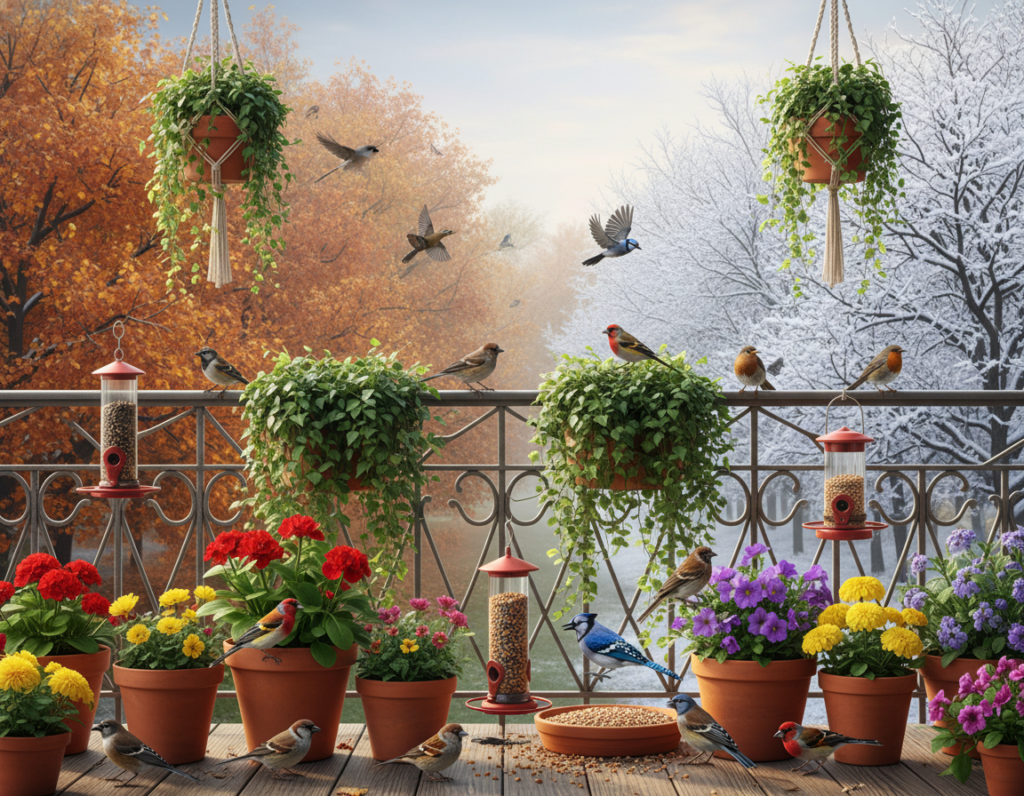
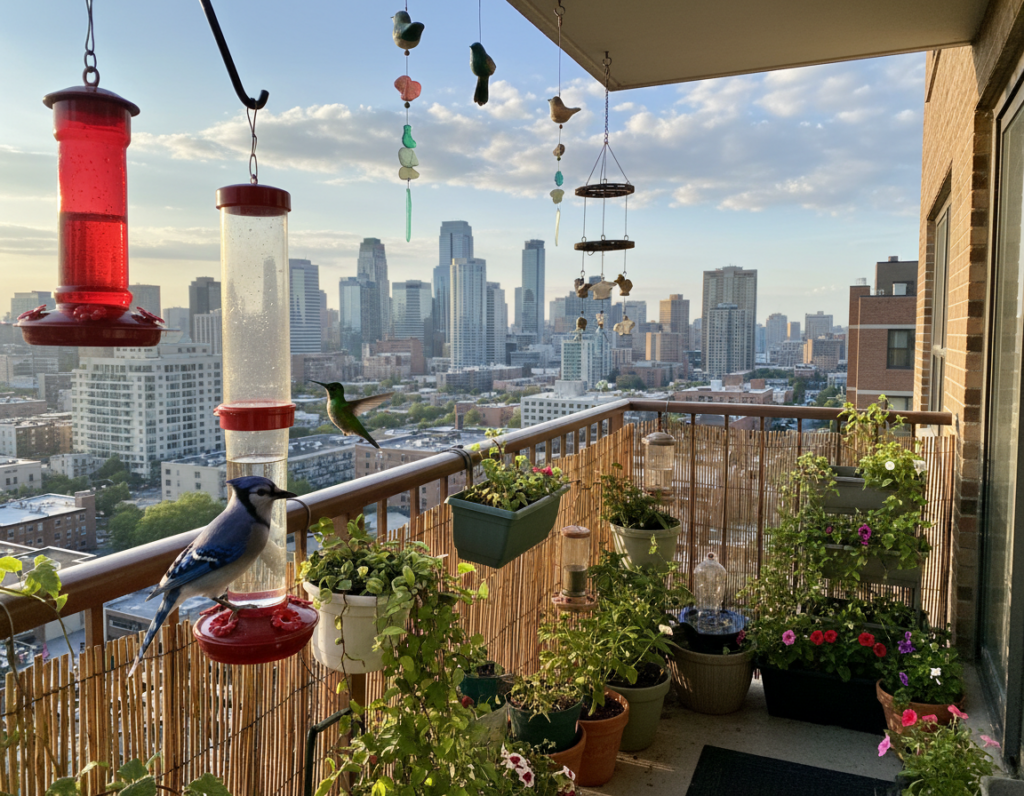
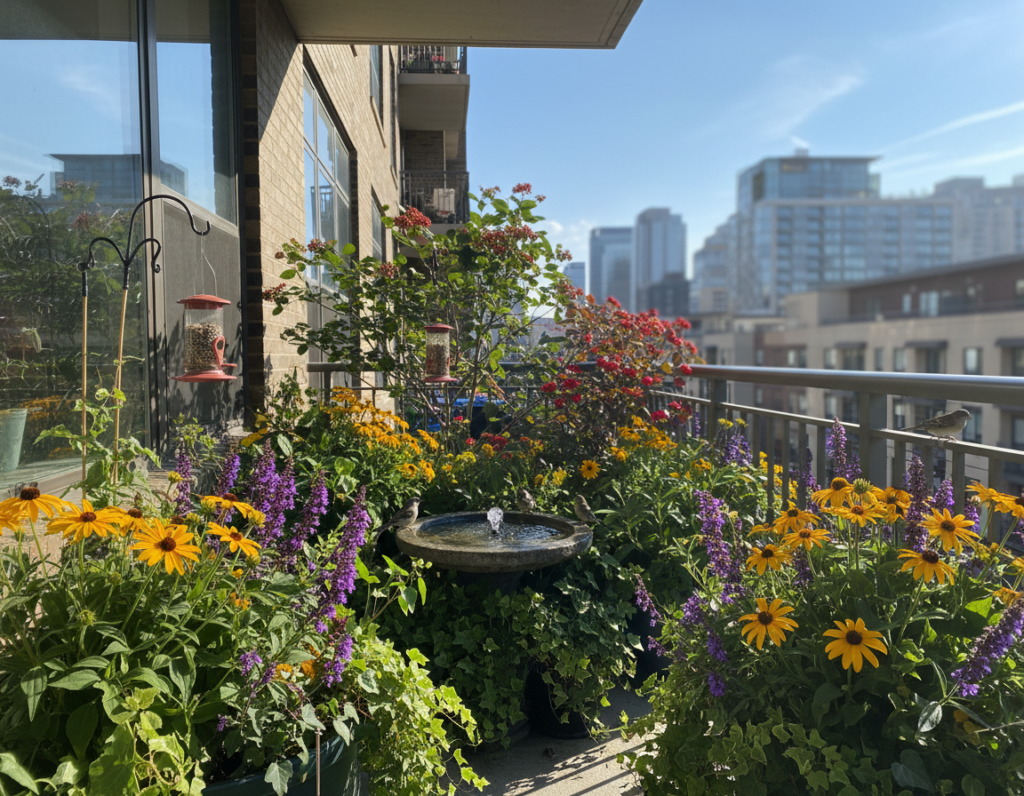
The typical urban observer often starts with a modest 3×5 slab attached to an apartment. They soon learn that small outdoor spaces can host regular visitors if set up with intent.
Safety and comfort matter most to winged guests. By noting local habits and offering steady water and perch choices, one can attract birds and keep them nearby. Consistent resources encourage repeat visits and longer stays.
Even minimal floor space becomes meaningful when residents plan carefully. Thoughtful placement of shade, perches, and cover helps urban wildlife feel secure. With steady effort, a simple birds balcony setup becomes a calm, active refuge.
Assessing Your Balcony Potential
Start by measuring every edge and corner to turn limited outdoor areas into useful habitat. A simple sketch helps identify sunny stretches and shady pockets. This gives a clear plan to place perches and planters without overcrowding.
Evaluating Size and Layout
Measure length, depth, and railing height. Note door swing and furniture positions. These details reveal usable zones at ground level and vertical space above.
- Map where heavy items can sit without stressing the structure.
- Plan vertical plant stands to free floor area.
- Place sturdy hooks for secure feeders and hanging planters.
Sunlight and Weather Exposure
Track sun angles through the day. Mark hot midday spots and wind channels. This shows where to put a water dish and shaded perches that visiting birds will prefer.
Understanding microclimate also guides plant selection and ensures the setup stays safe and durable under local conditions.
Understanding Building Regulations and Safety
Before installing any fixtures, residents should confirm building rules that govern outdoor modifications. This helps avoid costly fines and the need to dismantle a setup later.
Make sure the lease and complex policies allow hanging feeders or planters. Many property managers restrict items that add weight or change drainage patterns.
They should also secure heavy pots or structures so strong winds won’t send them over the edge. Fastening hardware and weight distribution matter.
Safety is paramount. Avoid sharp edges and narrow gaps where small wildlife might get trapped.
- Check local building codes and HOA rules before buying materials.
- Confirm attachment methods meet management standards.
- Consult the landlord or building engineer when in doubt.
Following these steps protects residents, property, and visiting wildlife, creating a safe, lasting way to enhance small outdoor spaces.
Selecting Native Plants for Natural Shade
Choosing the right mix of native plants turns a tight outdoor ledge into a cool, wildlife-friendly patch. Native selections give shade, food, and cover with little fuss.
Low-Maintenance Varieties
Black-eyed Susans and Purple Coneflowers are reliable choices. They tolerate heat, bloom repeatedly, and attract local species that eat seeds and insects.
Use hanging baskets and wall-mounted planters to expand vertical space and add shaded perches. These setups make room for more flowering plants without crowding the floor.
- Native plants need less water and fewer chemicals, so they require less time to maintain.
- Mix a variety of flowering plants to extend bloom time and keep insect prey available.
- Create a simple DIY vertical garden with recycled pallets or pre-made planters to add perches and hiding spots.
Seasonal planting tips help sustain food and shelter across the year. For a quick reference, consult a curated bird-friendly plant list to match species to local conditions.
Practical Balcony Shelter Ideas for Birds
Small outdoor ledges can become layered retreats when vertical space is used well. A compact design gives shade, perches, and protection without crowding the floor.
Using Vertical Space
Use wall-mounted planters and hanging pots to build green tiers. These layers create shade and offer hiding spots high above foot traffic.
Vertical setups free up floor room and increase the number of resting zones. They also reduce heat on hot afternoons by blocking direct sun.
Creating Natural Perches
Install natural branches or cedar dowels as perches. Birds prefer rough bark or wood that feels secure under their feet.
- Place perches at varied heights to suit different species.
- Position a bird feeder near dense foliage so food and cover are close together.
- Use untreated wood and avoid painted or toxic materials; make sure any plastic parts are labeled non-toxic and well fastened.
Installing Protective Screens
Attach trellises or mesh screens to act as windbreaks and visual cover. Screens also cut glare and help prevent window collisions.
Simple additions like a lightweight trellis or woven panel can improve safety and comfort quickly.
For practical tools and planting combos that pair feeders and planters, see this guide to creative setups: creative feeder and planter solutions.
Providing Essential Water Features
Providing a steady water source turns a tiny outdoor space into a vital oasis during heat waves. A reliable supply of fresh water is essential in cities where natural pools dry up.
Choose from simple types like shallow dishes, a small fountain, or a terra cotta saucer. A shallow bird bath lets birds drink and bathe, which keeps feathers clean and helps overall life and health.
Moving water often attracts more attention. A small bubbler or dripper creates sound and motion that invite more species to visit. This also benefits insects such as bees and butterflies, adding a living variety to the space.
- Keep water fresh by changing it every 2–3 days in warm weather.
- Scrub the basin regularly to prevent algae and disease.
- Place the dish where visiting birds can see it but feel safe nearby.
Choosing the Right Bird Feeders
The right mix of feeder styles and heights helps a range of species feel secure while they eat.
Placement strategies start with matching a bird feeder to railing space and nearby plants. Vary heights so shy species can use lower trays while more confident birds use hanging tube feeders.
Placement Strategies
Keep feeders near cover but not too close to windows. This reduces collision risks and gives visiting birds a quick escape route.
Use a tray beneath feeders to catch seeds and protect neighbors below. Install a baffle to deter squirrels and protect seed stores.
DIY Feeder Projects
Simple DIY feeders use recycled plastic bottles, pine cones smeared with seed, or small wooden trays. Choose non-toxic materials and make units easy to clean.
Smart feeders such as Bird Buddy and Netvue Birdfy add camera views that help monitor species and feeding habits after brief testing periods. Regular cleaning remains critical to keep guests healthy.
Maintaining Cleanliness and Hygiene
A tidy feeding station lowers disease risk and invites more winged visitors. Regular feeding area upkeep keeps birds healthy and encourages repeat visits.
Clean feeders at least once a week during warm weather. Use a solution of one part bleach to nine parts water to sanitize a bird feeder. Rinse thoroughly and let it dry completely before refilling.
Place a tray under feeders to catch spilled seeds and birdseed. Removing old food and scrubbing the water source prevents mold and limits attraction of squirrels or rodents to the balcony.
- Weekly cleaning reduces bacteria and disease spread.
- Let parts dry fully before adding fresh food or seed.
- Consistent maintenance makes the station safer and more appealing to a wider variety of birds.
Simple routines protect wildlife and keep the neighborly experience positive. A clean setup saves time later and supports healthy urban bird populations.
Incorporating Bird-Friendly Decorations
Careful decorating balances human style with wildlife needs, creating an inviting spot that supports local species. Small accents can add perches, color, and quiet shelters without overwhelming the area.
Safe and non-toxic materials are essential. Use untreated wood, ceramic, or stainless steel. Choose paints and sealants labeled bird-safe and weather-resistant. This keeps visitors healthy and decorations lasting longer.
DIY touches like a simple wooden swing or a handcrafted ceramic accent add charm and function. Place them near planters with native plants to provide natural perches and flowering cover.
Keep the layout open so birds can fly in and out easily. Avoid bright, moving plastic spinners; such items may alarm visiting birds. Position a bird feeder where it sits close to cover but gives clear flight paths.
- Mix sturdy perches with soft planters to attract more species.
- Limit plastic elements and secure all pieces to prevent hazards.
- Rotate decorations seasonally and clean feeders and water regularly.
Protecting Avian Visitors from Window Collisions
Glass reflections and transparent panes often trick passing birds into unsafe flights. This hazard rises when a bird feeder sits near a window or glass door on a balcony.
Make windows visible. Apply bird-safe decals, screens, or specialized tape in a regular pattern so birds see the barrier and avoid collisions.
Place a feeder at a safe distance from glass. Short distances under 3 feet or beyond 30 feet reduce strike force and give birds time to recover if they misjudge a flight.
Install netting or removable bird tape to create a clear visual barrier. Regularly inspect treatments and check rails and planters for loose hazards.
- Use screens or decals on windows that face feeders or water sources.
- Move feeders if repeated near-miss events occur.
- Check often to keep surfaces clean and visible.
When glass is treated and hazards are removed, more birds will visit confidently, making urban balconies safer for winged visitors.
Engaging with the Birdwatching Community
Reporting visits to citizen science platforms turns casual sightings into useful data for researchers. Projects like eBird and Project FeederWatch let anyone submit observations and help track population trends.
Joining local clubs or online forums helps a resident learn how to attract birds and expand the variety of species that visit a small apartment outdoor area. Members often share tips on safe feeding, best bird feeder models, and which plants support local life.
Sharing clear photos of a setup on social media can inspire neighbors to try a similar plan. It also opens doors to swap seed types, DIY feeder plans, and advice on keeping squirrels away without harm.
“Citizen science makes hobby birdwatching meaningful; a single checklist can aid conservation work.”
- Submit sightings to eBird or FeederWatch.
- Attend guided walks to ID local species and learn placement tips for railings and heights.
- Share photos and trade ideas about feeders, plants, and water sources with fellow guests in the community.
Conclusion
In a simple, steady way, a small outdoor space can become a vibrant wildlife haven.
Providing consistent food, fresh water, and safe perches draws regular visitors and boosts local biodiversity. Routine cleaning and mindful placement keep guests healthy and confident.
Even limited square footage makes a measurable difference for urban wildlife. Patience and regular maintenance are the keys to lasting success.
Start small, keep it simple, and enjoy the quiet rewards of mindful stewardship. These steps turn everyday living areas into meaningful connections with nature.