Turning a small apartment outdoor space into a lively bird haven is easier than many expect. With a few thoughtful changes, people can invite sparrows, finches, hummingbirds, and even feral parrots to visit more often. These adjustments work well in dense urban areas and do not require a large yard.
Start by adding safe water and consistent food sources near a window. Choosing the right feeder and a mix of seeds helps diverse species find reliable meals. A few potted plants give cover and resting spots without crowding the area.
Protective glass decals are a simple, vital step that keeps winged visitors safe as they fly between perches. Consistency in refill schedules and gentle placement of feeders encourages repeat visits.
Small, steady changes yield big results. By optimizing space, adding feeders, and thinking about water and plants, an ordinary slab can become a year-round oasis that brings nature closer to apartment life.
Assessing Your Balcony for Bird Potential
A quick size check and a few daytime observations reveal what the space can support. Measure the slab—many urban residents have a 3×5 concrete area that works well as a tiny yard. Note where sunlight falls and when.
Evaluating Space and Sunlight
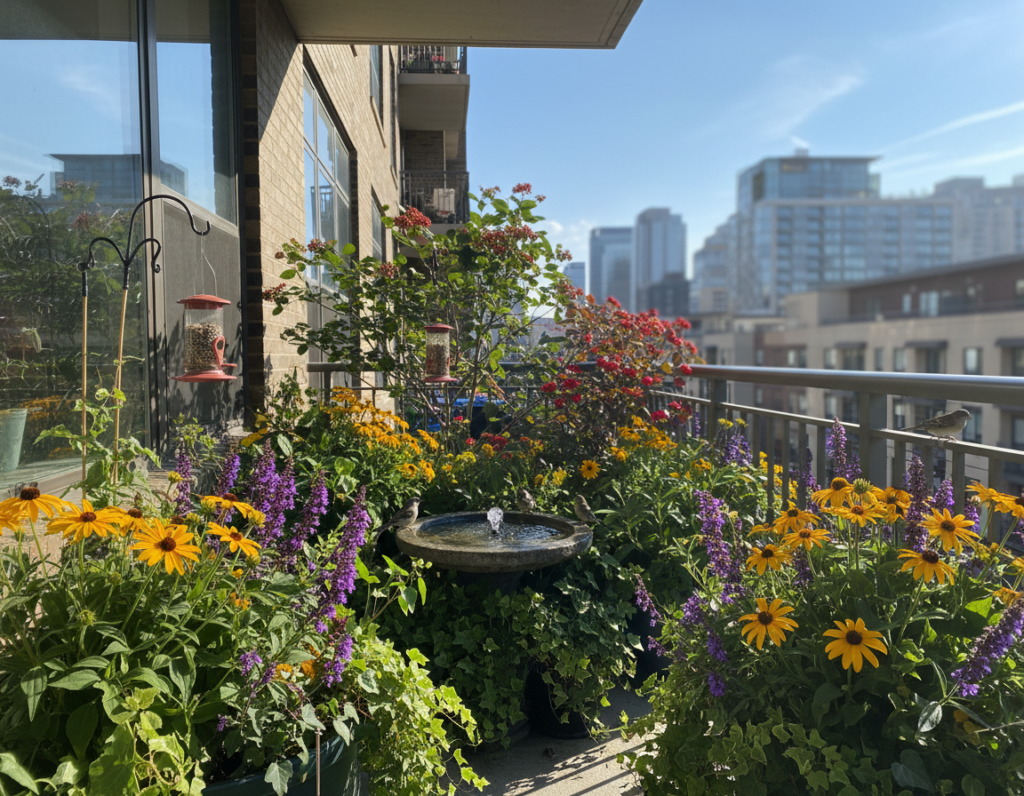
Record sun exposure at different times of day to pick suitable native plants. In the Northeast, Black-eyed Susans and Purple Coneflowers do well. In the Southwest, try Desert Marigold and Penstemon.
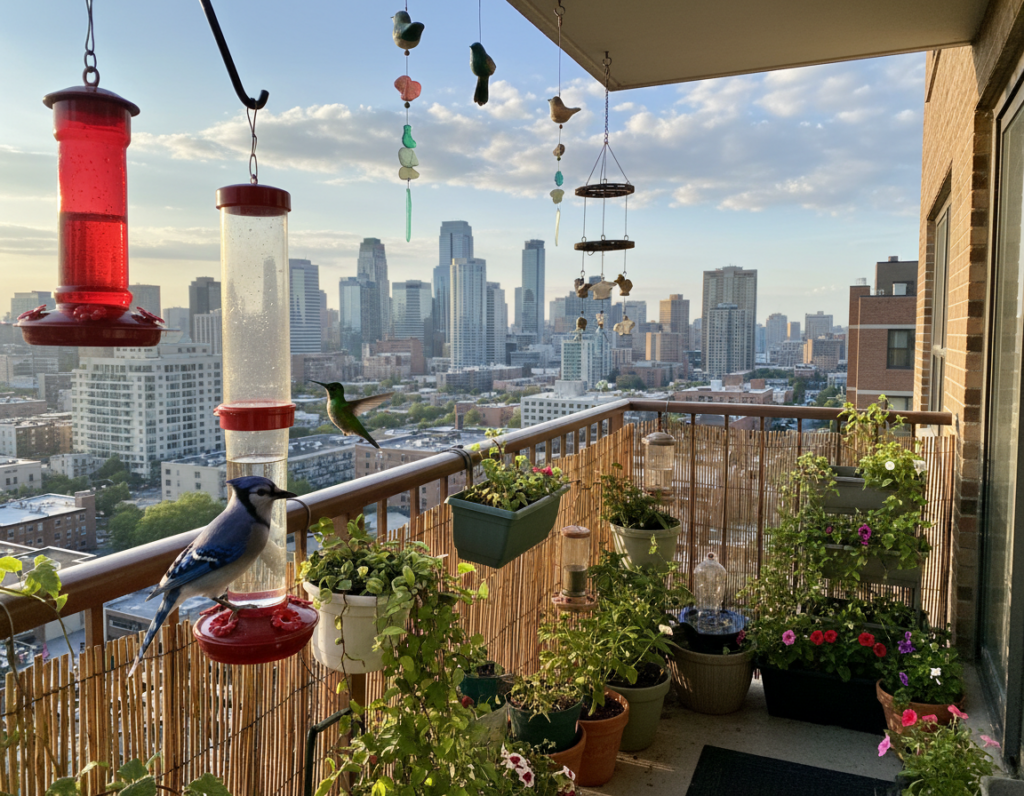
Decide if you need freestanding items or hanging feeders. If railing hooks are banned, freestanding poles, planter stands, and compact water basins save space and still draw attention from local birds.
Checking Building Regulations
Review apartment rules before adding feeders, plants, or hardware. Some complexes restrict screws and external hooks. Following guidelines prevents fines and preserves safety.
- Measure first: confirm the 3×5 slab fits a basin and a feeder pole.
- Watch light: choose plants by sun pattern, not assumption.
- Protect windows: test glass reflections and consider film if collisions are likely.
Designing a Bird-Friendly Balcony Setup for Attracting Birds
Use vertical layers of greenery and perches to turn a tiny outdoor nook into a welcoming urban habitat.
Hanging baskets, trellises, and wall-mounted planters maximize height without crowding the floor. They create safe cover and offer nesting material while saving limited room in an apartment.
Choose a mix of plants that produce seeds or berries and stagger bloom times to supply steady food through the seasons. Place a couple of open perches nearby so visitors can land and scan the area.
- Balance dense foliage with clear perching spots to reduce predator stress.
- Use multiple planter levels to build a layered, lush micro-habitat.
- Select one or two small feeders that fit the décor and local species.
Consistency matters: regular refills and predictable placement make the space a reliable stop. For more design tips and practical how-tos, consult this balcony birdwatching guide.
Selecting Feeders and Water Features
Feeders and water stations should be practical, easy to clean, and placed with intention. Choosing durable, low-maintenance gear helps an apartment host more frequent visits.
Choosing the Right Feeder Types
Pick feeders that resist mold and are simple to sanitize. Models compatible with a 1 part bleach to 9 parts water solution cut disease risk. Offer a mix: tube feeders for seed, a tray for ground-feeding species, and a nectar feeder if hummingbirds are local.
Placement Strategies for Success
Position feeders near plants and perches but away from busy windows. Place a tray beneath any station to catch droppings and spare seed. If using a railing, secure the feeder to prevent accidents in windy conditions.
Providing Essential Water Sources
Provide a shallow dish or small fountain and change the water often to stop algae. Regular refills keep visitors healthy. Smart feeders like Bird Buddy and Netvue’s Birdfy can track who comes and how much time each bird spends at the water and food areas.
Ensuring Safety and Minimizing Mess
Prioritizing hazard reduction and hygiene encourages more frequent, healthy visits from neighborhood fliers. Small, consistent actions keep both people and wildlife safe in a limited outdoor space.
Preventing Window Collisions
Apply specialized film or decals to glass surfaces so flying birds see the barrier. A visible pattern across windows reduces strikes and helps wildlife navigate near the railing.
Keep the area tidy. Remove clutter such as unused tools or bikes so birds can land and hop without fear. A clean floor and clear sightlines make the space feel secure.
- Use a shallow tray beneath feeders to catch debris and limit mess.
- Inspect for sharp edges or loose wires and fasten them to prevent injury.
- Secure planters and decor to the railing so they stay put in strong wind.
“Protecting birds from window strikes is vital to maintaining a safe apartment outdoor space.”
Clean feeders and water sources regularly to lower disease risk. These steps invite more visits while keeping local birds healthy and safe.
Conclusion
With steady care, a compact apartment balcony can become a lively, reliable refuge.
They should choose native plants, a single feeder or two, and a clean water source to supply food and water. Protect windows with visible film or decals and keep feeders clean to reduce disease risk.
Manage space with trays and smart placement to limit mess and keep neighbors content. Start small and remain consistent; patience encourages repeat visits and steady use of seeds and shelter.
Over time, this simple effort will attract birds and turn a tiny outdoor area into a rewarding urban oasis.