Small urban plots can become lifelines when the right choices are made. Douglas Tallamy explains that many backyard bird species raise their young on insects that evolved with local vegetation. A single clutch of Carolina Chickadees may need more than 9,000 caterpillars to feed nestlings through development.
By selecting adapted plants, a gardener can improve food and shelter in limited space. These selections match local soil and climate conditions and support insects that feed young. Check the Audubon list to find species that thrive nearby.
Practical gardening choices create a clear benefit: they provide resources decorative species often lack. With a small, well-planned garden, people can support local wildlife and give each bird a better chance to raise healthy young.
The Ecological Advantage of Native Plants for Balcony Birds
Choosing species that evolved nearby turns a tiny green space into a consistent habitat for pollinators and songsters. This approach supports insects and nectar feeders while also supplying seeds and fruits during colder months.
Keystone species matter. Many of these key shrubs and trees sustain up to 90% of regional butterfly and moth populations and a large share of native bees. That insect base fuels nestlings through spring and summer.
The Role of Keystone Species
Keystone species produce the flowers, leaves, and fruits that keep a local food web intact. Winterberry Holly (Ilex verticillata) is a clear example, offering persistent berries that feed robins, waxwings, and other fruit-eating visitors in winter.
Supporting the Local Food Chain
Integrating these species into a small garden provides shelter, nesting sites, and a reliable food source year-round. Insects like caterpillars, hosted on appropriate vegetation, remain the primary food for growing young.
- Provide summer nectar for hummingbirds and butterflies.
- Offer seeds and fruits that last into winter.
- Ensure shrubs and trees create safe nesting and cover.
For species lists and guidance on choices that work in urban settings, consult Audubon species guidance: Audubon species guidance.
Selecting the Best Native Species for Your Urban Space
Start by matching species to the light, soil, and wind your urban plot actually receives. A quick site survey helps narrow choices that will provide reliable food and cover.
The Ladybird Sunglow Texas Primrose is a good pick in hot, dry city corners because it thrives with little water. This annual brings bright color and attracts pollinators during summer and fall.
Consider shrubs like Arrowwood Viburnum; it offers berries and safe nesting sites. Such trees and shrubs supply seeds and fruits that sustain birds into winter.
Group several species in containers to manage growth across years and create a steady source of nectar for hummingbirds and bees. Bright red flowers, such as cardinal flower, are adapted to hummingbird feeding and help pollinators and butterflies in spring and summer.
- Check a regional list to match soil and light.
- Mix annuals and shrubs for seasonal food and insects.
- Use containers to fit more species into small space.
Essential Container Gardening Techniques for Wildlife
Good container technique turns a small terrace into reliable habitat for local wildlife. This section outlines core steps to make containers support insects and visiting birds over the years.
Assessing Sunlight and Wind
Measure sun exposure across the day and note strong gusts. Place deeper containers where wind is lower to protect flowering stems and nests.
Choose species that match those conditions to reduce stress and watering needs.
Choosing Proper Drainage
Always use containers with drainage holes. Poor drainage causes waterlogging and root rot.
Tip: A 36-inch round pot or a 3×4 foot box fits three plants comfortably and allows roots to spread over years.
Selecting Quality Potting Mix
Use a loose, well-draining mix with organic matter. Good soil holds moisture but sheds excess water.
Containers should be 18–24 inches deep to support long taproots such as Butterfly Weed. This depth gives a stable place for roots to grow and helps the garden provide food and shelter into winter.
- Assess light and wind before placing containers.
- Ensure drainage holes and a premium potting mix.
- Use larger boxes to house multiple species and reduce transplanting over the years.
Creative Solutions for Large Native Plants in Small Spaces
A gardener can repurpose common items to give large trees and shrubs the deep root room they need in tight urban plots.
Repurposed containers make it possible to grow bigger species without a yard. Plastic barrels, old bathtubs, and livestock troughs become deep planters when cut and fitted with holes.
Wooden crates and pallets lined with landscaping fabric create rustic beds that hold quality soil and support roots across years. Elevating troughs on bricks improves drainage and protects soil health.
- Cut barrels vertically or horizontally to create deep, stable containers.
- Elevate tubs or troughs to ensure proper water flow and healthy soil.
- Line crates with fabric to hold soil while saving space in the garden.
These approaches provide nectar for hummingbirds and shelter in spring and summer. They also supply a steady food source for insects and butterflies, which supports local bird life.
Before planting, clean any recycled container and add drainage. For step-by-step sizing and species suited to compact sites, see the patio and balcony guide.
Maintaining a Thriving Habitat Throughout the Seasons
A steady maintenance plan helps a compact habitat continue to feed pollinators and support nesting each year.
Leave seed heads standing through winter to provide food like seeds and fruits. Goldfinches and other songsters use those dry heads as a steady food source when snow arrives.
Regularly check the garden for insects and caterpillars. These insects are the main protein young need in spring and help ensure successful nesting.
“A simple habit—leaving seed heads—can sustain wildlife through harsh months.”
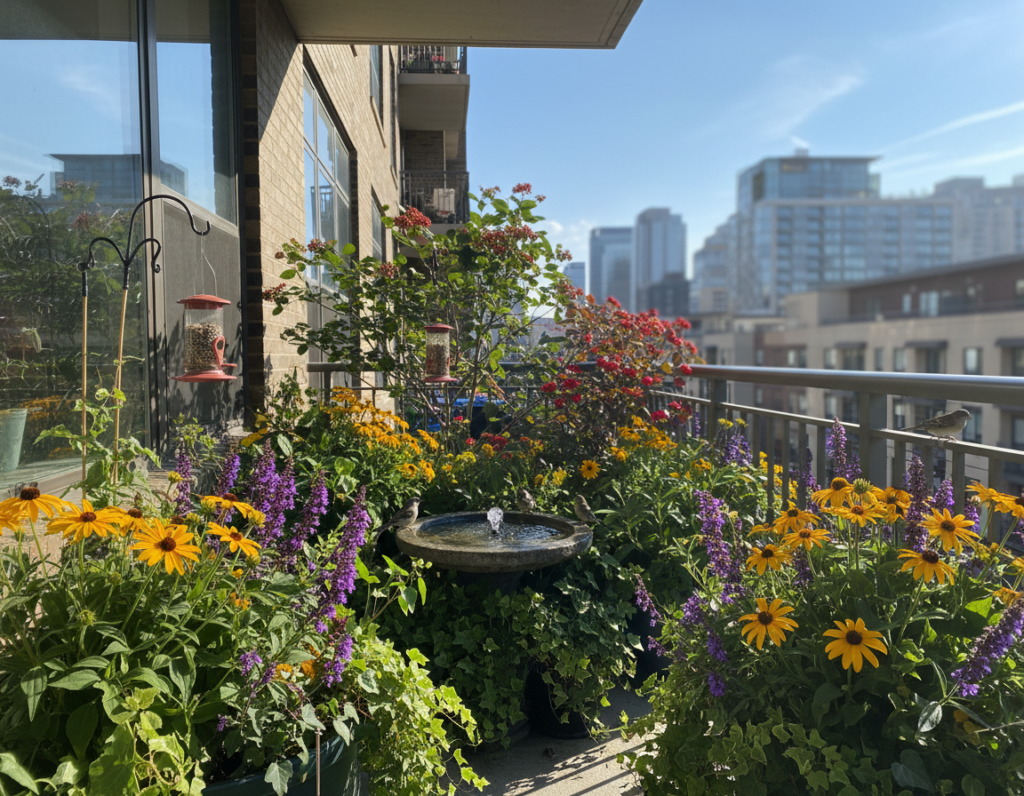
- Keep a shallow dish of clean water during hot summer months to help pollinators and hummingbirds.
- Group species of varying heights to build layered shelter and nesting places through fall and winter.
- Monitor soil moisture and top up compost to maintain healthy roots across years.
By following a seasonal list and giving consistent care, a container landscape will continue to provide food and habitat. Small actions now pay off with more insects, more caterpillars, and a richer place for wildlife to thrive.
Conclusion
Small green plots yield big returns when a gardener picks the right plants and species to support local life. Intentional choices, small containers, and layered planting create steady food and shelter.
Adding a native plant that hosts insects supplies the critical protein young need. With simple care and planning, this approach keeps a productive habitat across years.
Each new addition links a home patch to the wider urban network of wildlife. This way, even compact gardens help sustain more birds and enrich neighborhood biodiversity.