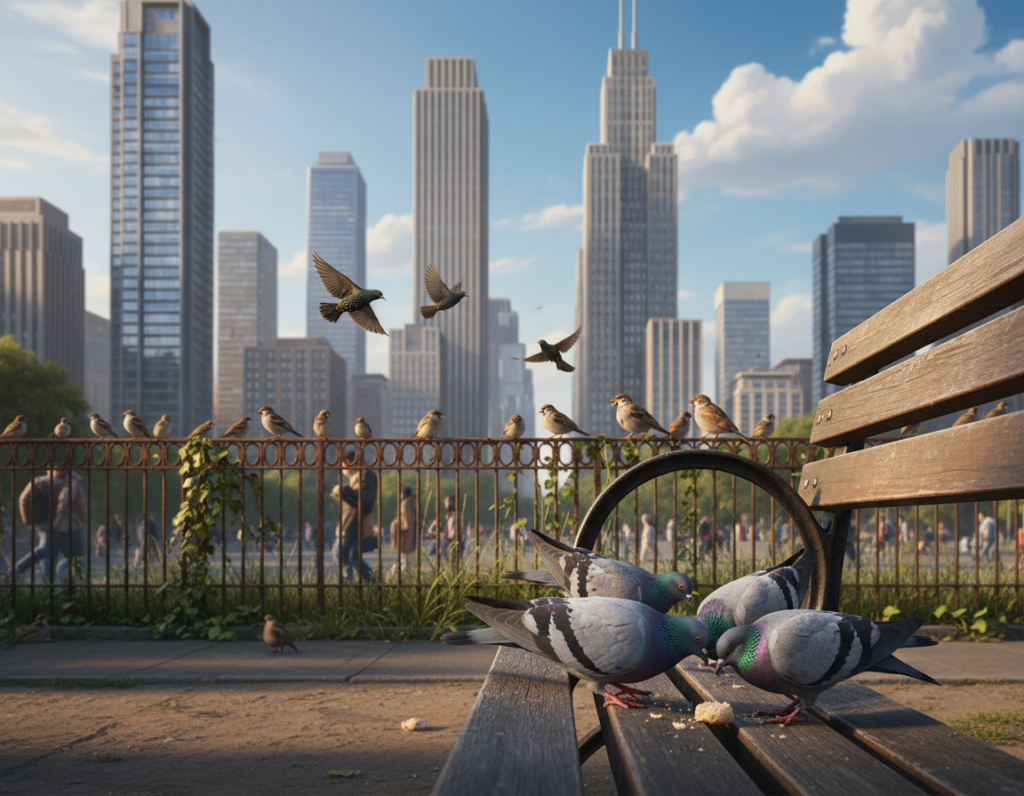
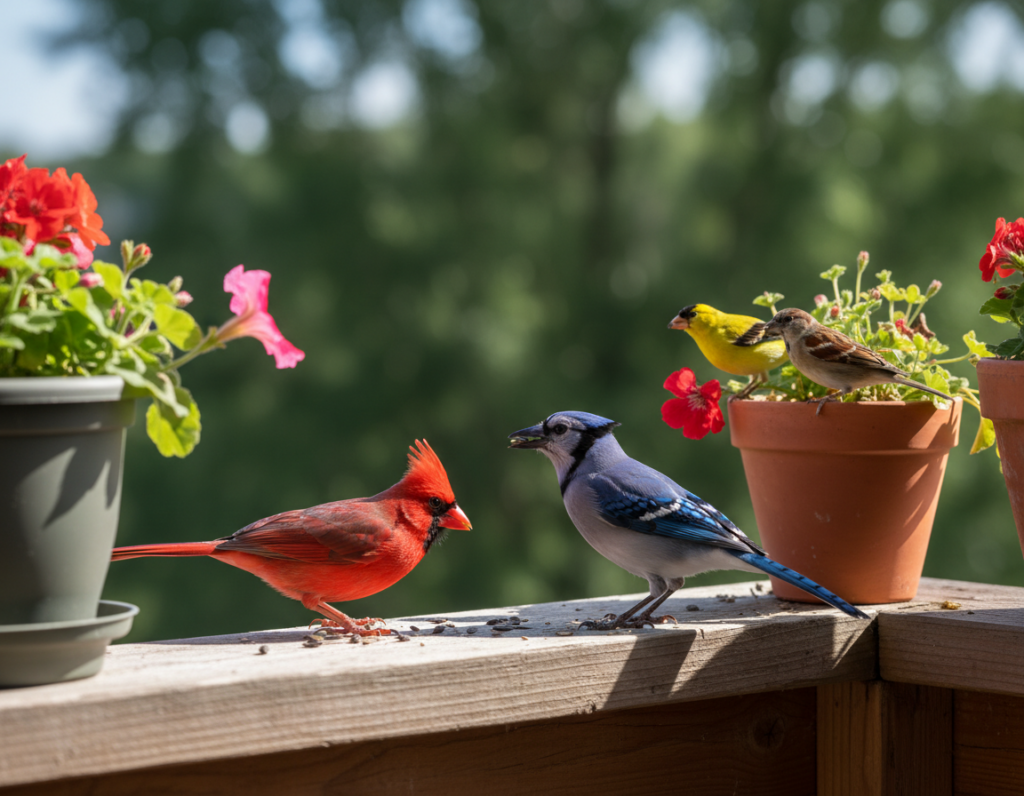
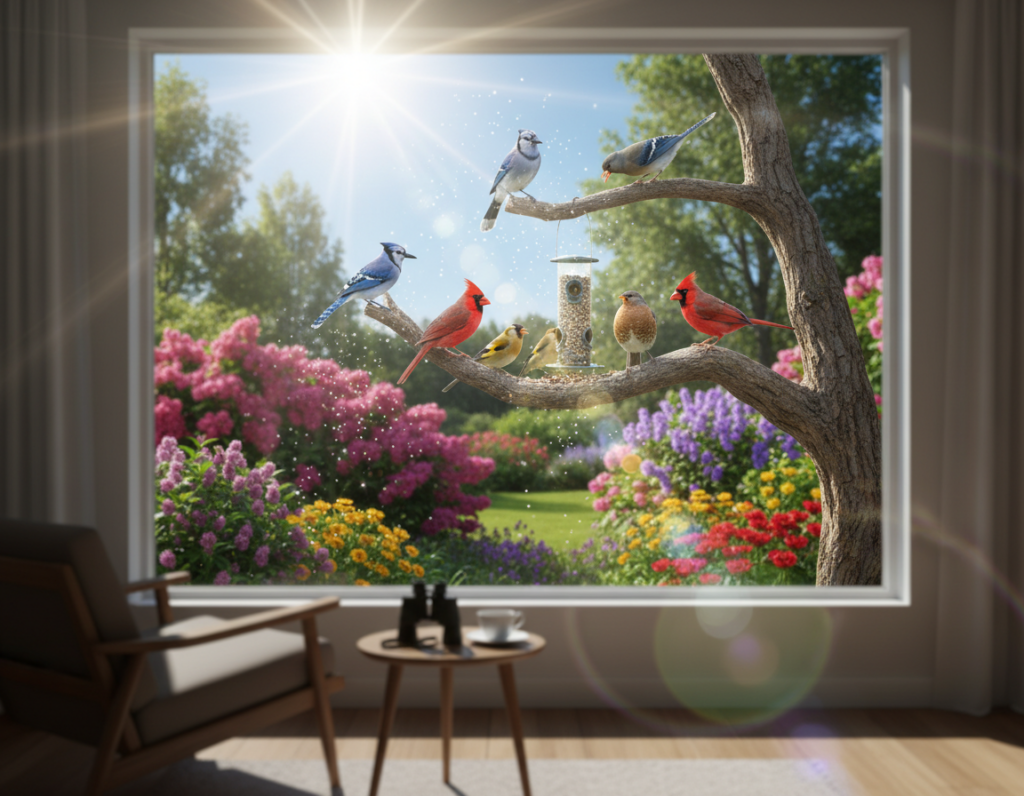
High-rise birding lets residents connect with nature without travel. Many assume one must go to forests, yet urban life offers rich wildlife moments. A simple window view or a small balcony setup can attract species over the years.
Start with a feeder or a container garden that provides water, shelter, and native plants. Respect building rules and talk with neighbors to keep shared spaces safe and welcoming.
Protecting birds from glass is vital. One billion birds die annually from window strikes, so add features that reduce collisions and place feeders near visible markers.
With a camera and patience, a resident can record a photo log and learn local species like hummingbirds and song visitors in nearby trees and sky. Small steps turn a home into a lasting, practical birding spot.
Understanding the Potential of Urban Birding
Urban corners, rooftops, and balconies can form meaningful habitats for local wildlife. The Bird City Network notes that cities already host remarkable diversity, so even a small living space can matter.
Urban birding is the practice of noticing the species that share the city, from sparrows on ledges to raptors on towers. It gives residents a sense of belonging and connection to the wider living world.
You do not need a traditional yard to join this project. A window ledge or balcony planter can attract birds during migration and serve as a vital habitat stopover.
Documenting what visits your home helps science. Citizen notes and photos feed larger projects that track how wildlife adapts to urban life.
- See the city as a living landscape rather than just concrete.
- Simple acts of attracting birds support local biodiversity.
- Starting small often leads to lasting daily discoveries.
Navigating Building Rules and Safety Concerns
Preventing window strikes and following building rules are both simple steps that save lives. Tenants should check written policies before installing feeders on a balcony or ledge. A calm, polite request to a landlord often clears up misunderstandings. If rules restrict feeding, ask for reasons in writing.
Window collisions kill roughly 1,000,000,000 birds in the U.S. each year, so placement matters. Placing a feeder on the glass or within three feet of a window slows impact and cuts strikes.
Use no-waste foods like hulled sunflower seeds to keep a place tidy and reduce seed drop. Regularly clean feeders and water dishes to avoid pests. A clear photo of the setup helps show managers it is safe and well-kept.
Respecting Neighbors and Building Policies
- Confirm building rules about seed mess and rodent risks before adding feeders.
- Keep balconies clean; tidy spaces are more acceptable to neighbors and management.
- If feeders are not allowed, enjoy the view of the sky and nearby trees as a safe alternative.
Preventing Window Collisions
“Add anti-collision decals or silhouettes to glass to help birds see and avoid it.”
Over the years, many residents have negotiated habitat space by demonstrating care and responsibility. Small steps protect wildlife and keep shared spaces pleasant for everyone.
Practical Ways to Observe Birds From Apartment Buildings
Even high floors can host lively visitors when you pick the right feeder and place it well.
Selecting the Right Feeders and Food
Start small. Small feeders keep food fresh and cut waste. Choose nectar feeders for hummingbirds and hulled sunflower seeds to minimize shell mess.
Place a feeder close to a window so a camera can capture clear photos without expensive gear. Emily Voigt proved success with a window-mounted feeder 25 stories up. Lynn P. in Toronto has hosted wildlife on a 21st-floor balcony for 20 years, showing height is not a barrier.
Add plants and water. A few potted plants give cover and a sense of safety. A shallow water dish attracts a lot of activity during migration.
“Small feeders, regular refills, and a little patience turn a home into a lasting habitat.”
- Use nectar for hummingbirds and seeds for other visitors.
- Keep feeders clean and refill each day to build trust over time.
- Record visits with a camera to identify species and track changes across years.
For more tips on turning high-rise spaces into welcoming spots, see these high-rise birding tips.
Creating a High-Rise Habitat With Container Gardens
A compact container garden can turn a balcony into a reliable urban habitat in a few weeks. Grouping pots creates a small refuge that supplies food, cover and privacy.
Choosing Native Plants for Balconies
Native plants offer the best sources of nectar and seed for local bird life. Julie Zickefoose, author of Natural Gardening for Birds, recommends native perennials and shrubs in containers to cope with challenging high-rise conditions.
Use a mix of flowering and seed-producing species. This creates continuous food and attracts hummingbirds and seed-eating visitors across the season.
Providing Water Sources
A shallow saucer or wide bird bath supplies vital water. Keep it clean and refilled each day; regular water boosts visits dramatically.
Tip: A low, stable dish works best on windy balconies and requires little maintenance.
Designing for Privacy and Shelter
Group containers to form visual screening and safe landing spots. Placing plants a short distance away from seating gives visiting birds privacy and encourages longer stays.
“A single empty container can become a tiny shelter or nesting niche for species such as Bewick’s wren.”
- Cluster 3–5 containers of varied height to mimic a yard-like structure.
- Add a red feeder or nectar plants to attract hummingbirds.
- Photograph the finished setup to inspire neighbors and document success.
Result: A well-designed container garden supplies food, water and shelter that help urban wildlife thrive while keeping shared spaces tidy and safe.
Essential Gear and Digital Tools for City Birders
Smart gear and a few apps help city dwellers track patterns and snap clear photos through glass. Start with compact optics; Heather Wolf recommends 8×42 binoculars for a balance of brightness and comfort.
David Lindo’s How to be an Urban Birder is a solid resource for learning where to focus time in a city. A camera with a decent zoom pairs well with binoculars to capture a clear photo without disturbance.
Use Merlin Bird ID to match songs and eBird to log sightings over the years. Keeping a simple notebook records behavior near trees, a balcony, or the view out a window.
- Binoculars: 8×42 recommended.
- Apps: Merlin and eBird for ID and projects.
- Feeding gear: Small feeders and clean water dishes support habitat visits.
“Consistent short sessions each day build a clearer picture of local patterns.”
Conclusion
Consistent care—clean water, fresh seed, and native plants—builds trust and regular visits. A small feeder or a clean tray by the window can create a reliable habitat that attracts attention and learning over time.
By following building rules and respecting neighbors, a resident can safely add feeders, water, and shelter without causing nuisance. These modest steps improve sighting chances and support local wildlife while keeping shared spaces tidy.
Joining citizen science projects helps researchers track urban changes. For practical setup tips and hygiene guidelines on creating a safe feeding place, refer to this safe feeding place. Start small, stay consistent, and enjoy the daily surprises that birding on a balcony or in an apartment can bring.