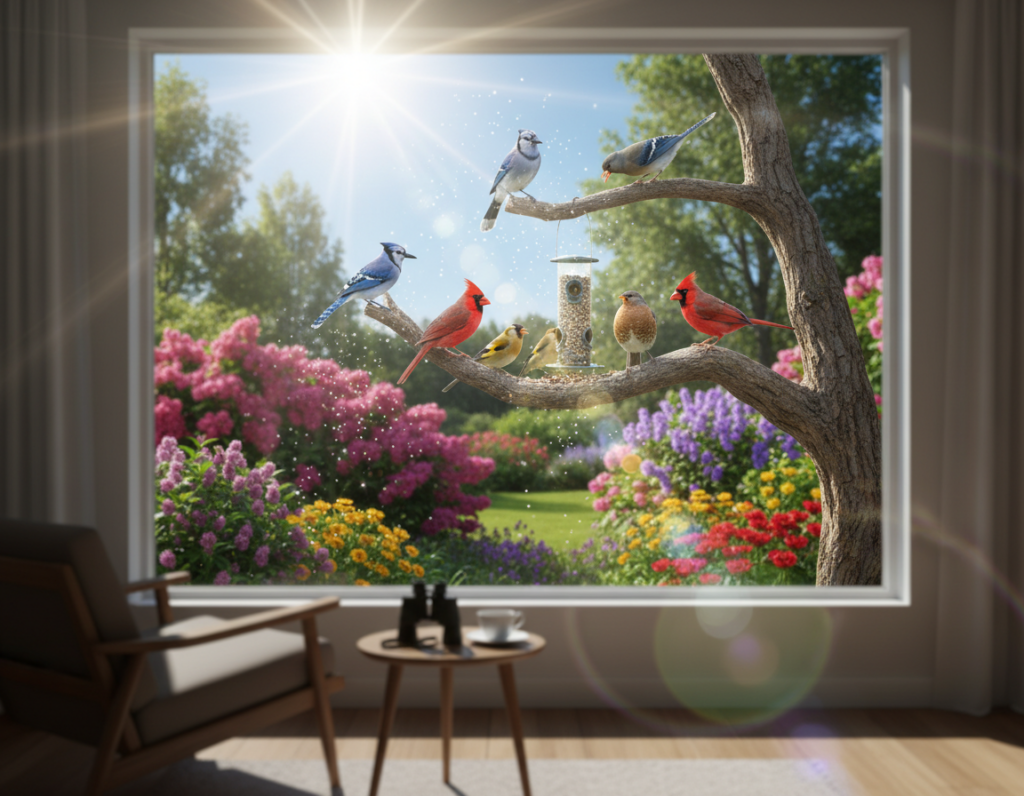
Starting birding from a small balcony can open a surprising window on nature. In just the first week, a person will notice a variety of birds visiting a feeder or windowsill garden.
City spaces support rich habitat. Central Park in New York City hosts 275 different bird species each year, and an average suburban home with a feeder attracts 30 to 50 species over a year.
They will learn simple identification cues such as color, beak features, and flight patterns. Using a basic guide and binoculars helps make those details clear.
Practical steps matter: set up a clean feeder with fresh seed, note active times of day, and keep a small windowsill garden to attract hummingbirds and other ones that seek food or shelter.
Getting Started with Beginner Balcony Birdwatching
Even a compact apartment can host a surprising number of feathered visitors with the right setup. This approach to beginner balcony birdwatching helps people connect with nature without a backyard.
Place feeders where birds can see them from a window and near trees or a house ledge. Use seeds that match local taste; sunflower and millet attract a variety of species.
- Keep feeders visible but safe from predators.
- Offer clean water and small native plants to create shelter.
- Follow simple guides and be patient—birds often scout a new spot before returning regularly.
Start by watching common birds, such as sparrows or finches, to build ID skills. Over time, the regular visits will feel less random and more like neighbors dropping by for a meal.
Essential Gear for Your Urban Oasis
The right gear makes spotting birds from an apartment window much easier. A few targeted tools improve sightlines, help with identification, and keep the small space tidy.
Binoculars for Close-Up Views
Midsize optics matter: investing in 8×40 or 8×42 binoculars balances brightness, field of view, and comfort. They let someone see feather details and behavior without disturbing the birds.
Keep binoculars near a window or windowsill so they are ready when birds visit nearby trees or a feeder. Regular use speeds recognition and makes bird watching more rewarding.
Field Guides and Digital Apps
A reliable field guide—paper or app—helps identify species by markings, song, and habit. Many apps also log sightings and suggest local species based on habitat and season.
- Choose a compact field guide for quick reference at the window.
- Use a bird feeder that attaches to the windowsill to save space and offer quality seed.
- Combine binoculars and apps to track birds and grow the hobby with confidence.
Designing a Bird-Safe Habitat
A few small changes at home can cut the risk of deadly glass strikes for passing birds. Protecting birds from window collisions is vital: researchers estimate building windows kill roughly 1,000,000,000 birds each year in the United States.
Make the window visible by adding anti-collision decals or silhouettes so birds can see the glass. Many find that placing feeders close to the window slows flight and reduces impact force.
Practical Steps to Improve Safety
- Use decals, tape patterns, or external screens to break reflections and signal a barrier.
- Create layered shelter with pots and small trees so species have cover from hawks and other threats.
- Arrange pots at varied heights to add structural complexity and resting spots for birds.
- Keep the area clean; seed debris attracts rodents and harms the habitat over time.
Designing a safe apartment garden is more than adding a feeder. It is a thoughtful way to help local species in the home neighborhood. Before installing feeders, always check building rules to avoid policy conflicts.
For more guidance on setting up feeders and designing a caring backyard space, see the complete backyard birding guide.
Attracting Diverse Species with Food and Water
Consistent food and clean water are the quickest ways to draw birds to a small space. A short routine keeps the habitat healthy and encourages repeat visits week after week.
Selecting the Right Feeders
Choose feeders that match local tastes. Black oil sunflower seed attracts a wide variety of species, while suet brings insect-eating ones in cooler months.
Use a mix of tray and tube feeders to offer options for different birds and reduce crowding.
Maintaining Clean Water Sources
Provide a shallow birdbath and rinse it often. During summer, refresh water daily because mosquito larvae take 7–10 days to hatch in stagnant water.
If many birds visit, add a second dish so all visitors can drink and bathe safely.
Choosing Native Plants for Containers
Plant native flowers and shrubs in pots to supply nectar and shelter. Hummingbirds need fresh nectar that is replaced every few days.
Group pots at varied heights to mimic trees and shrubs. This simple structure helps birds feel secure and raises the variety of species visiting the apartment or house.
- Keep feeders clean; moldy seed can harm birds.
- Offer diverse seed and fresh nectar to attract a wide variety of species.
Developing Your Identification Skills
Noticing small field marks is the fastest way to sharpen identification skills at home. Start by observing color, size, and overall shape of the birds that visit.
Use binoculars to search for key markings, like a cardinal’s red blaze or a goldfinch’s yellow patches. Look at beak shape; a cone-shaped beak often signals a seed eater.
Keep a simple log of sightings at different times and in varied weather. Note which species appear in winter versus spring and how activity changes.
- Compare notes to a field guide or app when unsure.
- Watch behavior at the window and in nearby trees to learn habits.
- Practice regularly; steady observation builds confidence.
Even experts miss some IDs sometimes, so patience matters. With time, the birds that visit your backyard or apartment will feel familiar and distinct.
Contributing to Citizen Science
Logging local species and counts links home observations to national research efforts.
Recording sightings is simple. They can use a notebook or a phone app to note the birds that visit a feeder or window each day.
Recording Observations for Research
Project FeederWatch welcomes data from thousands of backyard volunteers who track birds through the year. Submitting counts helps Cornell Lab scientists follow migration and population trends.
The National Wildlife Federation also offers a Certified Wildlife Habitat program for people who create safe spaces. Certifying an apartment or balcony habitat shows how small areas support urban birds and habitat health.
- Track the variety of species that visit feeders each season.
- Note dates, counts, and features like behavior or seed preference.
- Share findings with community projects to support conservation.
Every entry matters. Consistent records improve scientific models and make birding more rewarding for observers across the country.
Conclusion
Watching morning visits at a windowsill feeder can turn ordinary moments into lessons about local wildlife. Over time, small habits—fresh water, clean feeders, and native pots—make a space inviting for birds and support urban habitat.
Use binoculars and a compact field guide to sharpen identification and keep notes on each visit. These simple actions help someone learn bird behavior and add value to citizen science projects.
Whether on a balcony or in a backyard, this is a reliable way to enjoy nature at home. Bird watching is a rewarding hobby that grows with patience and good guides.