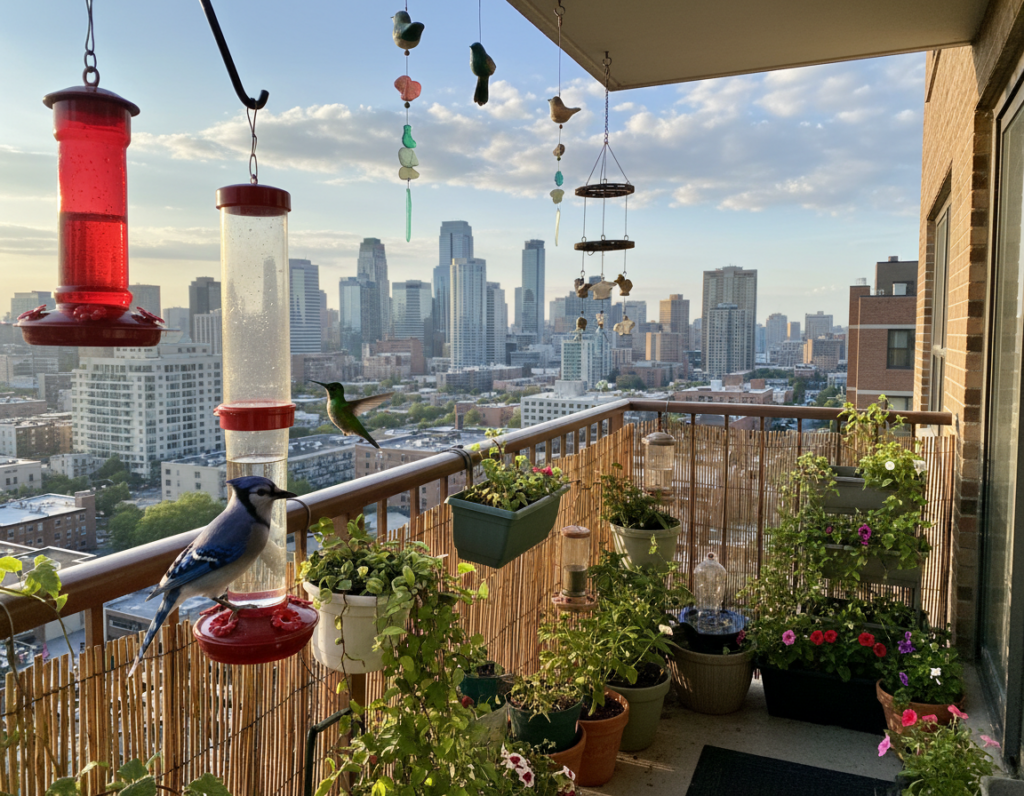
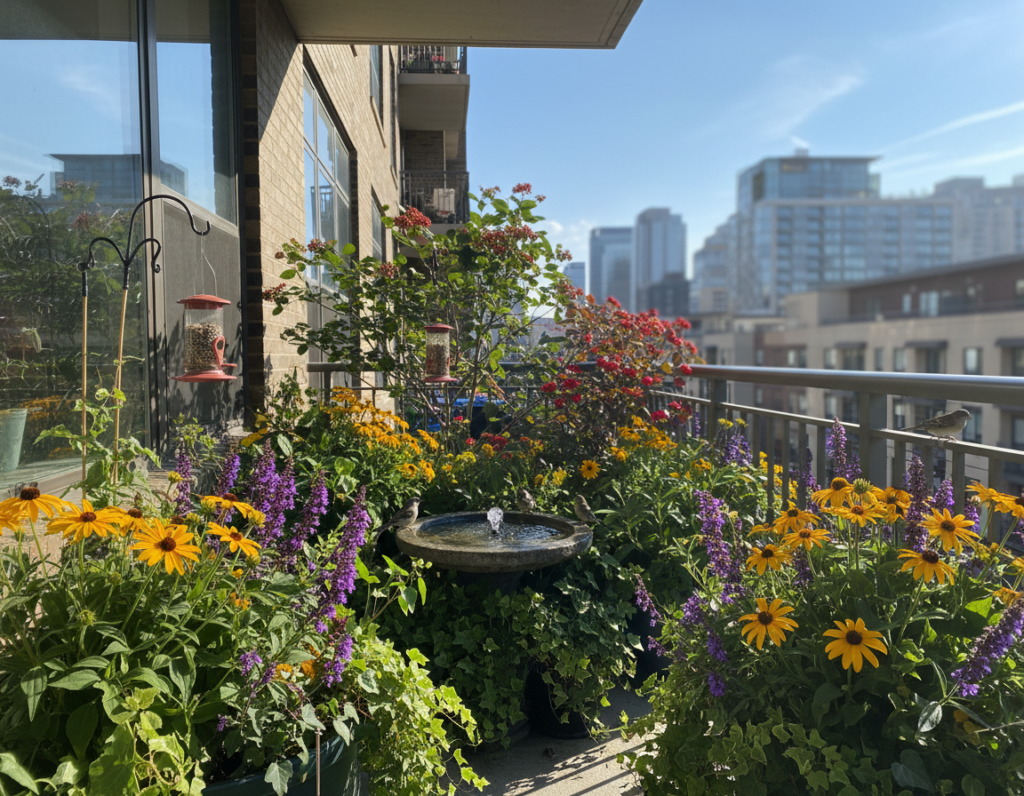
Urban residents can transform a 3×5 slab of concrete into a thriving mini garden that will attract birds and wildlife. With a few well-chosen plants and thoughtful placement, a small space becomes a vibrant refuge.
Providing consistent food and water is key. A reliable water source, clean feeders, and steady food offerings help keep visits regular. Adding nectar sources and native plants supports pollinators and songbirds alike.
People often find that watching bird life from home builds a deeper bond with nature. Observing nesting cycles and local insects gives urban dwellers a sense of place. Such routines also help the health of each bird and the wider ecosystem.
Assessing Your Balcony for Birdwatching Potential
Start by mapping the 3×5 slab to find safe, sunny spots that will attract birds and support plants and feeders. Measure sun angles at different times of the day and note windy corners. This quick survey helps identify the best locations for water and food sources.
Evaluating Space and Layout
Create a layered plan with ground pots, railing planters, and a vertical trellis to maximize limited space. Use a simple sketch to place feeder hooks and a small water dish so songbirds have clear flight paths.
Checking Building Regulations
Always review building rules or HOA guidelines before adding feeders or heavy planters. Confirm weight limits and permitted features to avoid fines or removal.
- Protect exposed edges with windbreaks.
- Choose sturdy feeders and secure pots.
- Be patient—birds often inspect a new yard or balcony for several days before returning regularly.
Designing a Seasonal Balcony Setup for Birds
Organizing pots, feeders, and water by vertical zones helps replicate the shelter and foraging areas birds use in nature.
Layering is essential. Shireen Zia, principal of EcoGardensLandscape Design, recommends matching pot heights to mimic trees, shrubs, and ground cover. This approach gives songbirds places to perch and hide.
Even small containers can form a wildlife garden. Mix tall planters with low pots and a hanging feeder. Add a shallow dish so water is easy to reach.
- Create vertical interest with trellises and tall plants to offer shelter.
- Place feeders near a shrub or taller pot so birds feel safe when they eat.
- Keep food and water consistent; regular refills encourage repeat visits.
- Think of the area as a mini garden or backyard refuge in dense urban yards.
A thoughtful plan turns tight space into a reliable habitat. With layered plants and steady food and water, balconies can support a surprising variety of bird life.
Selecting Native Plants for Year-Round Interest
Selecting local plant species helps a tight outdoor space support nesting and foraging needs.
Native versus ornamental choices
Mary Phillips of the National Wildlife Federation notes native plants supply the exact food web needed for full life cycles. Native flowers, shrubs, and grasses produce the insects and seeds that local species prefer.
Andrew Bunting recommends mixing annuals, perennials, and herbs and using trellises or hanging baskets. Vertical planting increases plant count and creates extra shelter and potential nest sites for songbirds.
Planning for continuous blooms
Plan for overlap: early bloomers, summer nectar sources, and late seedheads. Leave some seedheads through winter so seeds provide food when insects are scarce.
- Choose region-specific options like Black-eyed Susans or Purple Coneflowers in the Northeast.
- Include sunflower or butterfly milkweed to attract pollinators and provide seeds.
- Vary heights to create layered shelter and nesting opportunities across the space.
Providing Essential Water Sources
A shallow, well-kept birdbath makes a big difference in how often birds visit a tiny balcony or urban yard. Water invites drinking and bathing, and a safe depth matters: keep basins at about 2 to 3 inches to prevent drowning and to let small species splash comfortably.
Maintenance keeps water healthy and attractive. Mosquito larvae can hatch in 7 to 10 days, so refresh the basin frequently. Scrub the birdbath with baking soda or a vinegar solution every few days and rinse well to control algae and odor.
Place the birdbath in a shady spot on the balcony to slow evaporation. If visits increase, add a second birdbath to reduce crowding and give a variety of birds room to drink and bathe.
Maintenance and Hygiene Tips
- Depth: 2–3 inches is ideal.
- Cleaning: Scrub with baking soda or vinegar every few days.
- Winter care: Use a birdbath heater to keep liquid water on freezing days.
Implementing Effective Feeding Strategies
Consistent feeders, varied food, and good hygiene make a small outdoor space a dependable stop for songbirds. A clear plan helps birds find food, water, and safe perches across months of changing needs.
Choosing the Right Feeders
Use a mix of feeder types — tube feeders, platform trays, and suet cages — to attract a wider variety of species. Offer nutritious options like black oil sunflower seeds, peanuts, and suet to provide energy through cold and hot months.
Placement and Cleanliness
Place feeders at different heights to reduce collisions and make birds feel secure. Keep locations easy to reach so refilling and cleaning happen reliably.
- Clean feeders weekly with a 1:9 bleach-to-water solution to prevent disease.
- Use trays under feeders to catch falling seeds and limit mold buildup.
- Consider smart feeders like Bird Buddy or Netvue’s Birdfy to monitor activity and learn which foods attract a greater variety.
Tip: For additional tips on small-space birdwatching and feeding locations, see this helpful guide on balcony birdwatching.
Ensuring Safety and Protection for Avian Visitors
Protect the birds by eliminating common hazards that cause injury or stress. Install bird-safe window treatments to prevent collisions and keep glass visible to flying songbirds.
Keep the balcony clear of sharp objects and loose wires that can entangle a bird. Use non-toxic materials for perches, decor, and any sealants so the garden stays healthy.
Provide shelter with dense plants, nest boxes, or small refuges. These options give birds places to hide from predators and to rest between visits for food or bathing.
- Move feeders and water away from spots where cats or raptors can hide.
- Inspect the area after storms to remove fallen debris or damaged pots.
- Secure heavy pots and keep ground-level hazards trimmed and tidy.
Regular checks and careful placement help encourage nesting and repeated visits. For additional protection ideas, see recommended netting and protection options at netting and protection options.
Engaging with the Local Birdwatching Community
Joining local birdwatching groups opens practical ways to learn and share sightings from a small urban space. Neighbors and club members offer tips on plants, feeders, and shelter that work in similar microclimates.
Participating in citizen science provides direct impact. Projects like eBird and Project FeederWatch let observers submit counts that help track migration and population trends.
Local Audubon chapters often run guided walks and workshops. These events teach ID skills and safe practices for encouraging nesting and healthy insect communities.
- Share photos of a balcony garden on social media to inspire others.
- Record observations regularly; data supports conservation measures.
- Swap practical tips on feeders and plant choices with fellow enthusiasts.
Small efforts add up. Each recorded sighting strengthens a network of green corridors that sustain birds across seasons and life stages.
Conclusion
A compact outdoor space can host a surprising variety of species when it supplies steady food, clean water, and simple shelter. Thoughtful plant choices and consistent care help attract birds and create a healthy, livable patch on urban balconies.
Regular tasks—refreshing water, cleaning a feeder, and leaving seedheads—pay off over time. These habits support nesting, draw a greater variety of birds through summer and winter, and let neighbors enjoy a small garden or backyard refuge. Start with one reliable water source and one feeder and build from there; every small effort helps local wildlife thrive.