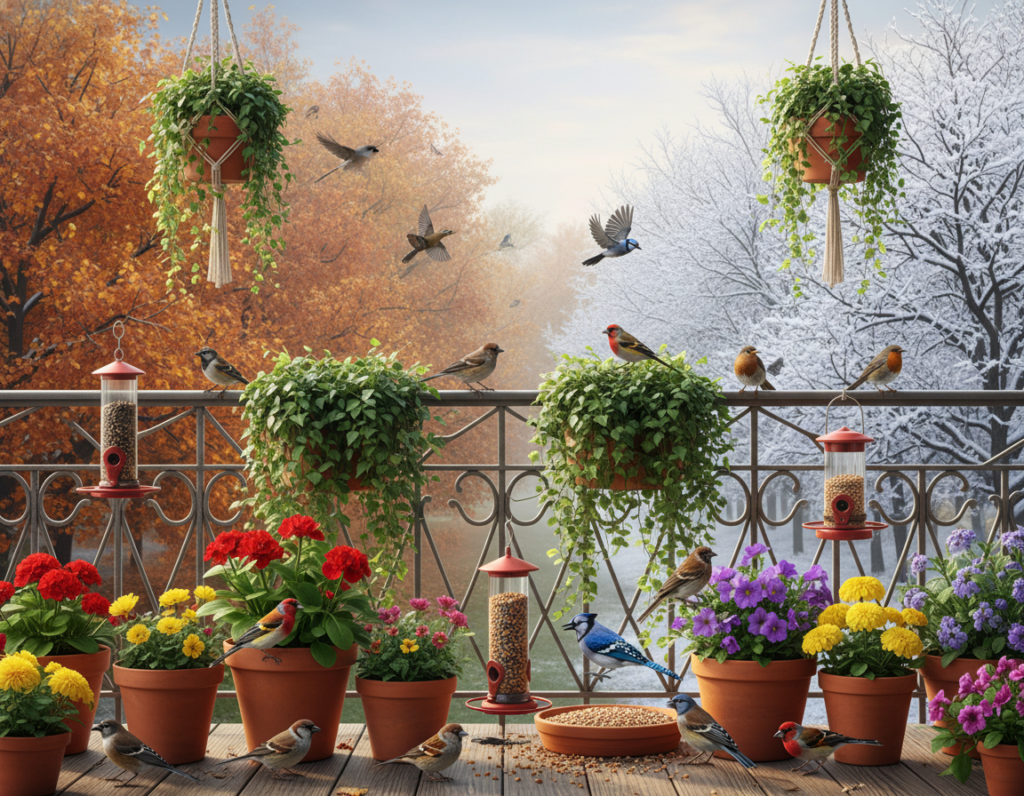
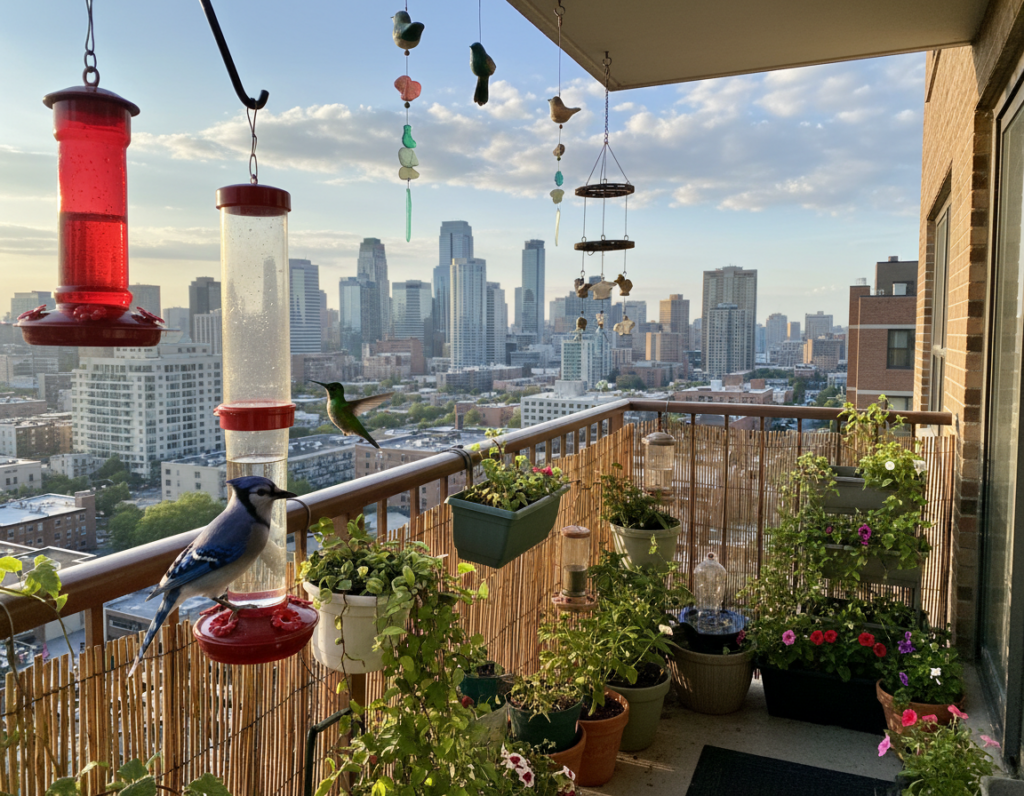
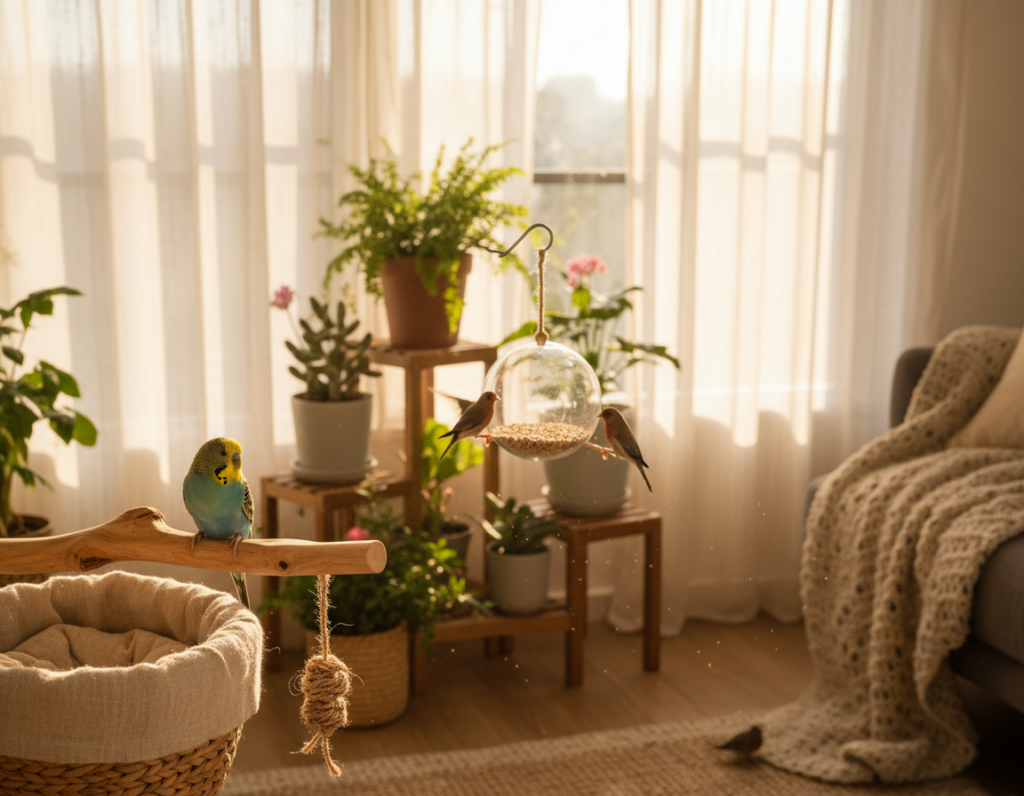
Apartment residents can create lively, small-scale habitats with thoughtful choices. Using native species and a mix of flowers, shrubs, and small trees helps provide nectar, seeds, and shelter through spring, summer, and into fall.
Audubon’s native plants database and experts like Douglas Tallamy show why local vegetation matters. Native varieties support the insect life that serves as a key food source for many species. This link between insects and wildlife is vital for a working food chain near home.
Simple combinations—purple coneflower, black-eyed susan, lonicera sempervirens, and a leafy shrub—fit well in containers or window boxes. They supply blooms that feed hummingbirds and butterflies, seeds for goldfinches and cardinals, and cover for nuthatches and titmice.
With the right soil, light, and a steady water source, even a small balcony can become a dependable landscape for seasonal wildlife. Careful selection keeps the habitat robust through early summer and into winter.
Why Native Plants Are Essential for Urban Wildlife
Native selections form the backbone of a living food web near homes. They evolved with local insects and provide the exact nutrients many species need during breeding seasons.
Insects power bird diets. Douglas Tallamy documented that a single Carolina Chickadee clutch needs over 9,000 caterpillars to fledge. This sheer demand shows why insect-rich plantings matter in spring and early summer.
The Role of Insects in Bird Diets
Native vegetation hosts pollinators and caterpillars which feed fledglings and adults. Research shows yards with roughly 70% native coverage offer far more food source for breeding than non-native mixes.
Creating a Natural Food Chain
Dense native trees and shrub layers supply shelter, nesting structure, and seeds into fall and winter. A 2017 study in Biological Conservation linked non-native yards to higher nest failure rates.
- Choose varied native flowers and foliage to support bees and butterflies.
- Include trees and shrubs for shelter and seasonal nectar.
- Learn why native plants matter to local wildlife.
“A diverse native landscape provides the reliable resources birds need year-round.”
Selecting Plants That Attract Urban Birds
Begin with a quick site survey: note sun exposure, wind, and container space. Marla Coppolino at the Cornell Lab of Ornithology advises matching choices to your USDA hardiness zone before buying.
Use the Audubon native plants database to generate a zip-code specific list of species. This helps pick flowers and trees that supply nectar, seeds, and insect food through spring, summer, and into fall.
Check drainage in each container. Good drainage prevents waterlogged soil and keeps roots healthy during wet spells.
Choose a mix of bloom times so blooms attract visitors from early spring to early summer and beyond. Group dense patches to create shelter; songbirds like goldfinches and cardinals use cover while foraging.
- Assess sun vs. shade for each planter.
- Prioritize native species for insect support.
- Observe which species visit and refine your selections.
“Local knowledge and gradual adjustments build a reliable source of food and shelter at home.”
Vibrant Flowering Perennials for Your Window Garden
Choose native, long-blooming perennials to provide nectar, seeds, and soft fibers for nesting. These species work well in containers and supply steady food and shelter from early spring through fall.
Purple Coneflowers for Fall Seeds
Echinacea purpurea and E. pallida offer long-lasting blooms that attract butterflies and bees. In late summer they form seed heads loved by goldfinches and other seed-eating species.
Sunflowers for Migratory Fuel
Native sunflowers such as Helianthus angustifolius produce bulk seeds that serve as a high-energy source for migrating birds. Tall varieties also add vertical interest near windows.
Milkweed for Nesting Materials
Asclepias tuberosa and A. incarnata draw insects and create downy seed fibers. Goldfinches often use these fibers to line nests during the breeding season.
- Mix coneflowers with black-eyed susan for continuous summer blooms.
- Leave seed heads through winter to sustain wildlife when other food is scarce.
- Use well-draining soil and full sun sites for best container performance.
“A small mix of perennials delivers big returns: nectar for hummingbirds, seeds for finches, and shelter for nesting.”
Climbing Vines to Provide Shelter and Nectar
Vines on a trellis provide vertical shelter and steady nectar sources in a small space. They give cover for visiting birds and create safe routes for movement between perches.
Lonicera sempervirens, or trumpet honeysuckle, has bright red tubular flowers made for hummingbirds. Baltimore Orioles also sip its nectar during migration. Native vines like this out-perform invasive alternatives in supporting local species and insects.
Virginia creeper (Parthenocissus quinquefolia) adds seasonal value by producing berries. Those fruits feed nuthatches, mockingbirds, and woodpeckers through fall and winter when seeds are scarce.
- Choose native climbers for nectar-rich blooms and winter fruit.
- Provide sturdy supports and well-draining soil for vigorous growth.
- Mix vine varieties to supply nectar in spring and seeds into fall.
“Climbing varieties maximize vertical space while offering food and shelter to nearby wildlife.”
Hardy Shrubs for Year-Round Bird Activity
A small group of berry-producing shrubs supplies seasonal fruit and safe perches near windows.
Choose species that offer spring nesting cover and fall or winter fruit. These shrubs give both shelter and food, supporting local species across months.
Selecting Berry-Producing Varieties
Cephalanthus occidentalis (buttonbush) provides unique flowers that draw pollinators and later seeds for waterfowl. It works well in moist containers or near planters with good soil.
Sambucus canadensis (elderberry) produces dark blue fruits favored by the Brown Thrasher and Red-eyed Vireo. Aronia arbutifolia (red chokeberry) holds bright red berries into fall and early winter.
Ilex verticillata (winterberry) displays brilliant red fruit through winter, making it a top choice for late-season feeding. Together, these shrubs extend food availability from summer blooms to winter berries.
- Shelter and nesting: Dense foliage creates safe spring nesting spots.
- Seasonal food: Mix species so some yield fruit in fall while others persist into winter.
- Adaptable: Many natives tolerate varied soil and perform in containers on balconies.
“Selecting a mix of berry-producing shrubs ensures steady food and shelter for local wildlife year-round.”
Native Trees That Support Local Bird Populations
Keystone trees like Quercus host large numbers of caterpillars and other insects. These food sources are vital for nestlings during spring and early summer.
Flowering dogwoods (Cornus florida and C. nuttallii) supply showy spring blooms and fleshy fruit in fall. Cardinals, titmice, and bluebirds commonly feed on those fruits as migration and cold months approach.
Even apartment dwellers can add small native trees. Dwarf varieties in large containers provide shelter, seeds, and the crooks needed for cavity nesting.
- Food web support: Oaks produce acorns and host insects used by many species.
- Seasonal value: Dogwoods offer blooms in spring and fruit in fall.
- Structural benefits: Native trees create nesting sites and windbreaks for balcony gardens.
“Choosing trees native to a region times resources to local life cycles and boosts biodiversity for years.”
Seasonal Strategies for Sustaining Bird Interest
Plan a year-long sequence of bloom, fruit, and seed so a balcony habitat never runs dry. A clear seasonal plan ensures steady food and shelter from spring through winter.
Spring Blooms for Early Feeders
Early flowers such as redbud and dogwood provide nectar for hummingbirds and fuel for emergent insects. These resources are critical as migrants return and local species begin nesting.
Include a mix of fast-blooming flower varieties and longer-lasting perennials like black-eyed susan to support pollinators and fledglings.
Winter Berries for Cold Months
Shrubs like winterberry and hawthorn hold fruit into the cold season, offering life-saving food for robins and mockingbirds. New England asters and seed-producing perennials supply seeds that nuthatches and cardinals use in late fall and winter.
- Plant for all four seasons to maintain steady food and cover.
- Set fall plantings when soil is warm so roots establish before winter.
- Monitor which species visit and adjust selections annually.
“Research shows native coverage raises richness and abundance during nonbreeding months.”
Practical Tips for Apartment Container Gardening
Apartment balconies can become rich wildlife corners with a few well-placed containers. Grouping pots near a window helps people observe visiting birds as they forage for nectar and seeds.
Choose containers and soil carefully. Use roomy pots and high-quality, well-draining soil to keep native plants healthy through spring and summer. Proper drainage prevents root rot and supports steady blooms.
Create dense patches by placing like species together. This gives song visitors the cover they prefer and makes small species feel safe while feeding or nesting.
- Place pots close to windows or seating areas for better viewing.
- Deadhead spent flowers to prolong blooms and feed hummingbirds and butterflies longer.
- Monitor water and nutrients regularly; potted setups dry faster than ground beds.
“Even a modest set of well-tended containers can supply food, shelter, and nesting material for local wildlife.”
Small additions—a shallow birdbath or a tiny stake for perching—can increase visits. With thoughtful choices, even limited space supports diverse species through fall and beyond.
Conclusion
A small window plot can grow into a dependable refuge for local wildlife with a few thoughtful choices.
By selecting native plants that provide nectar, seeds, and shelter, an apartment gardener supports seasonal visits from hummingbirds, butterflies, and bees. Simple mixes of flowers, shrubs, and small trees keep a space lively from spring through summer and into fall.
Research shows native vegetation boosts local richness and abundance. For a practical starting list, explore recommended native plants that feed our birds and match species to your USDA zone.
Every small effort—from one window box to a set of balcony planters—adds to a wider network of support and daily delight.