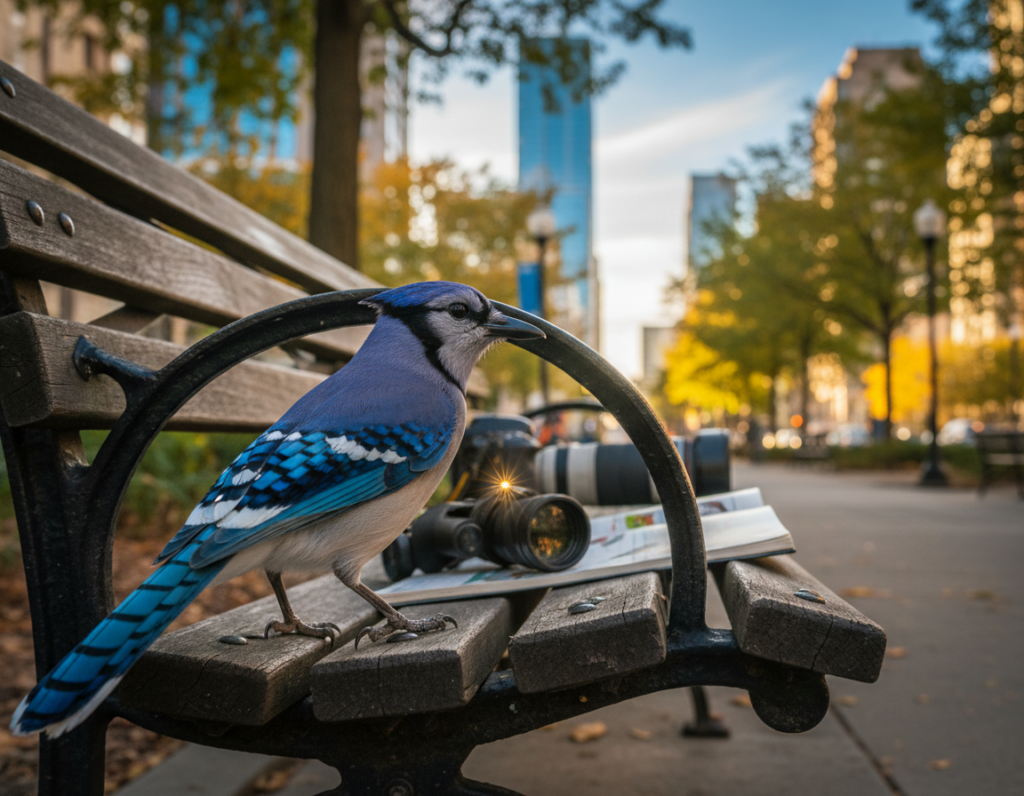
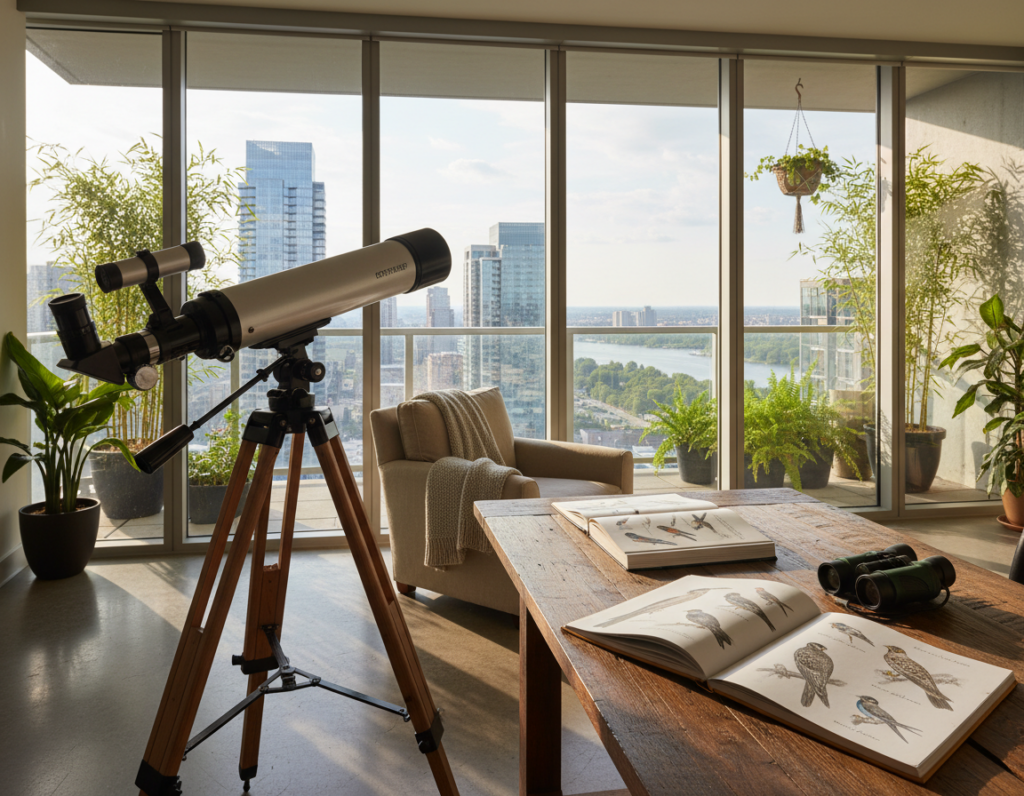
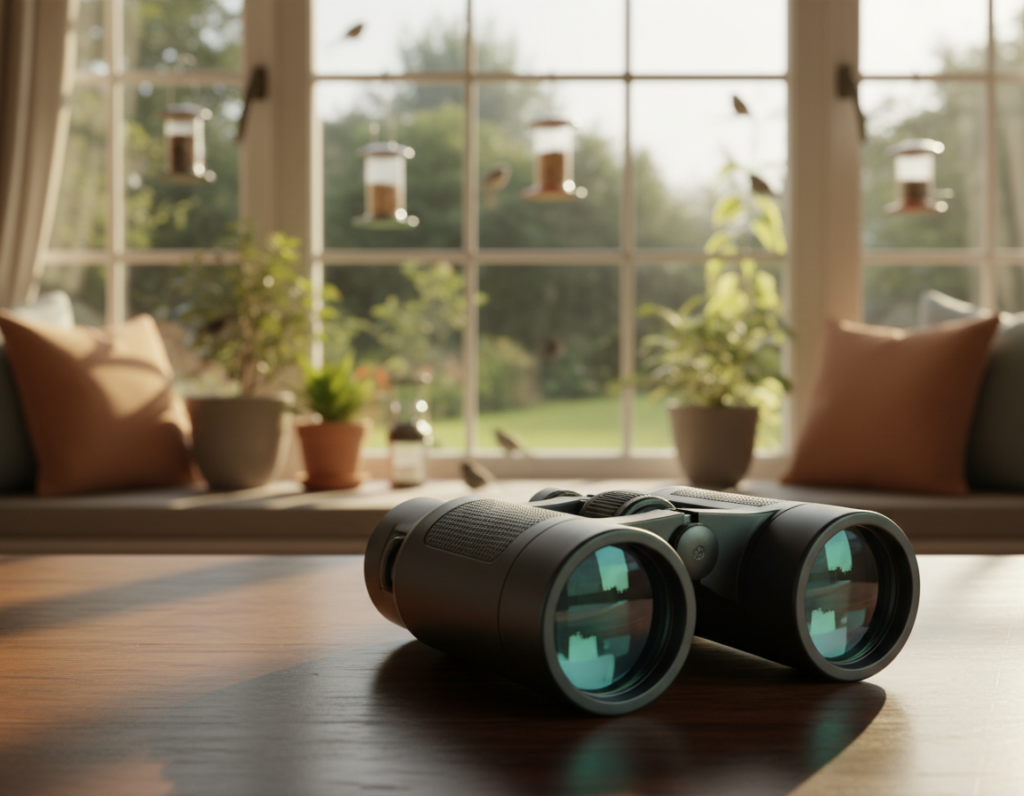
This guide helps apartment birders choose the right pair of optics to spot birds from a balcony or window. It explains how magnification, objective size, and the field of view change what the eyes see in an urban skyline.
When he or she birding from a high-rise, weight and size affect how long they can hold steady. The right pair binoculars balances magnification with a wide view so tracking fast birds is easier.
Readers learn which specifications matter most and how glasses, eye relief, and focus speed influence comfort. This short introduction sets the stage for a clear, practical comparison of pocket options and larger models, aimed at urban birders who want confident, consistent sightings.
Understanding Binocular Specifications for Urban Birding
Choosing the right specs makes a big difference when scanning rooftops and treelines from an apartment window. A quick read of numbers and terms helps a person match a model to their light and range needs.
Decoding Magnification and Objective Lenses
The first number in a reading like 8×42 shows magnification; the second is the objective lens diameter in millimeters. Common setups include 8×42 and 10×32, while 42mm is typical of larger units and 32mm or 25mm indicate smaller lenses.
The Importance of Light and Coatings
Objective lens size ties directly to light transmission, a key factor at dawn and dusk. High-quality optical coatings boost image contrast and reduce glare, helping urban birders get clearer views in mixed lighting.
- 2019 test note: At the 2019 Audubon Convention in Milwaukee, experts evaluated nearly 50 pairs to compare magnification and lens size effects.
- Eye relief: Adequate relief keeps the entire field view visible for those who wear glasses.
- Balance: Selecting a pair involves weighing magnification against physical size, image quality, and price.
For a deeper primer on choosing the right unit, see how to choose binoculars, which expands on specifications and practical trade-offs.
Comparing Compact vs Full-Size Binoculars for Birdwatching
Over recent years, glass and coatings have narrowed the performance gap between smaller and larger units. Manufacturers improved lens quality, making many pocket models a realistic option for city use.
The second number in a model name reveals the objective lens diameter and helps identify a 32mm or 42mm design. That number predicts light-gathering ability and exit pupil size, which matters at dawn and dusk.
Full-size gear often delivers a brighter image, a wider field, and easier focus adjustments. Those advantages help birders track fast-moving birds and see subtle plumage details.
“A larger objective lens usually equals better low-light performance,” experts say.
- Weight vs. performance: Heavier pairs offer better eye relief and steady focus, but they tire the arms faster.
- Portability: Pocket models win on carry ease and quick access, though they may struggle in poor light.
- Choose by conditions: Match the kind of optics to typical viewing range, light, and how often they use a pair.
The Case for Full-Size Optics in Apartment Settings
A fixed perch like a balcony shifts priorities toward image clarity over extreme portability. In many apartment settings, greater light capture and contrast improve sightings at dawn and dusk.
Balancing Weight and Image Quality
Objective lenses around 42mm collect more light, producing brighter images and better detail at longer range. That extra half-pound in weight often yields a noticeable jump in image quality and field contrast.
Modern models use lighter materials to keep size weight reasonable. Large eyecups block stray light and boost comfort for those who wear glasses.
- Coatings and phase correction: improve sharpness and color rendition.
- Stable viewing: when staying at a window or rail, extra mass reduces shake.
- Investment: quality optics often pay back in consistent detail and longer useful life.
“A slightly heavier pair often delivers clearer, more reliable views during low-light conditions.”
Evaluating Compact Models for Portability and Ease
A portable design can make daily observation easier, but it also shifts which optical limits matter most. This section looks at how weight, field, and exit pupil trade-offs affect apartment birders.
Benefits of Lightweight Design
Lightweight models reduce neck and arm strain during long sessions on a balcony or at a window. A lighter pair encourages more frequent use and faster position changes.
Premium pocket options like the Zeiss Victory Pocket 8×25 give excellent adjustability and hold up well over years of use. That quality often comes with a higher price but better overall image and coatings.
Managing Field of View
Smaller objective lenses narrow the available field. That means users must be steadier with focus and tracking to keep a bird in view.
- Practice quick refocusing to reduce missed sightings.
- Choose models with wider apparent angle when possible to increase margin for error.
- Good eye relief helps align the eyes and improve the perceived field.
Addressing Exit Pupil Limitations
The narrower exit pupil in pocket designs can create a tunnel-like view in low light. This is most visible at dawn and dusk when light is limited.
Tip: Match magnification and objective lens size to typical range and light to avoid frustrating views.
“A lighter pair reduces fatigue, but not all lightweight models match full-size image quality.”
Selecting the Right Pair for Your Viewing Environment
Assessing sunlight, sightlines, and typical viewing distances helps narrow which optics will work best on a balcony.
Match needs to light and range. If the space is shaded at dusk, larger lenses and higher light-gathering power matter. In bright rooftop settings, lighter weight and a wider field view can be enough.
Budget-minded birders often choose smaller, pocket options to keep a spare pair near a window. Those models can deliver excellent image quality when they include quality coatings and phase-corrected prisms.
Comfort and handling decide daily use. A heavier pair may give finer detail, but the pair that feels steady in the hand will yield better sightings over time.
“The best pair is the one they actually use—balanced between weight, image, and price.”
- Choose by common viewing distance and light.
- Prioritize eye relief if glasses are worn.
- Keep a pocket pair accessible for quick sightings and a larger pair for extended sessions.
Conclusion
A. Urban observers often decide between portability and a brighter, steadier view when selecting optics.
Choosing between a lightweight pair and a heavier, higher-performing option depends on daily habits and typical light. The right selection balances magnification, objective lenses, and a forgiving field to match each viewing spot.
Full-size models still lead in low-light detail, while compact binoculars have improved and suit quick checks and easy storage. This guide showed how to match specs to an apartment setup and comfort needs.
By weighing these factors, a person can pick a pair that enhances city birding for years. See the detailed compact vs full-size guide for in-depth comparisons of models and use cases.