Capturing clear images from home is more accessible than many expect. This introduction explains how to use everyday gear and smart technique to get crisp results. It focuses on practical steps anyone can follow.
Enthusiasts often assume that exceptional bird photography needs costly lenses. In reality, understanding camera settings, light direction, and placement near the glass makes a big difference. They can reduce reflections and boost clarity with small adjustments.
Practical tips include choosing the right light, steadying the camera, and positioning the subject close to the window. These methods help birds appear detailed and lifelike in images. For more on using window light effectively, see this indoor natural light guide.
By applying these easy steps, any hobbyist can improve their photos with existing gear. The following sections break down each technique so readers can start shooting sharper results today.
Essential Gear for Sharp Bird Photos Through Windows
Choosing the right gear makes all the difference when photographing wildlife from home. This short guide outlines practical items that improve image quality and consistency.
Choosing the Right Lens
Prime and telephoto options influence reach and clarity. A Canon 7D Mark II paired with a 600mm f/4 IS II locks onto fast-moving subjects and delivers tight framing for distant birds.
Beginners can get excellent value from a Sigma 150-500 zoom. It gives flexible focal length without the cost of pro prime lenses. Consider aperture: a wider aperture helps in low light and isolates the subject from background distractions.
Stability Support
Keeping the camera steady is essential. A Gitzo tripod provides the rigidity needed when the rig sits near a glass frame. Stability reduces blur and lets the lens perform at its best.
- Quality zoom lenses offer framing flexibility for unpredictable movement.
- Sturdy support keeps long focal lengths usable for clear shots.
- Proper setup is the foundation of reliable bird photography from home.
Mastering Camera Settings for Sharp Bird Photos Through Windows
Precise exposure and focus choices let home photographers capture clearer wildlife without buying high-end gear. Start with a baseline of 1/125s at f/8 to keep detail and maintain depth of field when shooting near glass.
Use a fast shutter when the subject moves. Increasing shutter speed reduces motion blur and improves the chance of crisp images. If light is low, raise ISO cautiously to preserve detail.
Set a single focus point on the bird eye to build connection and ensure the most important area is tack sharp. For birds flight, switch to continuous autofocus so the camera tracks the subject across different distances.
- Confirm exposure with a quick test shot and adjust shutter or ISO.
- Use a lens known for consistent focus at various meters of distance.
- Pick a spot to place the focus point and recompose only after locking focus.
Overcoming Glass Obstructions and Reflections
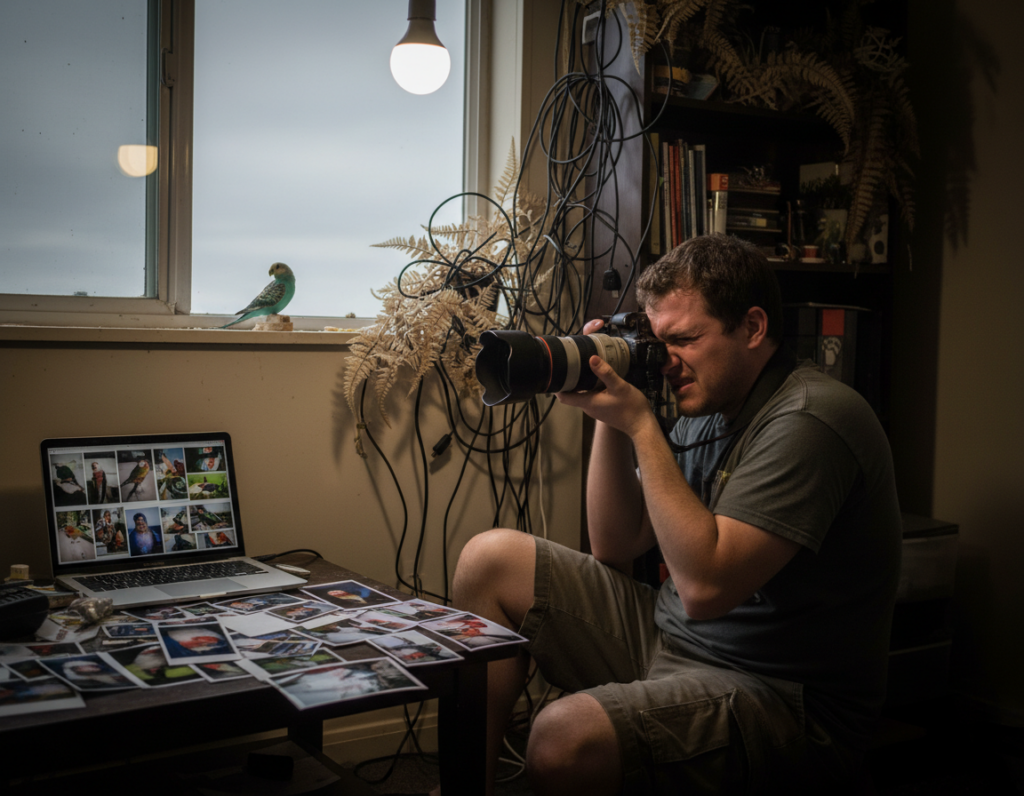
A simple change in angle or a bit of light control can eliminate most glare and restore contrast to your images. Small adjustments let the photographer capture clearer shots of nearby birds from an apartment.
Minimizing Reflections
Block interior light. Close curtains, turn off lamps, and wear dark clothing when shooting. Anything bright behind the camera will show up as a reflection on the glass.
Bring the lens flush to the glass or use a rubber eyecup to seal gaps. This prevents double images and helps the autofocus lock on the bird eye.
- Align the lens parallel to the glass to reduce distortion during birds flight.
- Set a single focus point on the subject’s eye for compelling wildlife photography.
- Use a small beanbag or tripod for steady shots and consistent focus when the bird moves.
Practice these techniques often. Repeating them improves timing, reduces reflections, and raises the quality of images taken from an apartment window. Over time, the photographer will get cleaner shots that rival outdoor setups.
Utilizing Back Button Focus for Moving Subjects
Separating focus control from the shutter transforms how photographers track fast subjects. This small change gives the shooter immediate control over focus and keeps the camera ready for action.
Back button focus lets the user lock focus independently. When a Sandhill Crane comes in for landing, the technique keeps the subject tracked even if the photographer releases the shutter.
Combine back button focus with AI Servo mode to maintain continuous tracking during flight. This pairing reduces missed shots and saves time because there is no need to switch modes mid-sequence.
Assign a single focus point to ensure the eye or key area stays sharp. Practicing this method improves reaction speed, raises keeper rates, and yields more usable images in any bird photography session.
- Separate focus and shutter for steady control.
- Use AI Servo mode for continuous tracking during flight.
- Set a point and practice to increase sharp shots over time.
The Importance of Shutter Speed and Focal Length
A few technical changes to shutter speed and focal length make dramatic differences in final images. These settings control motion blur and camera shake, so dialing them in is essential for quality bird photography.
Understanding the Reciprocal Rule
The reciprocal rule says your shutter should be at least the inverse of the focal length to avoid shake. For example, at 600mm the rule suggests 1/600s or faster.
With a Nikon D600 and Tamron 150-600mm G2, use a support like a tripod or beanbag. This lets longer focal lengths deliver usable shots at many meters distance.
Managing ISO
When motion demands a fast shutter, raise ISO cautiously to keep exposure balanced. Aim for 1/640s for perched subjects and 1/1250s or higher for flight.
Sweet Spot Aperture
Set aperture near f/7.1–f/8 to capture maximum detail from most lenses. Avoid the extreme ends of the zoom range to keep images crisp.
- Tip: Favor mid-zoom settings for best lens performance.
- Use steady support and proper focus to increase keeper rates.
- Test and adjust these settings to match light and subject speed.
Advanced Techniques for Capturing Birds in Flight
Capturing airborne subjects needs practiced timing and a few deliberate camera habits. They combine steady tracking with smart choices of shutter speed and focus to preserve detail in motion.
Panning is a core technique. Move the camera with the subject while using a moderate shutter. This keeps the subject sharp and gives the background motion blur that isolates the subject.
“A fast shutter is vital, but the exact speed should match the bird’s action and distance.”
Use continuous AF mode and a single focus point on the eye. Combine that with a long focal length to compress the scene and create a creamy background.
- Pick a fast shutter and increase ISO only when needed.
- Practice panning to improve reaction and framing.
- Check focal length and tripod support for steady tracking.
Tip: Treat the 1/2000s rule as guidance. Adjust the fast shutter to match speed and behavior for better results.
Conclusion
Success at home photography depends as much on timing and observation as it does on gear. By combining patient observation with tested camera settings, a photographer can make even modest kit deliver excellent results.
Practice matters: try varied shutter speeds, focal lengths, and lens placement to learn how birds behave near the glass. Small experiments yield steady improvement and higher keeper rates.
They should not be discouraged by early setbacks. With focused effort and the techniques outlined here, any photographer can capture rewarding images to share and enjoy.