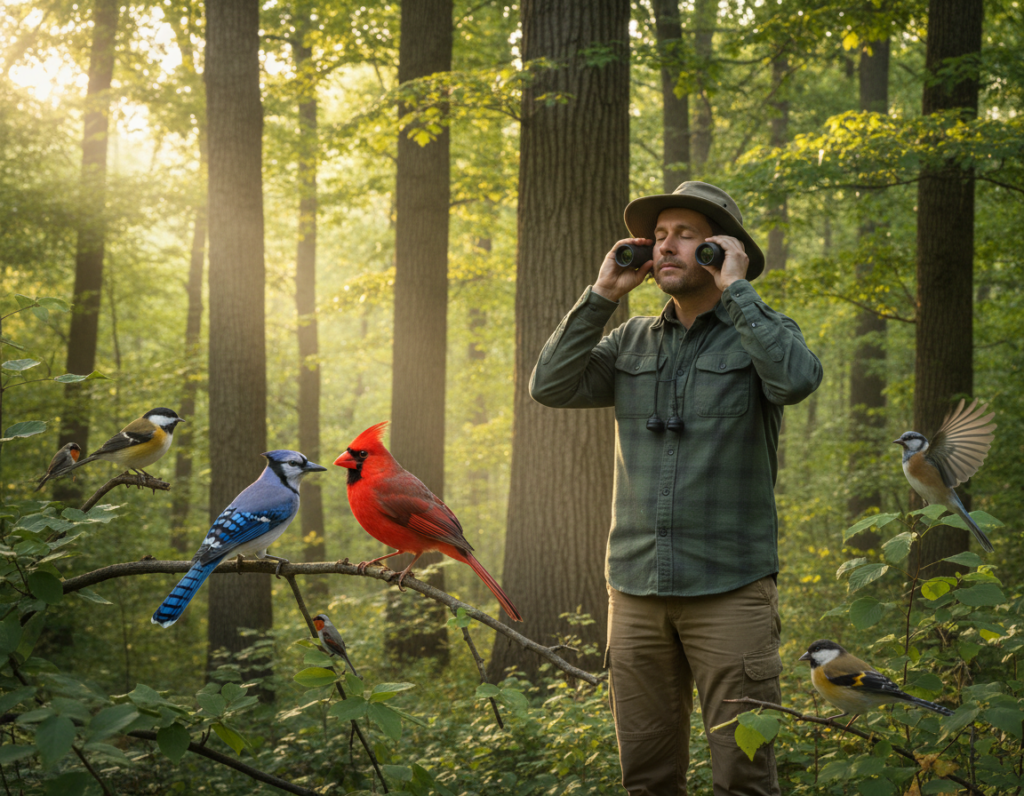
The chorus outside an apartment can tell a careful listener a lot. Short, distinct calls and rhythmic tapping reveal which species share a block or courtyard.
The Cornell Lab of Ornithology created the Merlin Bird ID app to help people learn how to identify birds. That tool lets users match vocalizations and photos to likely species without long field guides.
Urban residents who try birding often discover a rich local web of life on balconies, rooflines, and in street trees. Paying attention to small vocal cues and mobbing calls brings a new appreciation for the ecosystem near human structures.
For examples of familiar neighborhood feathered visitors and their notes, see a helpful list of common Minnesota backyard species at common Minnesota backyard birds. This makes it easier to connect sound to species right from an apartment window.
The Value of Birding by Ear in Urban Spaces
Listening from a balcony can turn ordinary street noise into clues about nearby wildlife. Kenn Kaufman argues that people already practice this skill to some degree; it only takes focus to sharpen it into deliberate birding.
In spring, the volume of song and calls rises fast. That surge can overwhelm a beginner, so learning a handful of common local species gives quick payoff.
“Birding in tropical forests without sound is like watching television with the sound off.”
That comparison shows why listening matters. A tuned ear finds species hidden in leaves or high on rooflines. With 821 North American species documented in field guides and libraries, focusing on nearby residents is the most practical way to begin.
- Kenn Kaufman suggests making listening a routine — short sessions at dawn or dusk.
- Start in spring, when songs are frequent, and pick three to five local calls to learn first.
- Practice often; learning the way calls vary helps the observer notice subtle differences.
How to Identify Birds by Sound Using Modern Technology
Modern apps turn a noisy block into a searchable archive of local avian life.
Using Mobile Apps for Real-Time ID
The Merlin Bird ID app uses machine learning trained on millions of recordings from the Cornell Lab of Ornithology.
This app listens and gives near-instant matches to likely species, even in traffic noise.
Key advantages:
- Real-time feedback helps users learn songs and calls faster.
- Matches come from a verified database of field recordings.
- The tool flags hidden singers that the eye might miss.
Managing Your Digital Recordings
Users can record a passing song and review the waveform later. The app suggests which recordings are worth saving.
That selective approach keeps phone storage clear while building a personal archive.
As the app improves, it recognizes more species, making it a practical companion for anyone trying to identify birds near their home.
Developing Your Listening Skills for Better Accuracy
Training the ear to catch rhythm and tone makes urban soundscapes far more informative. Listeners who practice short sessions will notice patterns faster. This section outlines simple, repeatable exercises that improve accuracy.
Using Mnemonics to Remember Calls
The Peterson Field Guide to Bird Sounds of Eastern North America offers a structured way to interpret complex vocalizations heard in spring. It organizes calls so learners can compare rhythm, pitch, and repetition.
Creating mnemonics helps. For example, the Barred Owl’s phrase “Who cooks for you” is a memorable hook that links phrase to species. Focusing on rhythm and tone rather than just words sharpens recognition.
- Listen to the same call several times to reinforce memory.
- Practice short, daily sessions near apartment windows or on walks.
- Record a clip, then match it to references in the guide or an app.
“Repetition is the fastest way to train the ear and make calls stick.”
Common Species Found Near Apartment Buildings
A quick morning listen reveals which familiar species frequent the trees and shrubs near flats. Urban green strips host a mix of songsters that are easy to learn with short sessions.
Thrushes and Robins
Robin offers a clear, beautiful song of rippling notes and whistles. It sings through winter and is often the first voice heard at dawn.
The Blackbird sings low, confident phrases that stop abruptly, unlike the more repetitive Song thrush and Mistle thrush.
Warbler Melodies
Warblers such as the Blackcap and Garden warbler deliver complex phrases that can resemble a babbling brook.
Chiffchaff and Willow warbler add bright, repetitive lines that help a listener separate one species from another.
Tit and Finch Songs
Tits—Blue, Great, and Coal—produce sharp, enthusiastic song notes. Finches like the Chaffinch and Greenfinch add clear, ringing motifs.
- Tip: Learn three local calls first to help identify birds in mixed choruses.
- Protecting these species matters; conservation charities rely on memberships to care for over 2,600 reserves.
“Learning a few songs brings nearby species to life and links listeners to their local habitat.”
Creating a Personal Library of Bird Songs
A personal audio library makes seasonal changes in urban wildlife easy to follow. It lets an observer record visits and note when a particular bird first returned each year.
Using a dedicated app to store each high-quality recording keeps files organized and searchable. Short, clear recording clips are best; they are easier to compare later and take less space.
Organize recordings into folders by date, location, and behavior. Tag files with notes about habitat, weather, and the number of singers. That practice helps during the off-season when listeners study variations.
A tidy digital collection of songs calls serves as both a record and an invitation. It demonstrates local diversity and encourages others to start their own birds songs archive.
- Save good-quality clips for long-term use.
- Review recordings each season to track change.
- Share selected files to support neighborhood monitoring.
“A maintained archive turns casual listening into a scientific resource.”
Overcoming Challenges When Identifying Multiple Singers
Listening through a city chorus can feel like tuning a crowded radio dial.
Short sessions, clear tools, and simple habits help a listener sort overlapping notes.
Practical aids:
- The Merlin app can isolate individual bird calls within a noisy mix and suggest matches.
- A northern mockingbird once reproduced thirteen different species’ songs, which the app flagged correctly.
- When several singers overlap, making a recording lets the user slow playback and study each phrase.
Regular birding practice refines focus. Listeners learn to ignore traffic and home noise, then pick out tempo, pitch, and repetition.
“Recording a short clip turned a confusing chorus into several clear lines to compare.”
The Mental Health Benefits of Mindful Birding
Minutes of focused listening often proved more restorative for staff on long shifts than a coffee break. A healthcare worker reported that using an app helped them build a daily mindfulness routine to manage job stress.
Engaging in mindful birding provides a simple mental reset before and after demanding work. Short sessions quiet the mind and create space for reflection.
Listening to a clear song from nearby species in green spaces lifted mood and reduced anxiety. Using an app to match local sounds encouraged presence and made small wonders more visible.
- Short breaks with focused listening gave professionals a needed pause.
- Even a five-minute recording session in a nearby park acted like meditation.
- Routine practice transformed walks into restorative interactions with nature.
“A daily pause to listen turned ordinary routes into moments of calm.”
For more on how listening improves well-being, see this short explainer on bird song and mental health at how listening to bird song can transform mental.
Conclusion
A few minutes of focused listening can turn a noisy block into a clear map of nearby wildlife. Short, regular practice helps someone learn to identify local species and appreciate their presence.
Start small, use tools such as the Merlin app to build a personal library of recordings, and use simple mnemonics to lock in phrases and rhythms. Over time, accuracy improves and recognition becomes faster.
Beyond learning, this habit supports mental health. Brief listening sessions offer calm and a mindful break from daily stress. Step outside, listen closely, and enjoy the diverse chorus of birds that share the neighborhood.