Watching birds from an apartment window became a popular pastime, and many people tried to learn on the fly. He once mixed up a musical rest in high school theater, and that same flash of stage anxiety showed up when someone faced a quick-moving bird through glass.
New observers often rushed to answer the familiar question: what did they just see? That hurry led to hasty calls, blurred pictures, and moments when even seasoned birders could not be certain.
Using a good field guide and keeping a yearly list helped reduce errors over time. Taking a clear picture provided a calm way to verify a sighting, and it reminded people that they did not need to force a firm identification immediately.
In short, the introduction aimed to ease the pressure on beginners, show that experienced observers also make mistakes, and suggest simple habits that improved accuracy and enjoyment.
Understanding Common Bird Identification Mistakes
Beginners often find that similar-looking species blur together until they learn a few reliable field marks. Many people in the United States started window watching and felt overwhelmed by subtle plumage, size, and behavior differences.
Experienced birders, including Chuck Gates in central Oregon, say that even common birds can pose a real challenge for newcomers. Gates compiled a list of 45 species that show how varied regional groups can be.
Practical tips help. A local field guide and photos — like those Greg Gillson provided for the Oregon checklist — give concrete examples to study. When a sighting goes to eBird, expect follow-up questions; that is a normal step to keep data accurate.
- Focus first on size, shape, and key field marks.
- Learn groups common to your region so comparisons become easier.
- Keep a simple seasonal list to track what appears when.
Most people will make errors at first. That is part of learning, and seasoned observers still keep species on their “hard” list. Steady study and good notes are the best way to improve over time.
Developing a Methodical Approach to Observation
A calm, methodical routine transforms window watching from guesswork into a reliable study habit. Observers who follow a set process notice more, learn faster, and reduce hurried calls.
Mastering Binocular Skills
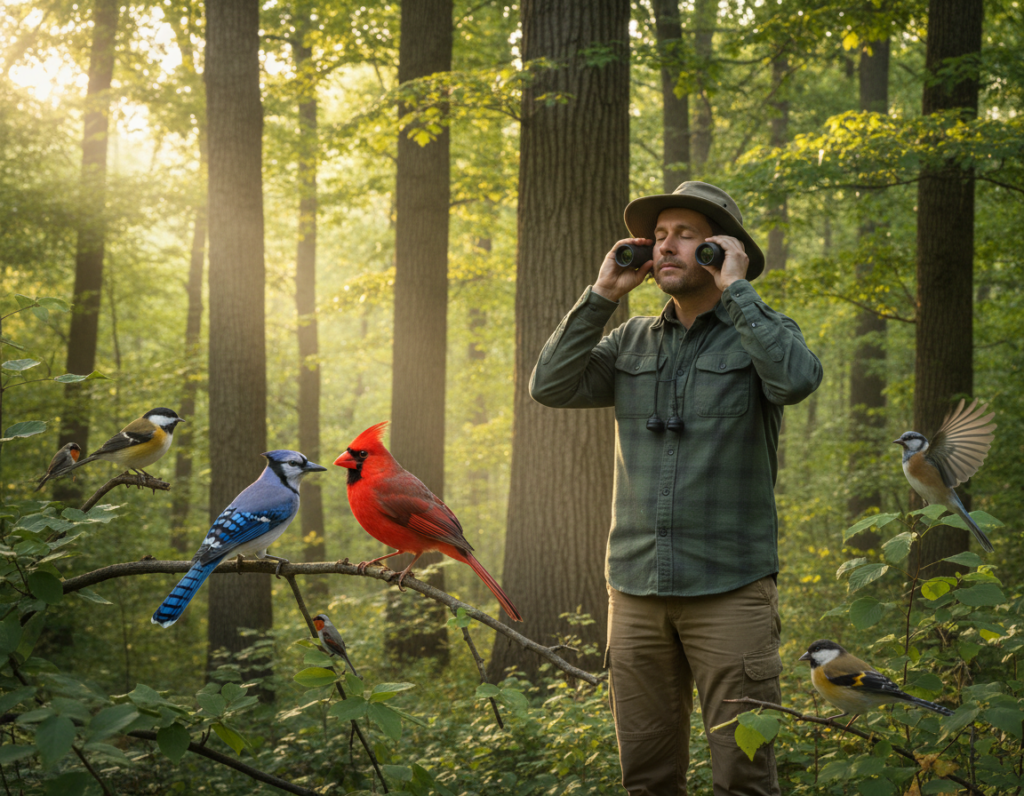
Good optics matter. Practice bringing a distant bird into the frame smoothly. Steady hands and slow tracking let an observer record size, shape, and motion with confidence.
Utilizing Field Guides and Notes
Start at the top of the head and work down to the tail to note all key field marks. Use a compact field guide to compare bill and wing shape, especially for species common in North America.
Take short notes or quick sketches in a leather notebook. If the observer has trouble, many birders welcome questions and can point out subtle marks.
The Importance of Seasonal Lists
Keeping a year list builds regional knowledge. A seasonal list helps separate migrants from local residents and narrows options for identification.
For song practice, Larkwire.org gamifies learning and improves recognition over time. For formal guidelines, consult the guidelines for safe species identification.
Navigating Challenging Species Pairs and Groups
When similar species appear at the window, a few reliable checks cut uncertainty fast.
Regional experts have cataloged the main challenges. Charlie Wright in Washington listed nine specific field challenges. Robert Mortenson from Idaho and Utah provided a list of eleven troublesome birds. Richard Leinen in Portland named thirteen species, including several sparrows, that often confuse observers.
Strategies for Distinguishing Similar Species
Follow a short routine to reduce guesses. Start with broad traits, then confirm finer marks.
- Head and tail shape: For hawks, the best way to separate species is to note head profile and tail outline at a glance.
- Bill-to-head ratio: Use bill size versus head size to split look-alikes like Downy and Hairy woodpeckers.
- Field marks and size: Check wing pattern, streaks, and overall size. Keep a small field guide and brief notes handy.
- Record evidence: If unsure, take a picture or capture the song. That later proves the answer and builds knowledge for the year list.
Practice on common birds each week. Repeating these steps sharpens skills and helps birders avoid repeat trouble when rare species arrive.
Conclusion: Embracing the Learning Process
In short, progress comes when observers treat each sighting as a lesson, not a test. Patience and steady practice gave them the best gains over time.
They were reminded that making errors helped refine their identification skills. Each small correction built confidence for future observations.
Keep a compact field guide and a simple year list. Use the practical tips offered earlier and focus on clear field marks.
With calm, regular practice, birders watched more and learned faster. Over months, birds and species that once seemed tricky became familiar companions.