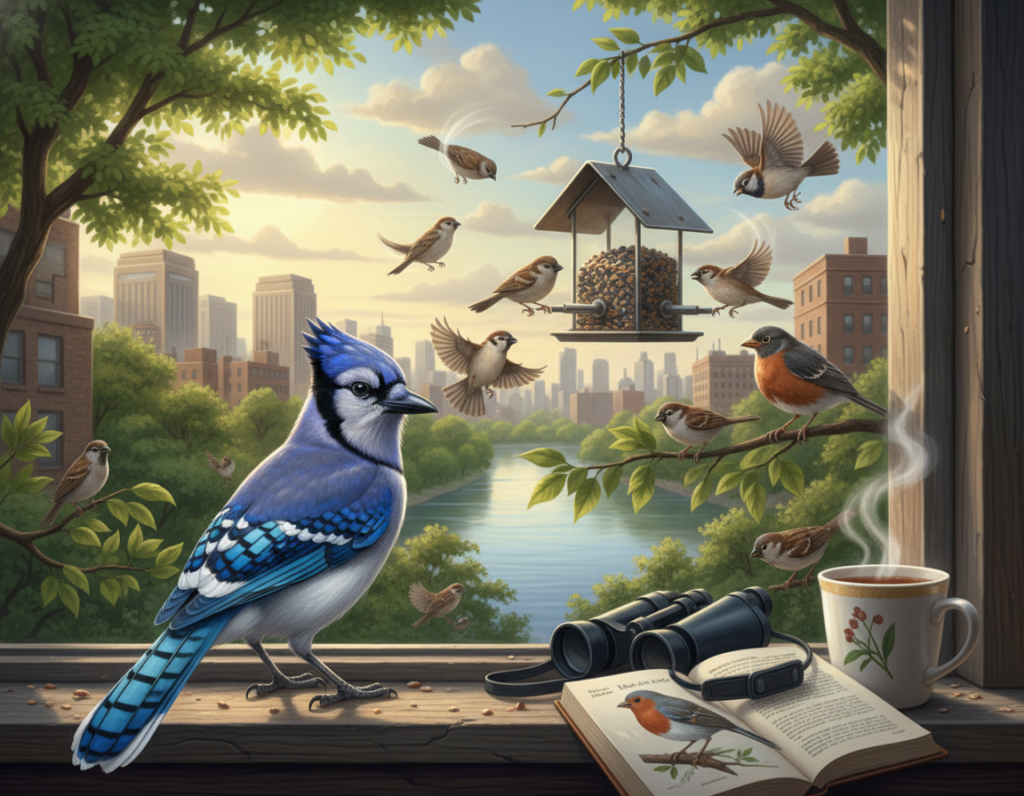
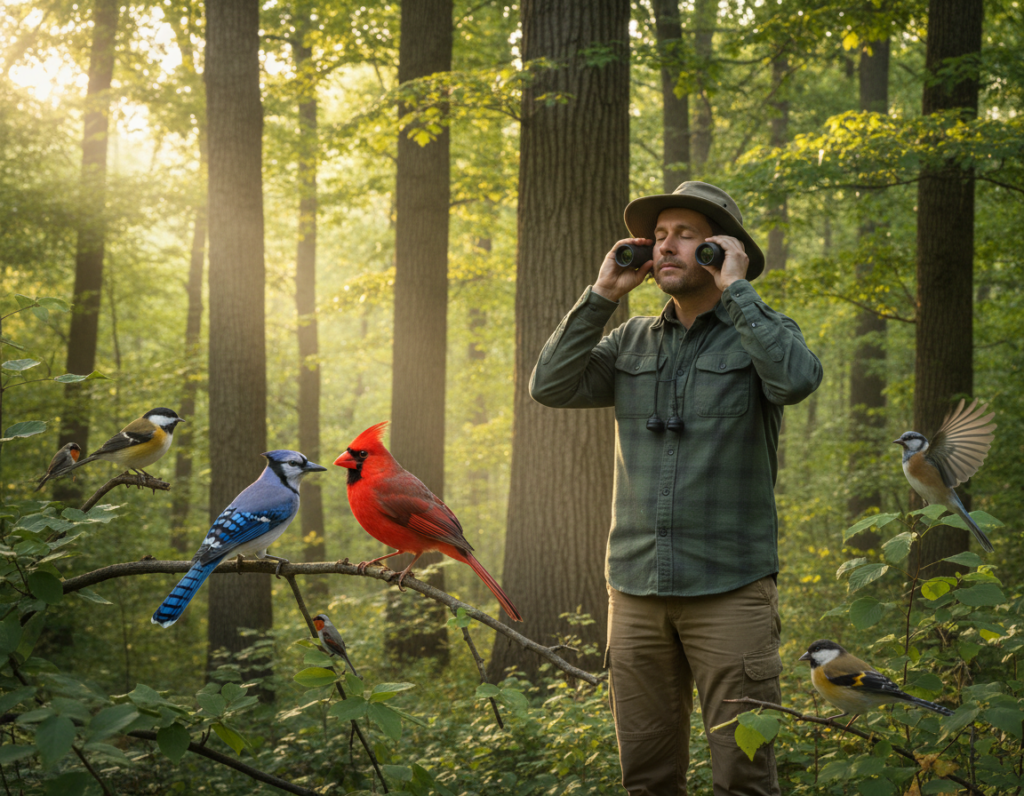
The way a phone helps identify birds in a city can change a casual walk into a meaningful encounter. In dense settings like New York or Chicago, sound, buildings, and traffic create noise that makes identification hard.
The Cornell Lab of Ornithology builds tools that filter background noise and sharpen calls. These tools let a birding app separate useful signals from the rest. That real-time filtering helps both beginners and experts find the right species fast.
Good mobile apps act as a digital guide. They provide photos, field guides, and ways to track sightings. Users can add data to global lists and help researchers understand range and behavior.
In short: the best solutions pair smart audio processing, clear illustrations, and simple interfaces. That makes it easier for birders across North America to identify birds, record life lists, and stay connected to the natural world each time they step outside.
The Rise of Urban Birdwatching Apps
Mobile tools have changed the way people spot and log birds in cities, turning short outings into meaningful surveys.
Developers built specialized app experiences that let users record sightings, attach photos, and add notes from neighborhood parks. This makes birding more accessible for residents who have little time but a big interest.
Collective data grows as more birders use these tools. Scientists and community groups gain new insights on migration routes and habitat use from everyday observations.
- Easy identification tools speed up learning for beginners.
- Quick submission workflows turn casual encounters into research-grade records.
- Integrated guides and sound libraries support confident IDs across settings.
By folding these tools into daily life, people contribute to a clearer picture of how birds adapt to human landscapes. This steady stream of observations helps conservationists and planners make smarter decisions.
Why Dense Urban Environments Present Unique Challenges
City noise and tight sight lines force new strategies for finding and identifying birds. In built-up areas, mechanical hum and human activity mask subtle cues that birders usually rely on.
Acoustic Interference
Traffic, construction, and crowd noise create a constant background that blurs bird calls. The Cornell Lab of Ornithology notes that such interference can hide soft notes and trills.
“Urban noise can mask the subtle calls of birds, necessitating advanced filtering features in modern mobile apps.”
Visual Obstructions
Tall buildings, reflective glass, and dense foliage often give only partial views of a species. That makes visual identification harder and increases reliance on multiple cues.
- Field techniques must adapt: watch flight patterns, behavior, and habitat.
- Patience and skill remain essential when sightings are fleeting.
- Digital tools with real-time filtering help separate useful sound and image data from clutter.
Successful identification often combines careful observation, targeted field methods, and the right app tools to overcome environmental barriers.
Merlin Bird ID and the Power of Sound Recognition
Merlin Bird ID brings real-time audio and photo AI together to make quick, reliable identifications on the go.
Created by the Cornell Lab of Ornithology, Merlin uses advanced machine learning to identify birds from short recordings or uploaded photos. The app pairs sound recognition with image analysis to suggest likely species in seconds.
- Regional packs: download bird lists for any part of the world to improve local IDs.
- Sound feature: isolates calls so birders can separate song from city noise.
- Sync and share: create a free account to save sightings and contribute data to a global list.
- Simple interface: answer a few questions about size, color, and behavior to narrow results quickly.
- Offline access: work without cell service so the phone stays a reliable field tool.
“Merlin turns short recordings into confident matches, speeding up identification in challenging conditions.”
For birders pressed for time, Merlin is a practical tool that helps identify bird calls and photos, build a personal list, and feed information back to researchers.
Audubon Bird Guide for Structured Field Identification
The Audubon Bird Guide gives a structured, step-by-step approach for identifying birds in the field.
Comprehensive coverage makes this guide a go-to tool. It covers about 800 North America bird species with clear information on range and vocalizations.
Utilizing Identification Filters
The app uses advanced filters so users can narrow results by size, color, habitat, and sound patterns.
Beginners benefit from the structured workflow: answer a few questions and the guide returns a short candidate list.
- Filters speed up identification in short observation times.
- Integration with the Cornell Lab of Ornithology surfaces local hotspots and recent sightings.
- Access to most content is available without an account; signing up saves personal lists and shared sightings.
“A structured approach helps new birders build confidence while learning core field skills.”
Sibley Birds for Illustrative Accuracy
David Allen Sibley’s artwork is the heart of the Sibley Birds app. The digital version reproduces expert illustrations that show subtle plumage changes across seasons and ages.
The app contains a 930-species catalog for North America and treats each entry as a visual study. Users rely on detailed plates to tell similar birds apart when photos and calls fall short.
Search tools let observers filter by location and time of year to narrow likely range and presence.
- Side-by-side comparison is a standout feature for distinguishing close species.
- Filters refine results by season and range, speeding field identification.
- Although premium, the depth of illustrations and notes rewards serious birders.
“Focusing on illustrative accuracy helps users spot field marks that other guides can miss.”
The Warbler Guide for Specialized Species Identification
The Warbler Guide targets a narrow but challenging group of bird species and delivers tools made for exact field work.
Released in 2013, the app focuses on more than 35 North America warbler species. It pairs detailed illustrations, a photo library, and diagnostic views to help users identify birds quickly.
Three Dimensional Modeling
The guide’s 3D models let a user rotate a plate to inspect plumage from any angle. This helps reveal tricky marks, like undertail coverts and subtle wing bars.
Practical advantage: observers can match a live view to a rotating model to confirm age and sex in short time frames.
Sonogram Analysis
Sonograms visualize the structure of a song so a birder can compare patterns, not just memory. The feature shows syllable shape and rhythm for clearer identification.
- Comprehensive sound library: songs and calls for each species aid ear-based IDs.
- Photo and illustration pairing: side-by-side assets support visual confirmation.
- Focused range: designed specifically for North America warblers, it sharpens skills for this group.
“Sonogram views change how field notes sound, turning brief detections into confident IDs.”
For serious birding, The Warbler Guide is a specialist tool that blends 3D visuals and sound analysis to help users identify birds in the field with precision.
Leveraging eBird for Community Science and Data
Submitting a quick checklist on eBird helps connect a single sighting to a global conservation effort.
Managed by the Cornell Lab of Ornithology, eBird is both a website and a mobile app that lets birders track the birds they record in the field.
The platform links observations, photos, and sound files to the Macaulay Library so species records gain context for researchers. Users can manage life lists, explore maps, and review recent sightings through a powerful dashboard.
Contributions matter: each checklist improves distribution models and helps conservationists spot population changes over time.
- Easy checklists let users log what they’ve seen and how long they spent in a location.
- Dashboards and filters help users find when and where a species appeared.
- Tutorials on the site teach best practices so submitted data stay accurate and useful.
“A single submitted checklist can change what scientists know about a species’ local presence.”
For any birder who wants to be part of a larger community, eBird is an essential tool for tracking lists, sharing photos, and contributing real data to the world.
iGoTerra for Competitive List Management
iGoTerra gives competitive birders a centralized hub to manage life lists and chase global milestones.
The platform is built for serious listers. It organizes sightings, stores precise data, and helps a birder compare records with peers worldwide.
Notable users include Peter Kaestner, who used iGoTerra to help catalog the thousands of species he’s recorded. That pedigree matters for those who track long-term goals.
- Detailed list management: mark seen versus heard-only entries and keep clean life lists.
- Global scope: set targets for new species and follow progress across the world.
- Versatile records: manage other wildlife as well as birds to broaden naturalist tracking.
For competitive birders, iGoTerra turns scattered notes into a disciplined system that supports ambitious lists and meaningful comparisons.
Birda for Social Engagement and Gamification
Birda blends fast image identification with social features to make birding more communal. The platform uses AI to recognize a bird from a photo, even when the image is blurry or cropped.
Building Local Birding Networks
Users share sightings, join local groups, and comment on photos to help confirm IDs. That makes learning interactive and fast.
- AI identification: helps identify birds from photos and speeds field confirmations.
- Challenges and badges: gamify progress so people track lists and earn rewards.
- Community tools: build local networks to swap tips and plan outings.
All logged sightings feed the Global Biodiversity Information Facility, so casual notes become useful data for scientists. Birda welcomes beginners and expert birders alike, making each species someone’s discovery to celebrate.
Essential Weather Tools for Predicting Urban Migration
Real-time radar views and model overlays change how observers choose where to look for migrants.
Windy is a comprehensive weather app that gives detailed insights into wind speed, direction, and pressure. These factors shape flight paths and the timing of nightly movements.
RadarScope shows high-resolution radar returns so users can track large-scale movements of birds as they travel. It turns broad forecasts into actionable field decisions.
Together, these tools help birders predict vagrancy events, when species push beyond normal ranges because of unusual winds or storms.
- Plan trips: choose times and spots with favorable winds to increase sightings.
- Track movement: watch radar echoes to pinpoint waves of migrants passing nearby.
- Understand context: correlate sound and visual detections with weather patterns to build a smarter list strategy.
“Using Windy and RadarScope turns weather data into a practical scouting tool for migration.”
Integrating Digital Tools into Your Daily Birding Routine
Bringing a small set of digital tools into daily outings helps birders spot and record more species. It builds skills with steady, repeatable practice.
Keeping a phone within reach lets someone open a quick guide or log sightings the moment a bird appears. A reliable app and a short checklist make it easy to add each entry to a life list.
Regular use improves observation. Even five minutes in the backyard or during a commute trains the eye and ear. Over time, users notice patterns and learn to work a field site faster.
- Save time: fast lookup features cut identification time in half.
- Build accuracy: repeat practice with sound and photo tools refines IDs.
- Share data: quick uploads turn casual sightings into useful records.
Used consistently, these resources become part of the standard kit. They offer a simple way to stay connected to birds and make every outing more productive.
Conclusion
Smart tools bridge the gap between a fleeting glimpse and a confident species ID. A single app can speed identification and make field learning more reliable.
From AI-driven images to community-driven apps, these digital guides turn quick sightings into useful records. Creating an account helps a user save results and feed valuable data back to researchers.
Choose the right guide for the way you like to learn — whether a detailed field guide, a social site, or a fast photo tool. Explore connected tools like the ones researchers study for broader data flows: connected tools.
By using these resources, people help protect species and grow a global information network that improves how the world tracks bird life.