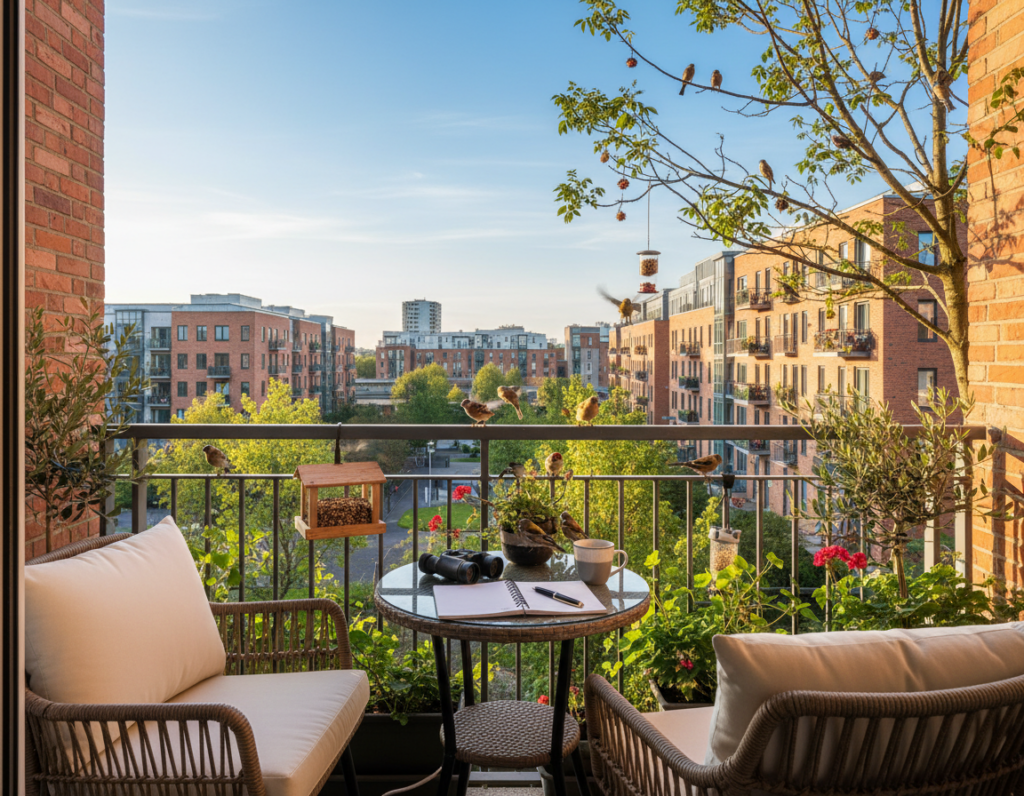
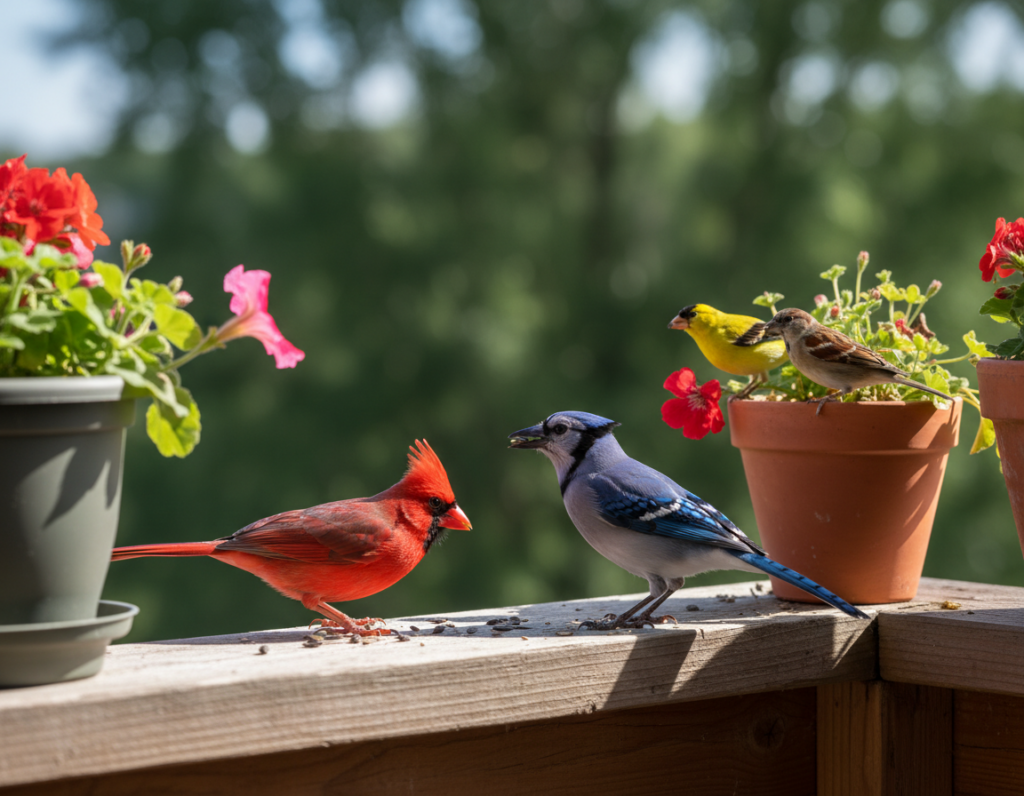
A small balcony can become a dependable habitat for urban wildlife. Many people think a large yard or garden is needed, yet feeders, water and simple plants can attract visitors to a compact space.
Consistent food and shelter often explain why feathered wildlife revisit the same railing and window areas across seasons. Reliable resources, like bird feeders and a steady water source, create a micro-habitat that supports stopping and nesting behavior.
Residents should check building rules first to avoid fines or tensions with neighbors over mess or noise. Thoughtful choices—native flowers, a modest house, and safer glass treatments—help create a welcoming place without major changes.
For deeper context on migration and stopover needs, see how and why birds use resource-rich.
Understanding Seasonal Patterns of Birds Returning to Apartment Balconies
Seasonal patterns shape how urban wildlife uses small outdoor spaces near homes. Migration timing and local food supplies often explain why visitors show up at the same railing or window area at certain times of the year.
Migration Cycles
During spring and fall migration, many species pass through city corridors. Buildings near lakes or rivers often see more flyovers and stopovers.
High-rise feeders can attract migrants looking for quick refueling during long flights. Observers in Maryland have even recorded a Summer Tanager visiting a small balcony for food.
Seasonal Food Availability
Providing nectar-producing plants and a feeder is a good first step in attracting visitors year-round. Sunflower seeds and mixed seed blends give finches and other small songsters the energy they need.
- Place suction-cup feeders within 3 feet of windows to reduce collisions.
- Change sugar water in hummingbird feeders every 2–4 days in cool weather.
- Create habitat with trees and low plants to supply cover and foraging space.
“Andrew’s Wildlife documented a Summer Tanager visiting a balcony in Maryland,” an example of how small urban resources can matter during seasonal movements.
Legal Considerations and Safety Protocols for Urban Birding
Legal and safety checks come first when inviting wildlife to a compact outdoor space.
Review building rules before adding any feeders or plants. Many apartment complexes ban mounted feeders to avoid damage to walls or railings and to prevent fines.
To limit mess for neighbors, choose hulled sunflower or hull-less seed and use a seed-catcher tray. Clean trays and a bird feeder regularly to stop mold and disease.
Protect visiting birds by applying special film to windows and glass. This reduces collisions when a bird flies in for water or food.
- Secure feeders to the railing with non-damaging hardware.
- Avoid items that scare birds, such as wind chimes or bright, moving objects.
- Keep water fresh and place feeders where windows are visible to reduce strikes.
Following these steps helps residents create a safe, legal space that benefits wildlife and keeps neighbors satisfied.
Creating an Inviting Habitat for Feathered Visitors
Creating a welcoming balcony habitat starts with simple plant choices and careful placement of feeders. Small, intentional steps can make limited space useful for wildlife while keeping neighbors happy.
Selecting Bird-Friendly Plants
Choose native flowers and shrubs that provide nectar, seeds, and shelter. Native plants support insects and offer familiar food for visiting birds.
For more on plant choices, the 14 Tips For Growing A Healthy Garden guide has practical suggestions for container-friendly species.
Optimal Feeder Placement
Mount feeders near a window but within 3–5 feet to reduce collisions. Use a mix of feeder styles to serve finches and hummingbirds.
- Keep at least one feeder visible from indoors.
- Use a seed tray or hulled sunflower to cut down on mess.
- Secure feeders to the railing with non-damaging hardware.
Providing Water Sources
Offer a small bird bath or a shallow dish and add a water wiggler for motion. Moving water draws attention and signals freshness.
Regular cleaning keeps water safe and reduces disease risk, which also protects neighbors and other visitors.
No-bird-bath solution ideas can help when space or weight limits prevent a traditional bath.
Conclusion
With the right feeders and a safe water source, even a compact balcony can support seasonal visitors. Thoughtful placement and fresh supplies help attract birds and keep visits regular.
Keep each feeder clean and change water often. These habits protect bird health and cut disease risk. Use simple window markers and position feeding spots near cover to reduce collisions.
Respect building rules and neighbors in any apartment setup. With patience and the right care, the small space becomes a durable urban habitat that brings nature close and rewards steady attention.