The sight and sound of wildlife outside a high-rise can change how residents view their home. Observing urban bird activity near apartments lets people form a direct bond with nature, even in dense city settings.
The Cornell Lab of Ornithology offers research on how to attract birds to tall structures and how noise shapes song patterns. These findings help residents who practice balcony birding to make smart choices about feeders and shelter.
Each species that visits a balcony or window gives a chance to record local trends. Monitoring visitors helps explain how soundscapes influence migration, nesting, and song frequency shifts. For readers who want the scientific background, see a study on noise-driven song changes linking ambient noise to song frequency.
Understanding Urban Bird Activity Near Apartments
Balconies and window perches offer a close-up view of how everyday noise and feeders alter neighborhood wildlife. Small changes in sound levels and consistent food sources can shift behavior, migration timing, and even song pitch.
The Impact of Noise on Avian Behavior
Emily Voigt’s 25-story experiment in Greenwich Village showed that persistent traffic and building noise can push some species to change their calls. These shifts help birds be heard but may also affect mating success.
Providing a steady seed supply through the year can help birds adapt to a noisy cityscape. Residents who feed cautiously and maintain quiet periods give local populations a better chance to thrive.
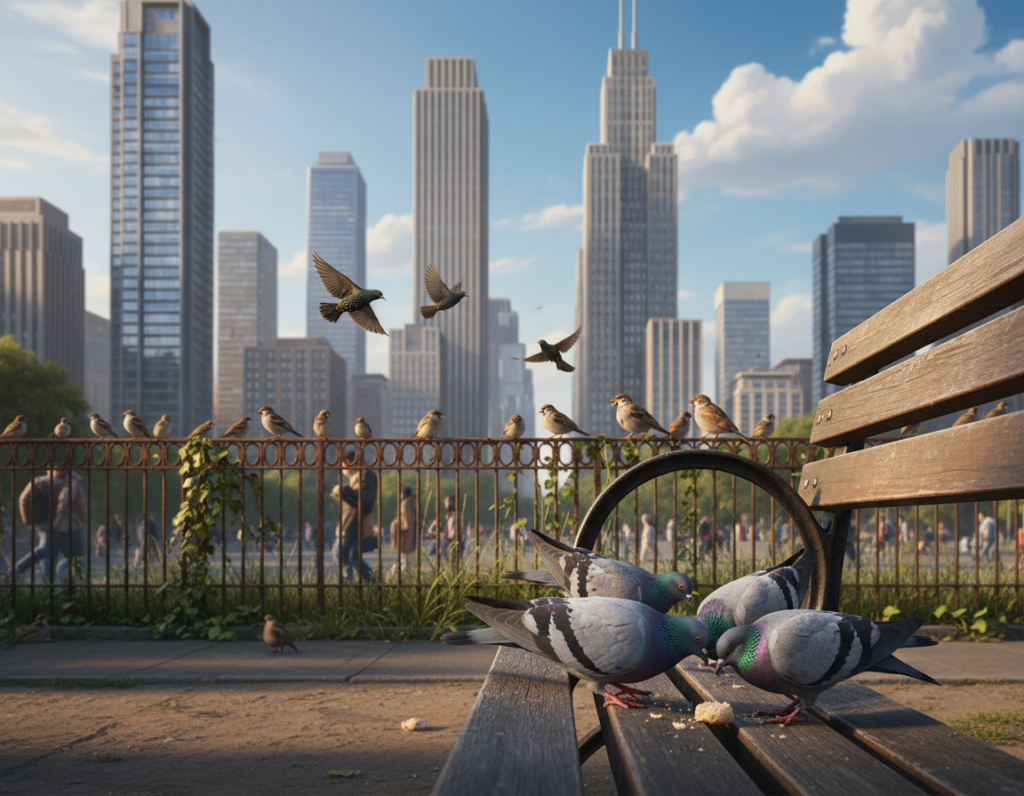
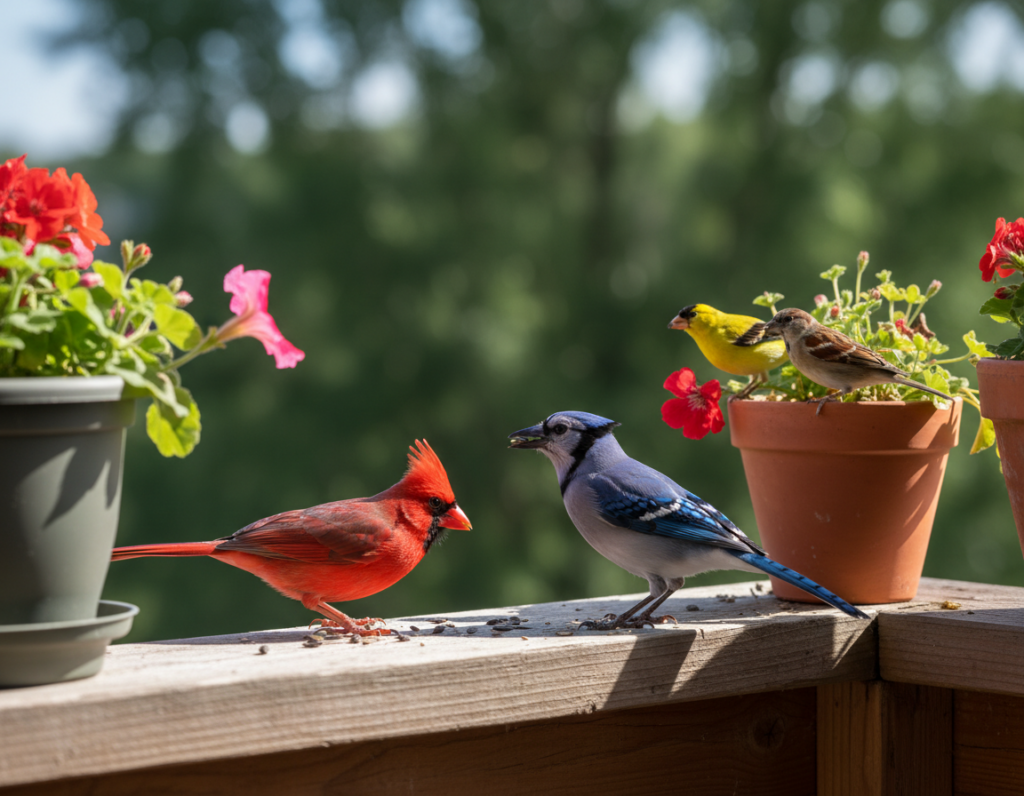
Identifying Common Urban Species
Lynn P. of Toronto proved that height does not deter visitors by hosting a successful feeder on the 21st floor for 20 years. Many residents report Anna’s Hummingbirds as frequent high-rise guests. Such examples show how feeders, plants, and nearby trees shape which species appear.
- House Finch — observed changing traits near frequent feeders.
- Anna’s Hummingbirds — often over-winter where nectar is steady.
- General tip — small potted plants act as discreet refuges when feeders are not allowed.
Essential Strategies for Attracting Birds to High-Rise Balconies
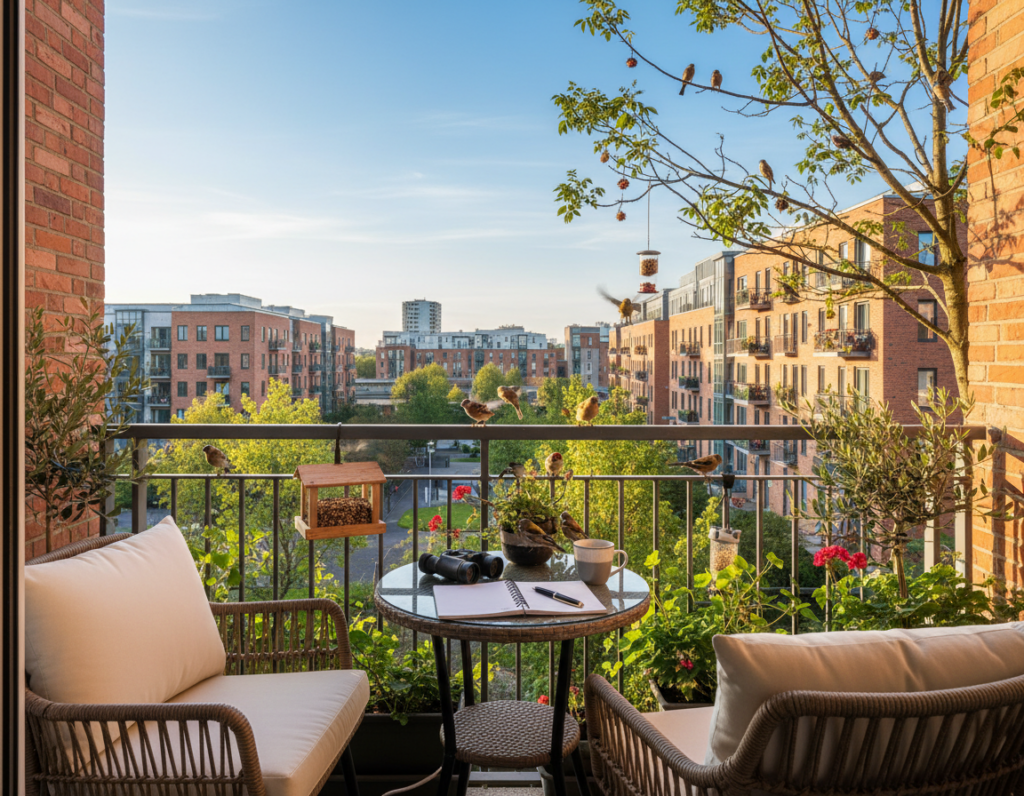
Creating a small habitat on a balcony starts with three simple elements: feeders, plants, and water. With steady care, a balcony can become a reliable stop for local birds and support year-round birding.
Selecting Appropriate Feeders
Choose small feeders that suit nyjer and sunflower seed. Small trays and tube feeders prevent waste and keep seed fresh.
Tip: Place feeders close to the window to reduce collisions and help visiting birds find cover quickly.
Choosing Native Plants for Containers
Group native plants to create layered cover and food. Julie Zickefoose notes that containers and compost can be hauled to any floor to build a functioning habitat.
Native plants provide the right nectar and seed for local species and encourage nesting in hanging baskets near the window.
The Role of Water Sources
Provide a shallow water dish or mister during hot months. Reliable water is as important as food in summer and during spring migration.
“It may take time for visitors to find your space, but consistent maintenance pays off.”
- Use small feeders for nyjer or sunflower to limit spoilage.
- Keep water clean and replaced often.
- Choose plants native to your zip code for best results.
Mitigating Risks and Ensuring Bird Safety
Windows can be deadly, but small changes make a big difference. About one billion birds die yearly in the United States from collisions with glass. Residents in every apartment share responsibility for reducing that number.
Preventing Window Collisions
Use visible markers on glass. Heidi Trudell recommends films, decals, or patterned tape so birds see the barrier and avoid fatal strikes.
Place feeders either directly on the window with suction cups or more than three feet away. Suction cup feeders cut collision speed and lower deaths.
- Keep feeders clean and refill hummingbird sugar water often in spring and fall.
- Choose low-waste food like hulled sunflower seeds to limit debris and pests.
- Offer shallow water dishes placed where birds can land safely without risky flight paths.
“When a bird hits a window, reassess your setup and add more film or netting.”
Responsible birding in a home means balancing enjoyment with safety. Small measures protect visitors and help feeders remain a safe, long-term resource.
Conclusion: Creating a Sustainable Urban Wildlife Haven
strong, Combining safe feeders, native plants, and simple window protection helps create a dependable habitat at home. This approach lets residents support local wildlife while enjoying the rewards of birding.
Experts like David Lindo and Heather Wolf show how small steps can transform a space. With careful placement and steady care, an apartment balcony or window box will attract birds and become a lasting refuge in the city.
Start small, keep safety first, and track visitors. Each action helps conservation in the United States and invites more nature into everyday life.