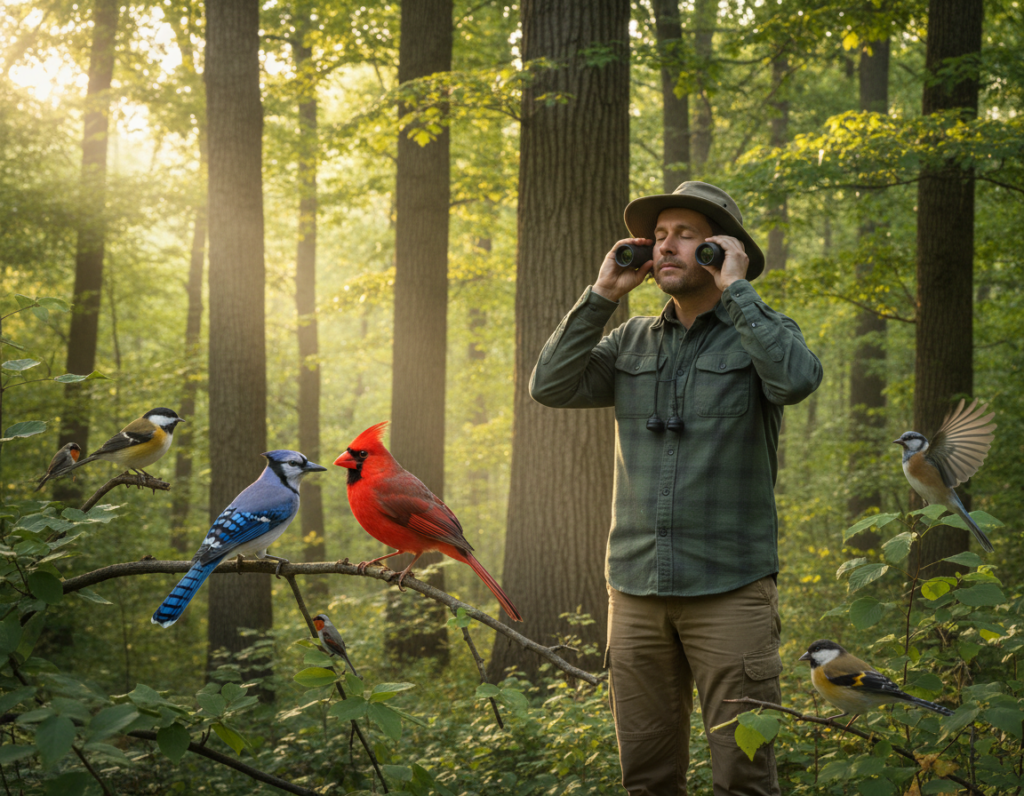
Field identification can frustrate even experienced birders when a flash of color or a brief call leaves only a memory. Modern tools now let users solve that puzzle in places without service by downloading regional packs to a phone.
Merlin Bird ID, with over 10 million downloads and coverage of more than 10,000 species, shows how powerful these tools can be. The app offers step-by-step, photo, and sound features so users can identify bird sightings in real time.
Whether a novice or an expert, people can keep a list of sightings, save photos, and contribute data to science. Many apps let users set their location to narrow likely species and access essential images and information while hiking or watching from the yard.
For a deeper look at the top choices and how they compare, see this guide to the most helpful field tools and trusted mobile guides.
the only birding apps you’ll ever
Why Offline Bird Identification Apps Are Essential for Fieldwork
Reliable, preloaded field guides turn uncertain sightings into confirmed records during remote outings. With over 45 million Americans participating in birding as of 2024, having a compact digital guide on a phone is now standard gear for serious outings.
These tools let birders log sightings where cellular service is absent. They provide step-by-step identification paths that reduce guesswork and speed learning.
The National Audubon Society’s app brings more than a century of North American expertise into each species entry. That mix of historical data and modern tech helps users keep accurate life lists and verify bird sightings on the spot.
- Record observations in remote areas without relying on a connection.
- Follow structured prompts to confirm species quickly.
- Save photos and notes to build a reliable life list.
For fieldwork, the ability to access vetted content anywhere is not a luxury — it is a core part of good science and enjoyable birding.
Merlin Bird ID: The Gold Standard for Remote Birding
The Cornell Lab of Ornithology built Merlin Bird ID to deliver reliable field tools for species recognition. The app pairs sound and photo features with curated data so users can reach confident conclusions while in the field.
Sound Identification Capabilities
Merlin’s sound feature can recognize over 1,000 species calls and songs in real time. That capability helps users narrow possibilities quickly when a call is all they have.
“An 85% accuracy rate for North American species shows how effective the tool can be.”
Downloading Regional Bird Packs
Users can download regional packs to ensure the guide has local data, maps, and images stored on the phone. This keeps the app responsive and up to date.
- Photo identification helps match images to the correct species with high accuracy.
- Regular updates from the Cornell Lab of Ornithology keep regional packs current.
- The interface makes it easy to save a sighting to a list and view range maps.
Audubon Bird Guide: Structured Learning for North American Species
For birders aiming to sharpen field skills, the Audubon Bird Guide pairs clear lessons with advanced search tools. It covers more than 800 species found in North America and offers a structured approach to learning.
Utilizing Advanced Identification Filters
The app offers multiple filters — including size, tail shape, wing shape, habitat, and voice — so users can quickly narrow the most likely species for a sighting.
Using the voice filter helps users learn vocal patterns like trills and buzzes. That feature trains ear recognition and improves field confidence.
- Filter by size and wing shape to eliminate similar-looking species.
- Use habitat and location to focus on realistic regional candidates.
- Save sightings and photos to build personal lists and shared data.
Regular updates keep range maps and species accounts current for North America. The guide also links users to local hotspots so they can see recent community sightings.
For a curated list of tools that complement this guide, see the best apps for birding and field.
Sibley Birds: Illustrative Excellence for Offline Reference
Sibley Birds v2 brings David Sibley’s renowned plates to a handheld guide. Priced at $19.99, the app highlights detailed drawings that capture posture and motion better than many photos.
The guide includes more than 2,700 calls and clear range maps so users can match sound and location quickly. It is based on the 2018 Sibley Guide to Birds and has major updates with new species and audio files.
Compare two species side-by-side to resolve tough field comparisons. Filters for location and time of year narrow likely species and speed up identification.
- Illustrative excellence: drawings that show typical poses and plumage details.
- Comprehensive data: thousands of calls, maps, and updated images.
- Portable field guide: the full guide works without a connection and supports travel-light birding.
For birders who prefer illustrations and precise comparison tools, Sibley Birds is an essential guide that blends art and science in the field.
The Warbler Guide: Specialized Tools for Challenging Identifications
The Warbler Guide targets tight field challenges with tools built specifically for small, fast-moving species. It focuses on the 48 warbler species found in North America and breaks down 75 plumages so users can match fleeting views.
Three Dimensional Modeling Features
Interactive 3D models let users rotate and zoom to match posture, wing angle, or bill size seen in the field. This visual approach helps close gaps between a quick glimpse and confident ID.
Navigating Complex Plumage Variations
The guide pairs a detailed photo library with side-by-side comparisons and clear notes on age and sex. Annotated sonograms and a full library of songs and chip calls support visual learners and ear training.
- Quick filters for season, location, and view speed up results.
- Side-by-side photos clarify subtle plumage patterns.
- Data on age and sex improves long-term learning and list accuracy.
For any birder who struggles with small, fast species, this guide is an essential, focused tool.
eBird: Tracking Sightings Without Cellular Coverage
When service is spotty, eBird still captures your observations and keeps your life list intact. The app lets users record a sighting in the field and save a checklist to submit later.
eBird integrates with the Cornell Lab of Ornithology so contributions feed research and conservation. That link makes each entry more valuable than a private note.
The app helps users sort lists by species, location, or taxonomy. It also syncs with tools like Merlin Bird to add sound and photo context to a record.
- Keep track of what you’ve seen and build an accurate life list.
- Start and submit checklists without a current connection; sync later.
- Explore hotspots and compare what other birders have logged.
- Contribute clean data that supports global conservation efforts.
Designed for everyone from the newly curious to dedicated birders, eBird is a central app for recording sightings and strengthening species data across regions.
Best Practices for Maximizing App Performance in the Field
Proper preparation—sound timing, photo angles, and storage checks—makes a major difference in results. Simple habits raise success for bird identification and make later review cleaner and faster.
Optimizing Recording Conditions
For sound recordings, aim for early morning between 5:30–8:30 AM. Noise is lowest then and calls register more clearly.
When using photo features, keep the subject at least 30% of the frame and take multiple angles. That practice increases ID success by about 25–30% for many species.
Managing Battery Life and Storage
Carry a charged power bank and clear unused media before long trips. Offline packs and photos fill storage quickly.
Close background processes and update the phone before a hike to ensure the app offers full functionality when needed.
Verifying Data Accuracy
Always cross-check sightings against range maps and species accounts in the field guide. The Cornell Lab of Ornithology also recommends keeping apps updated for the latest algorithms.
- Use Merlin Bird ID for sound/photo help and eBird to log the sighting later.
- Review your life list regularly to keep records clean and useful for science.
- Confirm doubtful records with range and season data before finalizing entries.
Conclusion
The right mobile guide lets users move from guesswork to confident species reports on the trail. This shifts birding toward clear, verifiable results and helps observers learn faster.
Reliable tools, like Merlin and eBird, help record sightings, store range maps, and submit useful data later. Using photo and sound features together improves accuracy and training for future outings.
Remember to download regional packs and keep each app updated. With these steps, anyone can grow a lasting life list and support conservation while enjoying time with wild birds.