The small apartment birder often faces tight shelves and crowded corners. They need clear, compact ideas for storing fragile optics and field gear so that the home stays tidy and ready for a quick trip to see local birds.
The Seattle Audubon Society offers a unique spotting scope backpack that lets a birder move hands-free while carrying binoculars. Compact options like the Zeiss Victory Pocket binoculars weigh only 12 ounces, saving space for carry-on travel and quick outings.
Practical storage tips include dedicated hooks, slim cases, and small labeled bins for water bottles and chargers. These solutions protect delicate gear and make tracking species easier. For curated feeders, houses, and backyard items, check this Audubon marketplace collection, and for the spotting scope backpack and compact models, see this sample guide.
Essential Strategies for Organizing Birdwatching Equipment
Apartment birders can save time and space by grouping similar gear into clear, labeled zones. This approach makes packing for local trails faster and reduces risk of damage to optics and guides.
Categorizing Your Gear
Start by sorting items into three practical groups: optics (binoculars, lens cloths), identification tools (field guide and notebook), and support items (bag, covers, cleaning kit). Keep the heaviest optics low on a shelf to maintain stability.
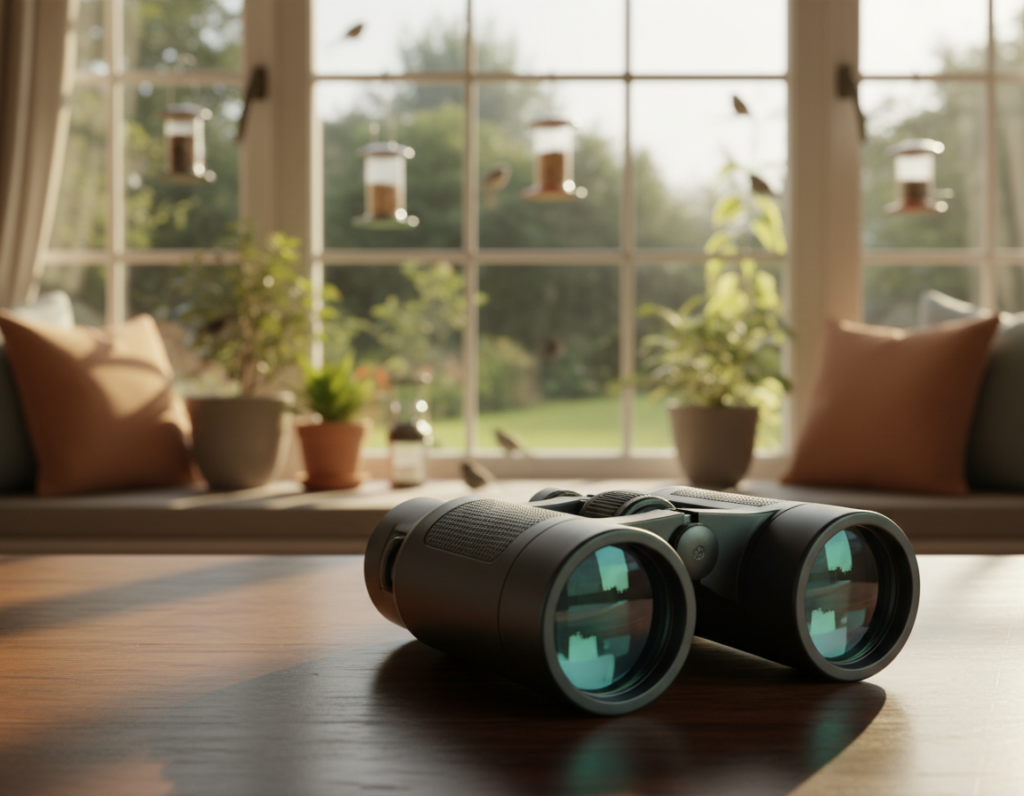
- Store a pair of binoculars near your go-bag for quick use.
- Keep field guides and notebooks in one spot to speed up species identification.
- Place lens covers and cleaning tools in a small zip pouch inside the station.
Creating a Dedicated Birding Station
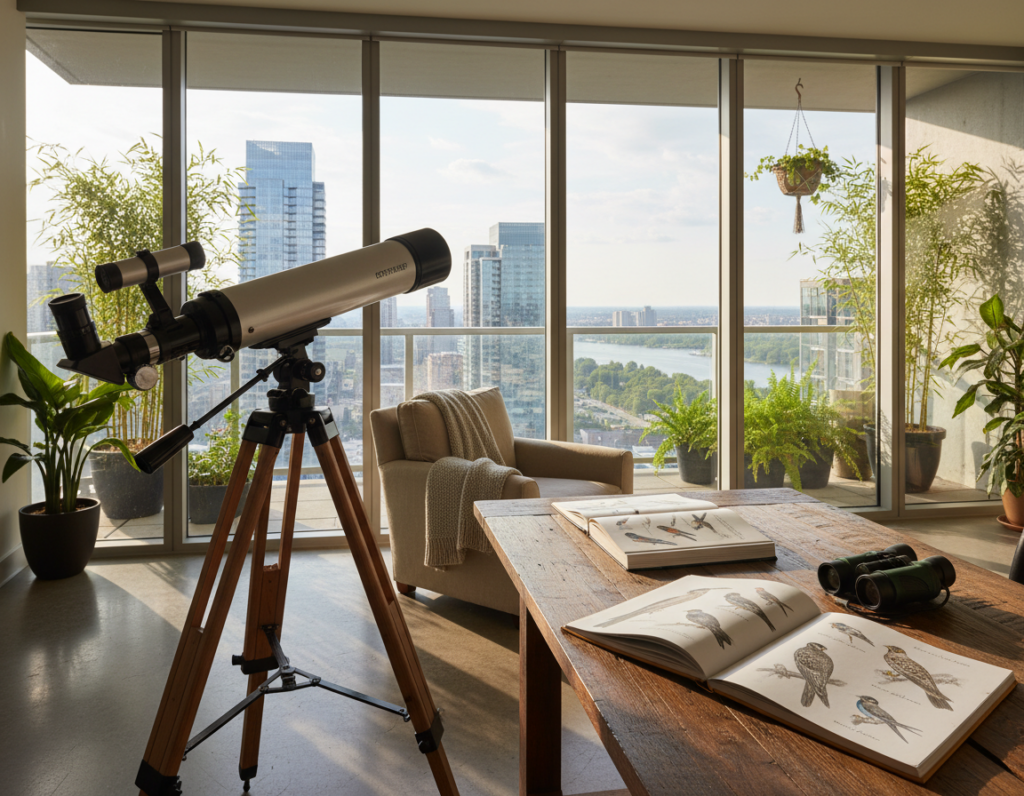
Designate a single corner or shelf as the birding station. They should include a small tray for lens care and a hook or slot for the bag.
Amy Tan’s DIY feeder idea shows how grid panels and zip ties can turn basic items into a functional staging area for backyard birds. Use simple, inexpensive fixes to make the station practical and tidy.
Maximizing Vertical Storage in Small Apartments
Tall shelves and slim walls make vertical solutions the smartest move in a compact apartment. They free up floor area while keeping essential gear ready for a quick trip.
Mount sturdy hooks to hang a pack and a field guide bag near the door. A waterproof daypack like the 20-liter Drycase Basin offers reliable protection from rain and sudden weather changes.
Install shelving that reaches toward the ceiling to store bottles, extra bags, and guides. Clear storage bags let users view contents at a glance and make the most of tall closet space.
- Keep hydration—such as a water bottle—on an upper shelf so it is accessible but out of the way.
- Place the pack and heavier gear lower on wall hooks for easier reach and better protection.
- Position the storage area away from windows to reduce moisture risk and extend protection for optics and books.
Vertical storage creates room and speeds preparation. With simple fittings and a waterproof pack, a small apartment can hold everything needed for safe, efficient bird trips.
Selecting Compact Gear for Mobile Birding
For mobile trips, choosing compact, multiuse gear keeps a birding day light and efficient.
Comfort and quick access
A good harness spreads the weight of binoculars across the shoulders and back. That reduces neck strain on long trails and lets a birder keep optics ready for sudden sightings.
Utilizing lightweight field bags
Carry what matters
Hip or leg bags free the torso while holding a field guide, camera, and a water bottle. Look for pockets that fit a phone, power bank, and a small scope cover for protection.
Packing essential tech and notebooks
Reliable nav and weather-ready notes
Packing tech like the Garmin Oregon 600 ($400) keeps navigation simple in new areas. Waterproof notebooks, such as Field Notes Expedition Edition, let observers record identification even in rain.
- Clothing: moisture-wicking layers, durable pants, and lightweight boots help on mixed trails.
- Bring a charged phone and a power bank for apps and longer sessions.
- Choose low-weight bags and a compact pair of binoculars to save weight.
For gear buying guidance, consult a curated list of the best bird watching gear.
Maintaining Your Optics and Field Tools
Simple maintenance routines protect fragile optics and keep field work easy. A brief checklist and a few reliable supplies will help a birder preserve lenses, guides, and other gear for years of use.
Cleaning and Protecting Sensitive Equipment
Always clean binoculars and scope lenses with a proper kit to maintain clear identification in the field. Use a blower, soft brush, and lens cloth in that order to avoid scratches.
Store optics in a padded bag when not in use to guard against dust and moisture. Check a field guide and notebook after each trip for wear, and replace pages or covers as needed.
- Insect relief: A Thermacell Repellent Camp Lantern ($60) helps keep insects away during long glassing sessions.
- Wet conditions: For wading, Muck Pursuit Stealth boots ($205) give knee-high waterproof protection.
- Routine care: Clean cameras, water bottle caps, and pockets of bags; air out base layers and pants to prevent odors.
Keeping a small repair kit, a spare lens cover, and a lightweight pack ready will shorten prep time and protect gear on trails and in variable weather.
Conclusion
Simple systems that store optics, guides, and tech together let a birder focus on sightings, not searches.
Following this advice helps maximize small spaces and keeps items ready for any day in the field. Routine care adds a layer of protection against wear and harsh weather.
Whether they use a phone for ID apps or carry a paper guide, quick access saves time and reduces stress. These habits free more minutes for watching and learning about local species.
Clear routines and small fixes make trips smoother. With the right setup, each outing becomes easier and more enjoyable.