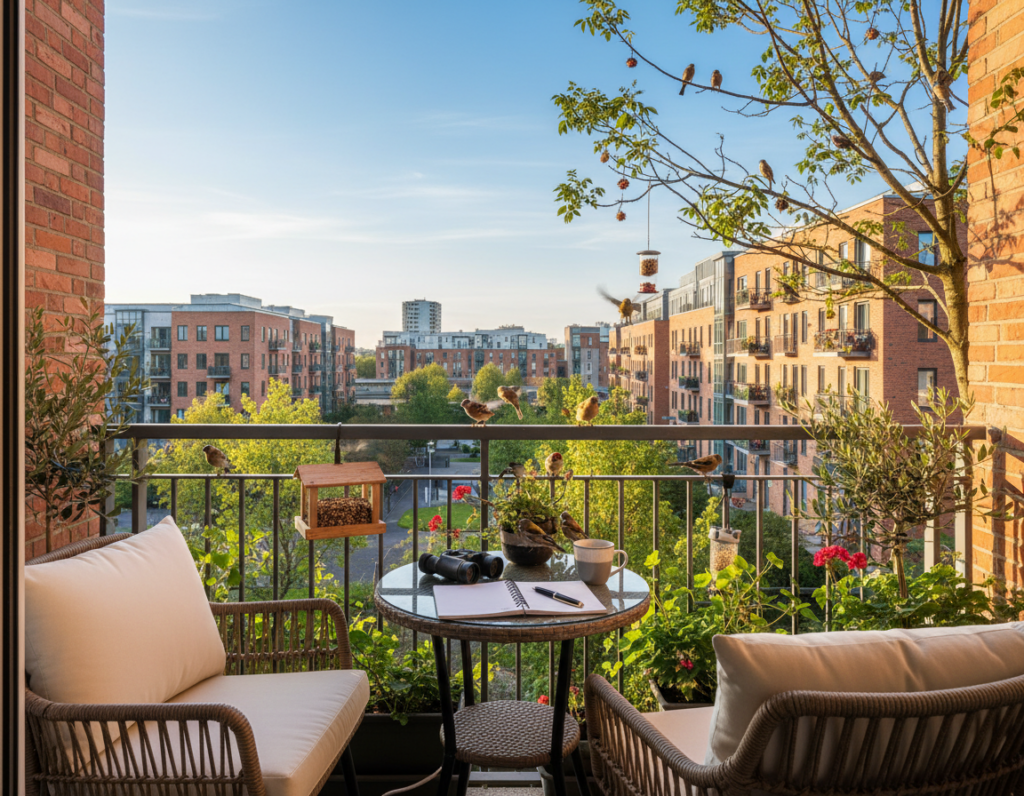
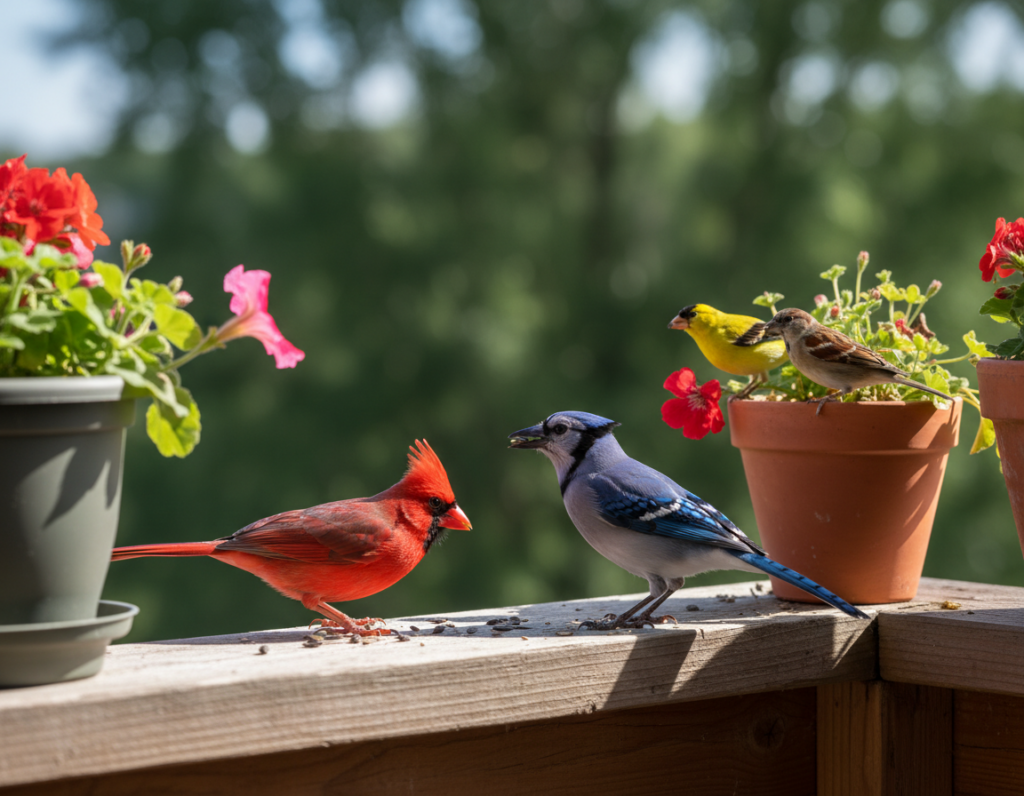
Urban nature can feel distant, yet it is close enough to notice from a window or balcony. This short post guides readers through simple steps to attract local birds and enjoy daily wildlife sightings.
They learn how to choose feeders, offer safe water, and create spots that suit local habitat and weather. The Cornell Lab of Ornithology offers basic tips, but city dwellers often add creative solutions for higher floors.
With modest effort and thoughtful placement, even one apartment can invite vibrant life. Observing a bird on a ledge or a nearby tree is rewarding and requires little gear.
Key takeaways: Simple actions attract birds; minimal cost; adaptable to high-rise living.
Assessing Your Apartment for Birdwatching Potential
Start by mapping out the usable outdoor and window zones to see where feeders and plants fit best. A quick measure tells you the total size of balcony or ledge and what gear will fit. This step sets realistic expectations and helps plan safe placements.
Evaluating Layout
Sketch the layout and mark wind patterns and shelter. Note where residents can view a bird species from inside through windows. Even a narrow ledge can provide enough space for a feeder or planter.
Sunlight and Exposure
Observe sunlight across the day. Pick plants that match your exposure and create a micro-habitat that attracts several birds over time.
- Measure the usable area before adding feeders or pots.
- Track which parts warm up during the day and which stay windy.
- Watch how different species use the space at different times.
Local examples show height is not a barrier; a Seattle resident on the 10th floor kept a hummingbird feeder successfully. Careful assessment helps connect city dwellers with nature and boosts sighting chances.
Navigating Building Rules and Safety Concerns
Before adding any feeders or planters, review lease terms and condo rules. This prevents conflicts and helps maintain shared living standards.
Consider neighbors and visual impact. Use low-waste food like hulled sunflower or nectar to avoid a mess that could upset others.
Secure attachments matter. Fasten feeders so they cannot fall and endanger people below. This creates a safer home for visiting birds and protects passersby.
- Check rules: confirm what is allowed on your balcony and window frames.
- Reduce waste: choose tidy feed options and trays to limit spills.
- Protect birds: place feeders away from windows and use strike-reduction treatments recommended by Heidi Trudell.
If a resident keeps a pet, position the setup so both animals and visitors stay safe. For guidance on glass collision risks, see this resource on threats to birds from buildings: window collision impacts.
Effective Methods for Birdwatching in Small Apartments
A few focused changes to feeders and placement can greatly increase sightings from upper floors. Start with a feeder that fits your balcony size and the available space. A compact, secure tray or window-mounted option avoids clutter and limits mess for downstairs neighbors.
Choosing the Right Feeders
Choose feeders designed for the types of birds you hope to see. Use high-quality seed to attract more species over time. Lynn P. of Toronto proved this: by offering consistent food and water for years, she hosted the same bird species from her 21st-floor unit.
Placement Strategies
Place feeders near but not flush against windows to reduce collision risk. Keep the feeder where it is easy to refill each day. Journalist Emily Voigt’s experiment from 25 stories showed a secure, window-mounted feeder can succeed even at high elevation.
“With a steady supply and safe placement, city balconies become reliable stopovers.”
Keeping Feeders Clean
Clean feeders regularly to prevent disease. A mild bleach solution works well — rinse thoroughly and let dry before refilling. If you have a pet, make sure feeders are unreachable to avoid unwanted interactions.
- Tip: Match feeder size to your space to reduce spill and maintenance.
- Tip: Refill in the morning so visiting birds find fresh food.
- Tip: Rotate and clean parts every few weeks for long-term success.
Creating a Bird-Friendly Container Garden
Container gardening offers a practical way to bring nature closer to urban living and support local bird species. Small, well-chosen pots can supply food and shelter even when outdoor space is limited in an apartment.
Selecting Native Plants
Julie Zickefoose notes that hauling a container and compost up a high-rise is easy and effective. Native plants feed local birds and offer shelter through the seasons.
- Group containers to create visual cover and make visitors feel safe.
- Pick hardy natives that provide berries or seed as natural food.
- Choose pet-safe species so a resident with a pet can enjoy the setup worry-free.
“A few well-placed pots can become a vital oasis for wildlife even amid concrete,”
With minimal care, a container garden delivers plenty of reward: regular sightings of urban birds, habitat for vulnerable species, and a greener view from home.
Engaging with the Urban Birding Community
Joining local groups opens doors to shared knowledge and regular bird sightings across the city. Neighbors and online communities lend practical tips about which native plants and food work best on a balcony or ledge.
Participants often share records through eBird and other citizen science projects. These reports help researchers track how species adapt to narrow spaces near windows and high-floor balconies.
Benefits: members learn tricks for safe placement, cleaning, and how to keep a pet and visiting birds comfortable. Sharing photos and notes brings plenty of inspiration and new ideas.
- Find local groups to learn about common bird species and seasonal visitors.
- Share sightings on social platforms to swap tips with other urban birders.
- Contribute to citizen science to support broader conservation work.
“Community connections turn solo observations into valuable data and lasting friendships.”
Conclusion
Simple routines and safe placements make it easy to enjoy more feathered visitors from home. By following this post, a resident can turn a narrow space on a balcony or ledge into a steady source of joy.
Every bird that visits adds calm to daily living and brings chances to learn about local species. Whether on a high floor or near ground level, the thrill of a new visitor is the same.
Start today by trying one new feeder or plant and keep windows safe. For practical tips on attracting birds to your view, see this guide to attract birds to your window.