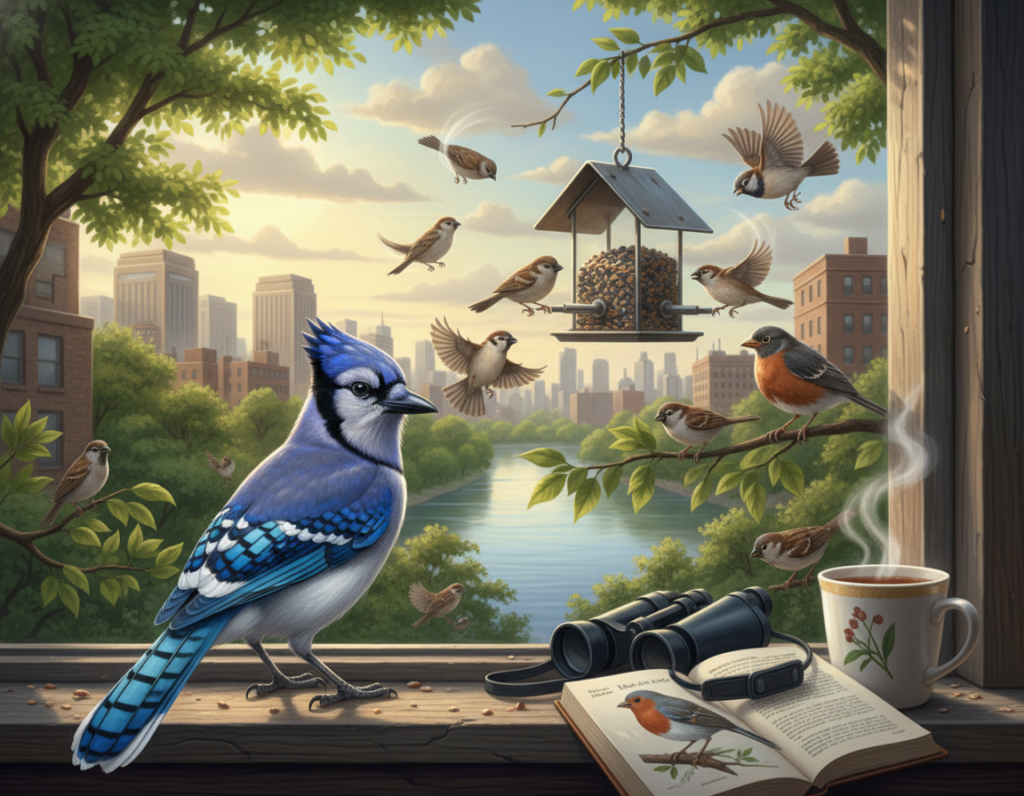
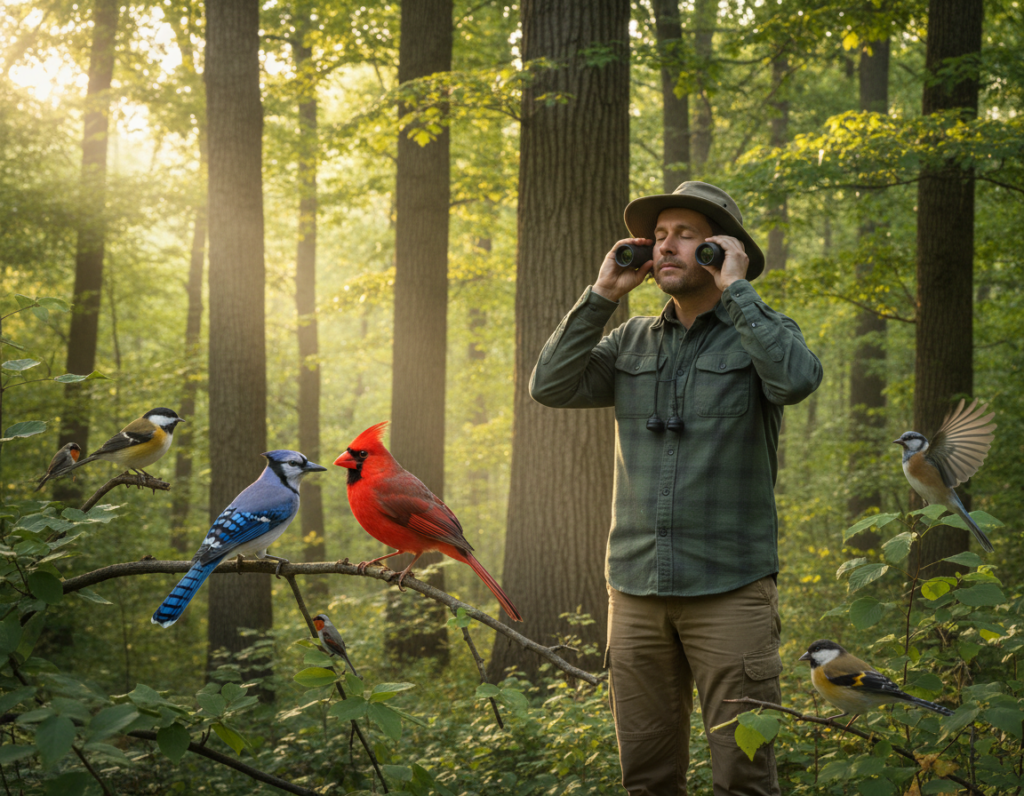
The gap between curiosity and confident observation is smaller today. New tools turn a phone into an expert guide that never tires of repeated questions.
Many people find matching backyard sightings to paper field guides frustrating. The Cornell Lab of Ornithology develops resources like Merlin that simplify this process. These digital guides let a beginner learn on the move and build accurate skills.
In the urban field, these digital tools help users identify birds and local species with more ease. They also provide rich information that supports learning and contributes to science through shared observations.
Modern apps turn what was once a solitary hunt into a shared activity. Birders can join a global community, compare notes, and feel confident spotting new species. With a reliable app in hand, others who were hesitant can enjoy birding and keep exploring nature.
Overcoming the Frustration of Bird Identification
Many newcomers find the sheer choice in field guides more confusing than helpful. Flipping through pages while a sighting fades can drain the fun from a walk in the field.
Traditional field guides remain valuable, but they lack interactive filters. That makes it hard to narrow likely candidates when species list is long.
Developers solved this by creating an app that trims possibilities using location, season, and visible marks. Users can quickly identify birds and move on to enjoying the view.
“What used to be a research task is now a few taps away, turning confusion into curiosity.”
- Many birders report less time searching and more time observing.
- Apps narrow options so users can learn faster without feeling overwhelmed.
- These tools free users to savor the moment and build real skill.
Why Bird Identification Apps for Beginners Are Essential
Smart mobile tools put expert-level resources into anyone’s pocket during a neighborhood walk. These tools combine deep reference material with quick, practical help that answers users’ immediate questions.
Digital Convenience
Offline access means a full field guide is available even without service. The Audubon Bird Guide carries over a century of North American records and links with eBird data.
AI-Powered Recognition
Merlin’s AI can listen to calls in real time and suggest likely species. Its Bird ID Wizard asks a few simple questions about size, color, and behavior to help users identify birds quickly.
“These tools turn curiosity into consistent learning by answering the right questions at the right moment.”
- Set up a free account to save sightings and track progress.
- Stored reports contribute to global science and improve recognition models.
- Systematic prompts ensure a beginner gains skill with each encounter.
Mastering the Merlin Bird ID Experience
A powerful mix of sound, photo, and step-by-step prompts makes Merlin a practical companion on any walk. It is a free tool from the Cornell Lab of Ornithology that uses machine learning to suggest likely species quickly. The interface guides users through simple questions about size, color, and behavior to narrow a list of candidates.
Sound Identification Features
The Sound ID feature listens to songs and calls and populates a list of possible matches in real time. That live list helps users confirm what they hear without long waits.
Merlin also supports photo recognition and a step-by-step guide. Users can download regional packs to use the app anywhere in the world without wifi, from a city park to a Guatemalan cloud area.
- Device support: Consistent tools on iOS and Android.
- Offline packs: Full guide data available by location.
- Expert updates: Regular improvements from the Cornell Lab of Ornithology keep results current.
“Merlin’s sound feature turns short snippets of song into actionable suggestions.”
Building Skills with the Audubon Bird Guide
The Audubon Bird Guide app gives users clear, step-by-step tools to learn about roughly 800 north america species.
Designed with the beginner in mind, this guide app pairs range maps and photos with concise notes on behavior and nests. The structured filters let birders focus on field marks such as wing shape or habitat.
Integration with the eBird database, managed by the Cornell Lab of Ornithology, shows recent sightings nearby. That live context helps users verify a sighting and plan where to look next.
- Track progress: Create a free account to save a personal list of observations.
- Learn details: Use filters to practice spotting plumage, size, and posture.
- Contribute: Share sightings and add useful information to citizen science.
Whether in the field or at home, the Audubon guide app supports steady learning. For practical tips on building lasting skills, see this building skills resource.
Utilizing Illustrative Field Guides Like Sibley
Illustrative field guides offer a unique way to learn species at a glance. The Sibley Birds app is the digital version of The Sibley Guide to Birds, created and illustrated by David Allen Sibley.
The app features expert plates that show 930 species found in North America. Each illustration highlights plumage variations and typical posture, so users can match what they see in the field more easily.
Filters let users narrow a list by location and time of year. That makes the app highly effective when traveling across a region or checking recent sightings.
Priced at $19.99, this version gives birders a portable, artful reference. It also includes range maps and sound recordings, turning the guide into a complete resource for serious birding.
- High-detail illustrations capture movement and stance better than many photos.
- Side-by-side comparison helps distinguish similar species quickly.
- Range maps and audio provide context for confident field decisions.
“Sibley’s illustrations condense a species’ essence into a single, telling image.”
Specialized Tools for Identifying Warbler Species
A split-second sighting of a warbler demands tools that match speed with detail.
The Warbler Guide app, released in 2013, targets the 35+ warbler species found across North America. It gives observers focused resources to turn a brief glimpse into a firm record.
Three Dimensional Modeling
The app offers 3D models in all plumages that users can rotate and zoom. That capability helps match angle, size, and posture to a live view.
Visual Comparison Tools
Side-by-side comparison lets users view similar species from the same angle. This feature is vital when a small bird shows only a flash of color or an odd wing flick.
- Calls and sonograms: A large library of songs, chip calls, and flight calls with annotated sonograms aids learners who prefer listening.
- Filters: Season, location, and view filters narrow the list of possible species quickly.
- High-quality photos and data: Photos and curated information support confident field decisions.
“Specialized tools reduce guesswork and help birders confirm a sighting, even when the view lasts just a second.”
Contributing to Science Through eBird
Every checklist submitted through eBird turns a casual sighting into usable science. eBird is a community science database managed by the Cornell Lab of Ornithology that gathers sightings from around the world.
The eBird Mobile app free version lets users submit checklists while out in the field. By recording counts and time spent birding, observers supply valuable data that researchers use to track population shifts and range changes.
The platform links to the Macaulay Library, so users can attach photos and sound clips to a report. That multimedia information improves verification and helps experts refine models.
- Contributing through eBird connects local reports to a global community.
- Setting up an account is quick; every checklist builds a permanent record of sightings.
- Both casual observers and expert birders add value to conservation science with each submission.
Notable users, such as Peter Kaestner, rely on eBird to log rare finds and inform long-term research. In short, using eBird makes individual observations part of a larger effort to protect species worldwide.
Organizing Your Sightings with iGoTerra
A reliable checklist tool turns scattered notes into a coherent life record.
iGoTerra is a powerful database used by competitive birders like Peter Kaestner to organize wildlife lists and reach birding goals. The iGoTerra Pocket app lets users submit lists that feed directly into the main database for easy tracking.
The platform is not limited to birds. It allows users to keep lists of mammals, insects, plants, and other animals, making it a versatile tool for nature record-keeping.
iGoTerra offers a free version plus two paid tiers. That range gives flexible access to advanced features like heard-only flags and comparative leaderboards.
- Track progress: Maintain a detailed life list and review past sightings.
- Compare lists: See how your totals stack up against birders around the world.
- Safe storage: Your data and photos sync with an account you can access anywhere.
“Organizing sightings with iGoTerra helps users set goals and plan smarter outings.”
Connecting with Local Birding Communities
Local networks turn a solo hobby into a shared resource of tips and timely alerts. Joining these groups gives users fast updates about recent sightings and the best spots in their area.
Private messaging groups such as WhatsApp offer a quiet, trusted space to post photos of rare birds and arrange meetups. These threads help members coordinate trips and confirm a sighting quickly.
Private Messaging Groups
- WhatsApp lets members share images and GPS pins in a private chat.
- Small groups foster mentorship and quick verification from an expert.
- Maintaining a group list makes organizing field trips simple.
Real-Time Chat Servers
Discord servers provide structured channels for county or state discussions. They support voice, images, and instant links that guide users to active locations.
- Real-time chat gives prompt access to local knowledge and rare species alerts in North America.
- Joining often starts by meeting others on walks or via social media and creating an account.
- Being part of a community adds context to sightings and connects users to wider citizen science efforts.
“Community groups turn scattered reports into a helpful, living list of what to watch this season.”
Enhancing Field Observations with Weather Data
Weather patterns often set the stage for peak migration and can change a quiet morning into an active one.
Windy helps users read wind speed, direction, and cloud cover so they can predict where migrating birds will concentrate. RadarScope gives a professional radar view that shows migration signatures in real time.
The Cornell Lab of Ornithology produces BirdCast using radar data to forecast migratory activity. Birders can monitor those forecasts and choose prime hours for field observation.
- Plan outings: Use Windy to pick mornings with favorable winds and low cloud.
- Track movements: RadarScope visualizes flocks on radar, improving the odds of meaningful sightings.
- Record evidence: Voice Memos on iOS and Android captures calls and notes for later review.
“Combining weather charts with on-site observation turns casual walks into useful data collection.”
Applied weather information helps observers anticipate species arrival and refine search size and location. This approach strengthens community reporting and improves the quality of field records.
Exploring Nature Beyond Avian Species
Exploring beyond the usual backyard finds reveals whole networks of life at your feet. Tools such as iNaturalist let users document fungi, plants, insects, and other animals with a quick photo and location.
iNaturalist is a nonprofit platform that supports community-driven science. Observations uploaded there enter a global database where experts and enthusiasts help refine IDs and verify records.
The Seek app by iNaturalist gives a simpler, family-friendly interface. It uses image recognition to suggest species and nudges users to learn more without overwhelming them.
“Uploading a single observation can teach you about an unknown plant and contribute to research.”
- Expand a birding hobby to include insects, plants, and mammals during walks.
- Use iOS and Android versions to record sightings any time, even while traveling.
- Join the community to learn from others and improve observation skills.
Conclusion
The right digital guide can deepen enjoyment and sharpen observation skills. It helps make outings more productive while keeping the focus on nature.
Using practical tools and the best practices helps users track sightings, learn local species, and grow confidence. Tools such as merlin bird offer sound and photo support that speeds learning.
Joining a local birding community connects casual observers with experienced birders and creates chances to share records. Above all, a strong, respect for wildlife and simple enjoyment of the outdoors will keep the hobby rewarding.