Creating a simple record from a balcony will help residents document the diverse avian life found across North America. Lisa Fimiani, a Fellow at the Loyola Marymount University Center for Urban Resilience, notes that watching local visitors is an accessible way to connect with nature and gather useful data.
By counting the numbers of birds that visit, observers add details on how species adapt to the city and backyard settings. Small, regular logs can reveal migration timing and shifts in local populations over months and years.
This short guide will offer the top strategies for keeping a consistent, accurate log. Whether noting water visitors or common backyard arrivals, each entry supports research on North America’s wildlife and conservation priorities in your area.
Getting Started with Urban Birding
Start by picking a clear view that gives a reliable snapshot of local arrivals each day. A steady vantage helps observers note calls, behavior, and arrival times with less guesswork.
Choosing a vantage point
Select a place where visitors can land and forage near the home. Natural perches, feeders, or water sources attract regular traffic. In North America, even small green pockets offer useful viewing spots.
Establishing a routine
Consistency matters. Professional watchers suggest at least 15 minutes daily to catch transient arrivals. Short, repeated sessions across morning and late afternoon reveal how different birds use the same area.
- Focus on a single point to spot subtle behavior changes as seasons shift.
- Record time, weather, and counts to build a reliable dataset.
- Stay patient; familiarity with local species grows quickly from steady observation.
Essential Gear for Balcony Observations
Good optics and a few core tools make balcony observations easier and more accurate. High-quality binoculars are the single most important purchase. They help the watcher pick out small details at a distance and reduce misidentification.
A field guide tailored to North America supports quick comparisons between similar-looking local birds. A compact regional guide or a phone app can speed up ID while observing near water or trees.
Keep a small notebook or a phone ready to log time, behavior, and counts. Immediate notes preserve data integrity and make later analysis easier.
- Consider a spotting scope for long-range views of waterfowl at a pond or lake.
- Choose gear that reveals plumage, posture, and feeding habits.
- Invest in reliable equipment to improve documentation year-round.
Setting Up Your Urban Bird Species Checklist
A tidy log turns daily balcony notes into useful records for tracking local sightings. It gives structure to observations and supports data that matters for conservation across North America.
Organizing your log
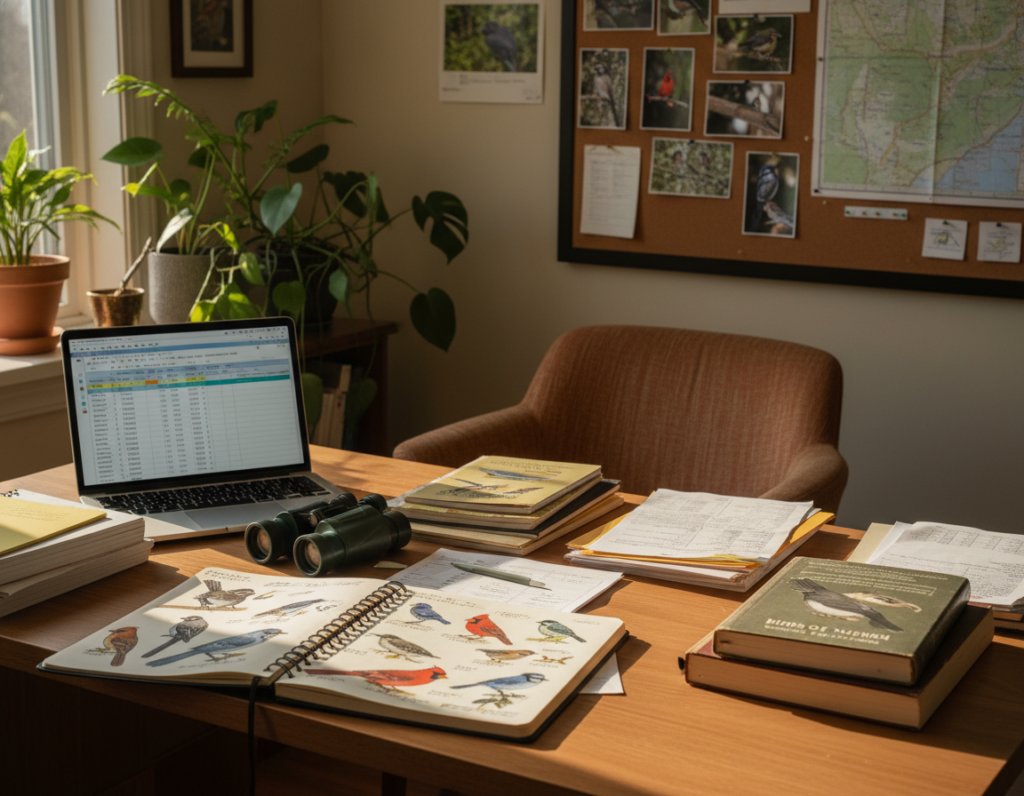
Start with clear columns. Include date, time, weather, and the identified species. Add a small field for the numbers of individuals seen.
Keep entries consistent. Use the same format every day so counts remain comparable with other surveys in the same area.
- Record family or common grouping to spot trends by lineage.
- Sort entries by frequency to highlight frequent visitors versus rare finds.
- Use a digital or paper format depending on comfort; both improve ID skills and engagement.
Identifying Common City Birds
A steady routine helps observers link sight and sound to recognize regular visitors from a balcony. Short daily checks of shape, motion, and call give faster IDs over time.
Distinguishing common species
Focus on a few reliable marks. Note size, bill shape, tail length, and flight style. Learning the top 25 local species — such as the American Crow, Red-tailed Hawk, and Allen’s Hummingbird — builds a strong base.
Compare similar forms like the Eurasian Tree Sparrow and Yellow-vented Bulbul by checking head pattern and posture.
Recognizing bird calls
Sound often reveals hidden visitors. Learn one clear call per regular visitor. The Zebra Dove’s soft coo or a crow’s rattle can confirm an ID when sight is brief.
Recording short clips on a phone helps match calls later to field guides for north america lists.
Identifying plumage variations
Watch for sexual dimorphism and seasonal changes. Males and females may differ in color or markings; juveniles can look muted.
Some city residents show territorial breeding behavior visible from balconies or gardens. Water birds like the Collared Kingfisher add distinct color cues to daily logs.
- Start with shape and call, then add plumage details.
- Use photos and short notes to track variations.
- Prioritize frequent visitors to grow confidence quickly.
Understanding Bird Behavior and Migration
Seasonal travel sends flocks hundreds or thousands of miles to reach breeding habitats and reliable water stopovers.
Migration across North America is complex. Observers note timing to see when the highest activity will appear in their area.
Breeding cycles shape local behavior. Knowing when courtship or nest building starts helps predict peaks in sightings from a balcony or green space.
- Many birds depend on urban water for rest and refueling during migration.
- Watching movement reveals how individuals cope with the modern city landscape.
- Documenting dates and behaviors helps track how climate change shifts migration timing.
Recording nest displays, courtship flights, and stopover use adds value to a personal log. Small, steady notes can support larger studies on changing patterns of bird movement.
The Role of Native Plants in Your Backyard
Native flora forms the ecological foundation that supports diverse local wildlife near homes in North America.
Douglas Tallamy argues in Gardening For Life that planting native plants is essential for healthy habitat. These choices provide food, shelter, and nesting materials that will attract more birds and benefit many species.
Selecting bird-friendly flora
Choose plants that match your local area and soil. Native shrubs and perennials offer berries, seeds, and nectar across seasons. This steady supply helps support breeding and migration stopovers.
- Lower water use: Native plants often need less water than non-native alternatives.
- Pest control: A diverse plant mix attracts insect eaters that naturally reduce pest numbers.
- Year-round value: Provide flowers, fruit, and shelter for nesting and roosting.
“Native plants support the complex food webs that sustain wildlife,”
Planting a mix of trees, shrubs, and groundcover will help create a resilient backyard habitat. Over time, observers will notice a richer mix of birds and related species visiting the yard.
Creating a Welcoming Habitat for Local Species
Even compact spaces can support nesting and shelter when they mimic native plant layers.
Provide clean water year-round. A shallow bird bath or small fountain offers drinking and bathing spots that attract visitors from nearby parks and gardens.
Add shelter with dense shrubs, potted evergreens, or a safe nest box. These features protect local species from predators and harsh weather.
Design planters to include native plants that supply seeds, nectar, and insects. This approach supports seasonal needs across north america and invites regular returns to the area.
- Place water where it is visible but safe from cats and heavy foot traffic.
- Install one or two nest boxes suited to common local visitors.
- Rotate feeders and clean them to reduce disease risk.
Maintain the space. Regular upkeep keeps water fresh and shelters usable. A well-kept balcony becomes a lasting sanctuary for birds and other wildlife.
Tracking Bird Numbers and Breeding Patterns
Routine monitoring of nesting sites helps translate casual sightings into meaningful population data. Observers should log nest counts, clutch size, and fledging success during the main breeding window.
Consistent entries of numbers and behavior reveal how local species adapt nesting habits to the specific conditions of the area. Short daily checks make trends easier to spot.
Document arrival and departure dates during migration to map seasonal fluctuations in birds on the balcony. Note any repeat visitors and sudden increases or drops in totals.
Water-associated species often show obvious courtship or nesting at ponds and wetlands; record these behaviors when present. Accurate tallies help identify long-term population trends across north america.
- Record date, location, numbers, and a brief note on breeding behavior.
- Photograph nests when possible to confirm success rates.
- Share consistent logs with regional projects to support conservation efforts.
Utilizing Digital Tools for Data Collection
Using apps and online platforms, watchers can timestamp, geolocate, and back up every sighting automatically.
Mobile tools make it fast to record the numbers of birds seen from a balcony and attach photos or short audio clips for later ID. Many apps built for North America include fields for counts, maps, and simple export options.
Platforms also let users compare observations with others in the city. That side-by-side view helps track migration timing and spot shifts in local populations.
Recording water or migratory visitors is easy with these tools. Uploading quality images and call recordings improves identification and strengthens the dataset that researchers use.
- Sync daily logs to cloud accounts to keep long-term records.
- Share verified entries to regional projects to support conservation across North America.
- Use exportable CSVs to analyze numbers and timing later.
In short, technology simplifies data entry and connects individual observers to a global community working to monitor the health and distribution of bird species.
Participating in Citizen Science Projects
Signing up for a citizen science event is an easy way to make your observations count for research. Projects run across North America let observers submit quick records from a balcony or backyard. These efforts turn local notes into data that professionals use to track population trends.
The Great Backyard Bird Count, led by the Cornell Lab of Ornithology and the National Audubon Society, accepts simple entries that add to a massive database of species. The Christmas Bird Count remains the longest-running survey, offering vital context on numbers and long-term change.
Recording breeding activity and migration timing makes each entry more valuable. Note dates, counts, and any water-focused sightings to help researchers map habitat use and seasonal shifts.
- Contribute recent sightings during organized events to amplify your data.
- Share clear counts and brief notes on breeding or migration behavior.
- Connect with local volunteers to compare results in the same area.
Engaging in these events links observers to a wider community and ensures daily logs support conservation priorities across North America.
Seasonal Changes in Your Local Bird Population
Observers will notice that the arrival and departure of different birds shape the rhythm of local sightings through the year.
Spring and fall migration bring sudden increases in numbers as many species travel across North America. Some visitors stop briefly; others stay to breed in the area.
Plumage and behavior change are easy to track. Watch for breeding colors in spring and more muted winter plumage later in the year.
- Migration adds new birds to the city, while others leave for distant breeding grounds.
- Water visitors often concentrate near local ponds or fountains in winter, offering clear viewing from a balcony.
- Recording arrival and departure dates reveals seasonal patterns and resilience in local populations.
Track short-term shifts by noting counts, breeding activity, and any changes in habitat use. Over time, these entries explain how life cycles and migration shape the living mix in the area.
Connecting with Local Birding Communities
Meeting fellow watchers reveals patterns in numbers and behavior that are hard to see alone.
Local groups provide context. Joining a club helps observers compare counts with others in the same area. This makes it easier to spot shifts in migration timing and water use across North America.
The Center for Urban Resilience, at 13110 Bluff Creek Drive, Playa Vista, CA 90094, offers resources and occasional meetups. Members trade tips, verify tricky identifications, and organize outings to watch water visitors and track migration routes.
- Compare your numbers with regional records to better understand trends.
- Share your notes to sharpen ID skills and discover new species nearby.
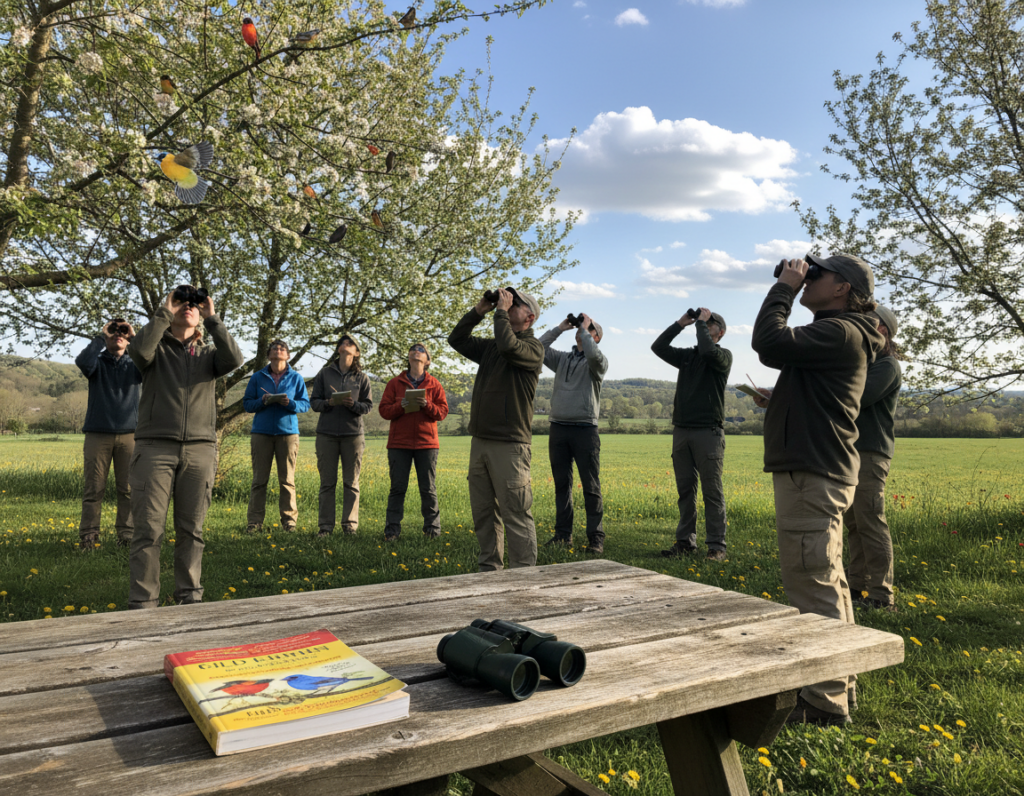
- Join field trips to see varied birds and observe seasonal movements first-hand.
Community support makes the hobby more rewarding and reliable. Active participation connects a single balcony observer to a wider network across North America.
Overcoming Challenges in Urban Environments
Patience and small changes pay off. Observers can turn a busy balcony into a reliable watch point by choosing quieter times and adding cover. Simple moves reduce stress for wary bird visitors and raise regular counts.
Manage balcony gardens to help birds feel safe. Dense shrubs, layered plantings, and a tucked water dish give shelter from predators. These steps increase the number of species and make frequent sightings more likely.
- Focus on the top species in the local area to build ID skills.
- Note numbers and behavior near water features to document pollution or habitat loss.
- Record migration timing to mark dangerous corridors across North America.
“Small habitat fixes and steady logs make a real difference for local wildlife.”
By addressing these challenges, observers create a safer habitat and improve the quality of their personal watching. Consistent, clear notes help researchers and protect the birds that rely on city gardens and shared green space.
Analyzing Your Observation Data
Turning raw observations into simple charts helps reveal long-term changes in visitor numbers. Monthly summaries let the watcher see trends in which species appear and when they show up on the balcony.
Comparing records with historical lists clarifies how the local area has shifted over years in north america. Noting seasonal peaks for water visitors reveals links to rain, temperature, or landscaping changes.
Simple statistics, like averages and medians, give a solid basis for claims about birds and counts. Those summaries also make it easier to share reliable results with researchers across north america.
- Run basic stats: totals, averages, and trend lines for numbers by month.
- Compare: match your log to regional records to spot gains or declines.
- Share and refine: submit analyzed data to projects and adjust methods to improve accuracy.
Regular analysis keeps observers engaged and helps them refine timing, vantage, and recording habits for better, repeatable results.
Expanding Your Birding Horizons
Stepping out to wetlands, forests, or local green spaces reveals many visitors that rarely show up on a balcony. Observers who master the top common visitors in their area can then search for rarer arrivals during migration.
Explore varied habitats. Wetlands and shorelines in North America attract a wider mix of water visitors. Woodlands and parks add forest-dwelling residents and seasonal migrants.
Learn on the go. Joining guided trips or workshops teaches practical ID tricks and documentation methods. These outings speed skill building and boost confidence when noting new species.
- Visit parks and gardens to compare counts across locations.
- Target wetlands to increase sightings of water-dependent visitors.
- Attend local field trips and use regional guides like regional birding resources for support.
Every new site adds entries to a personal log and deepens knowledge. By challenging themselves, observers keep the hobby fresh and rewarding for years to come across North America.
Conclusion
Daily notes made from home can reveal patterns that matter for regional research and planning. Creating a personal checklist is a simple, rewarding step that connects people to the natural world right from a balcony.
Consistent recording helps. By logging visitors and behavior, observers add valuable data to scientific efforts across the United States. Whether new or experienced, they strengthen understanding of local ecosystems and species trends.
Start a log today and join the community of citizen scientists. Every bird counted and every clear entry helps protect the diverse bird life that shares our spaces and enriches daily life.