Technology has made it easier for beginners to identify birds without relying on a paper guide. In recent years, devices like Bird Buddy capture clear photos and sort them into albums. Tools such as Haikubox use automatic audio detection to teach users the sounds of local species.
Many birders now use phone apps to log sightings and join a global community. These apps offer identification tips, sound clips, and simple ways to save photos and information. Setting up a feeder or a small backyard station gives people a steady way to observe patterns over days and through the year.
Simple methods—from smart feeders to an app on a phone—make learning enjoyable. They help users notice changes in life cycles, migration, and local species, while contributing useful data to researchers and the wider world.
Understanding Seasonal Bird Visit Patterns
Seasonal patterns reveal when different species move through a region each year. Observers can use those rhythms to plan for arrivals and changes across the seasons.
Knowing migration routes lets people prepare feeders and shelters before migrants show up. Studying local habits also deepens respect for complex life cycles and nesting timing.
Key habits to observe:
- Note first arrival dates each spring to map long-term shifts.
- Record which birds favor seeds, nectar, or insects to tailor offerings.
- Watch for repeat seasonal patterns to predict fall departures.
Experienced birders keep concise logs of sightings. These simple records help detect population changes and support local conservation efforts. Recognizing seasonal shifts is a core skill for anyone studying the natural history of the species that visit yards.
How to Track Bird Visits at Home Using Smart Technology
Using compact cameras and recorders, anyone can build a simple station to observe local species. This setup makes it easier to gather clear images and audio and to identify birds over time.
Setting Up Your Monitoring Station
Place a smart feeder or camera where activity is visible but birds feel safe. Make sure the device has a stable wifi connection so it can send data and notifications to the user’s app.
Quick tips:
- Position equipment near trees or shrubs to increase comfort for visiting species.
- Use a dedicated app to manage settings and view collected information.
- Follow the manufacturer’s guide to optimize angles and power supply.
Choosing the Right Location
Choose a high-traffic area for better results. Proper placement boosts audio quality and visual captures, which helps birders and the broader community.
Consistent placement and careful setup turn simple tools into a reliable way to collect useful data about local bird species.
Leveraging AI-Powered Bird Feeders
Smart feeders pair cameras with cloud apps to streamline photo management and identification. These devices bring automated sorting and alerts to anyone who wants a closer look at backyard nature.
Practical features to expect:
- The Bird Buddy feeder (regular price $249) uses a 5-megapixel camera to capture clear photos and auto-sort them into albums.
- Advanced algorithms help identify species and send real-time notifications when a new bird arrives.
- Battery life ranges from 5 to 15 days, and many users add a solar roof to extend power between charges.
Managing Photo Albums and Notifications
The companion app organizes photos and offers quick identification suggestions. If the AI is ever a bit off, users can correct names manually.
Sharing is simple: the system links to a global network where friends and birders can help with tricky IDs. This blend of automation, community, and clear photos creates an engaging identification experience that suits beginners and seasoned observers alike.
Monitoring Birdsong with Audio Recording Devices
Continuous sound recorders reveal changes in local species activity over weeks and years. The Haikubox ($399) is one such tool that listens round the clock and saves audio to the cloud with a five-year membership included.
The Haikubox uses an adapted version of the Cornell Lab of Ornithology’s BirdNET to provide high-confidence identifications of common species. It ignores human speech to protect privacy while capturing calls and songs.
Birders can replay clips throughout the day, download raw audio, and analyze the dawn chorus or migration timing. Over the years, such devices have become a key way to collect useful data and support community science efforts.
- Broad coverage: audio detects more species than a single feeder because it listens to all singers in range.
- Privacy-minded: filters out human conversation.
- Data access: download recordings for deeper study and sharing.
For a practical look at smart observation tools, see this summary of similar devices in the field: smart identification devices.
Essential Mobile Apps for Bird Identification
Smartphone apps now serve as on-the-go guides for recognizing local species. They pair visual references with audio tools to speed identification and learning.
Using Photo Recognition
Merlin Bird ID (free from the Cornell Lab of Ornithology) uses machine learning to suggest IDs from photos. It often gives quick, accurate results for common birds.
The Sibley Birds app ($19.99) provides expert illustrations and lets users compare similar species with clear detail.
Identifying by Sound
Apps now use short audio clips to suggest matches. Merlin also supports sound-based identification, which helps when visual clues are limited.
This audio feature is useful during migration or dawn hours when many species sing.
Comparing Species
Users can filter species by location and time of year to narrow results. The Audubon Bird Guide adds habitat, nest, and egg information for about 800 North American species.
Quick tips:
- Use photos first, then confirm with sounds for better identification.
- Save uncertain records and compare illustrations in Sibley for similar species.
- Share findings with the community to improve confidence and learn from other birders.
Keeping Digital Records of Your Sightings
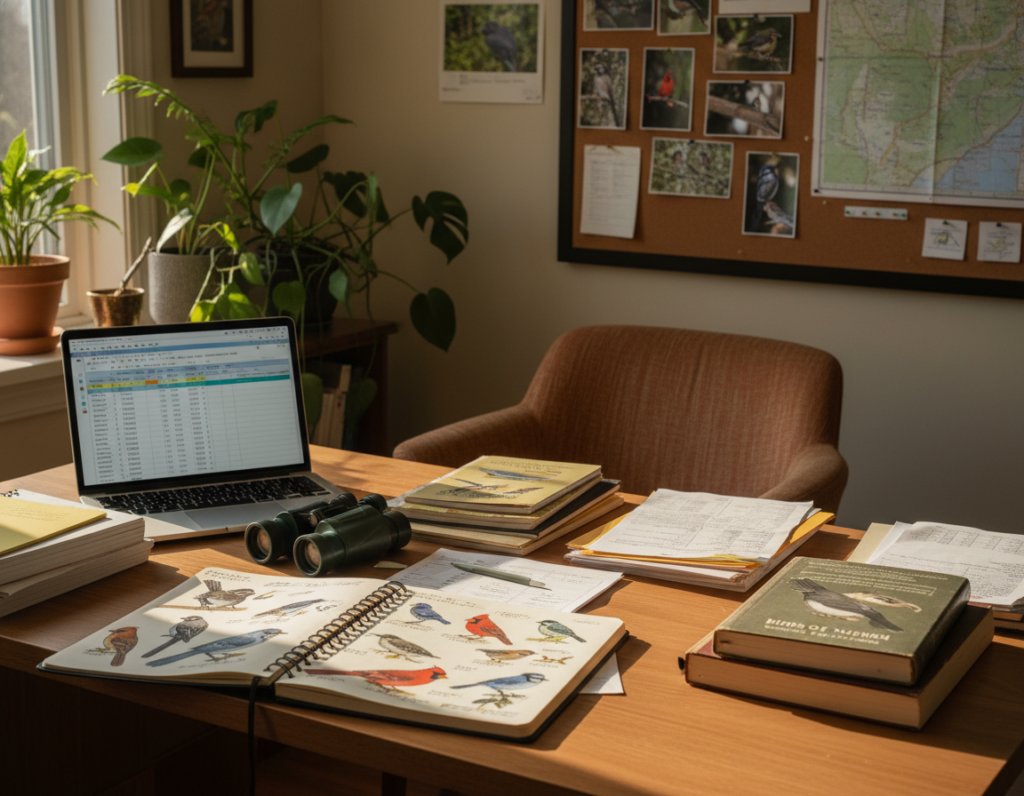
Keeping a clear digital log turns scattered sightings into a useful long-term record. Many enthusiasts use simple apps to save lists, times, and photos so each observation is preserved for future review.
eBird Mobile makes submitting checklists straightforward. Users can note the number of individuals per species and upload photos or short audio clips to support entries.
iGoTerra helps competitive birding users organize lists and mark whether a species was heard-only or seen. That distinction improves the quality of submitted data.
- Digital logs motivate continued participation and improve the overall experience.
- Shared checklists supply researchers with useful information on migration and population changes.
- Personal stats let users compare lists with other members of the community.
Whether observations come from a feeder or a local park, maintaining accurate records ensures contributions are valuable. Careful entries help scientists study distribution of various bird species and support wider conservation efforts.
Connecting with the Global Birding Community
A lively community can turn a single observation into useful data and shared learning. Members exchange photos, questions, and quick alerts that help others spot rare species and learn field tips.
Sharing Observations with Local Groups
Local channels on WhatsApp, Discord, or specialized forums let people post sightings and arrange meetups. These groups help both new and experienced birders refine IDs and enjoy the social side of the hobby.
Participating benefits the wider network. When observers share clear notes and photos, they add value to regional records and to the global community of nature enthusiasts.
“Good observations, shared quickly, become useful information for everyone.”
- Use concise posts with one photo and the time to help others validate records.
- Join regional threads or consult regional birding resources to find local experts and events.
- Respect etiquette: verify before sharing rare finds and credit contributors.
Utilizing Weather Data to Predict Migration
Observing wind patterns and storm fronts helps predict peak migration windows for many species. Apps like Windy supply clear visuals of wind speed and direction. This information shows when conditions favor longer, easier flights for migrating birds.
For live movement, RadarScope gives access to professional radar images. It reveals both weather and the passage of large flocks in real time. Birders use these images to decide where to go each morning.
- Use Windy to plan days when winds are tailing or light.
- Check RadarScope for flocks moving through your region in the early hours.
- Combine maps and radar to time outings for rare or migratory species.
Data-driven birding adds a scientific layer to observation. With the right tools and information, anyone can spend less time guessing and more time enjoying migration seasons.
Improving Your Backyard Habitat for Visitors
A small patch of thoughtfully chosen plants can change how many species come into a yard. Simple additions of food, water, and shelter make it easier to observe local wildlife through the year.
Providing Food and Water
Consistent feeding encourages repeat visits. Use a quality bird feeder and refill it on a regular schedule so birds learn a reliable source of food.
Make sure to clean feeders often to protect life and reduce disease. A shallow bird bath or gentle fountain adds water and draws many species in hot weather.
Creating Shelter
Plant native shrubs and a mix of tall and low vegetation to offer cover and nesting sites. Over years, layered plantings become safe corridors for breeding and migration.
- Provide dense shrubs for chicks and open perches for adults.
- Leave some leaf litter and seed heads to support insects that feed local species.
- Monitor calls and other sounds to learn which species use the yard each day.
Result: A well-maintained backyard becomes a living guide to nature. Through steady care, observers gain more time outdoors and deeper enjoyment of birding.
Troubleshooting Common Technical Challenges
A short checklist can resolve many app and device problems in minutes.
First, confirm the wifi signal and that the phone app is up to date. Weak connectivity causes missed notifications and slow uploads of data.
If photos or audio are unclear, try lowering sensitivity or changing the mic gain in the app. Small adjustments often improve capture quality within a few days.
Restarting the device or re-pairing it to the phone fixes most connection issues. This simple step saves time and restores normal operation for many users.
When identification seems off, remember algorithms learn from more data over time. Patience helps; systems usually improve with continued use and corrected entries.
“Many problems vanish after an update, a restart, or a quick settings tweak.”
- Check manufacturer updates for bug fixes and new features.
- Limit notifications to avoid alert fatigue during a busy time.
- Keep a troubleshooting log for recurring issues; it helps support teams diagnose problems.
With a bit of persistence and these simple steps, users can get the most from their smart tools and enjoy a smoother overall experience.
Conclusion
A simple routine of observation and tools turns casual interest into lasting knowledge about local species. This short guide shows how modern apps and devices can help anyone enjoy birding and learn more about the animals they’ve seen in their yard.
By combining apps, audio records, and a few good habits, users can improve at identifying birds and share findings with friends. The Cornell Lab of Ornithology and other resources remain excellent references for further study.
Every clear note and photo adds value to the global world of nature. With steady effort, both beginners and expert birders can contribute data, deepen their knowledge, and inspire others to explore this rewarding pastime.