Starting to notice the birds outside a window can feel overwhelming. There are more than 800 species across the United States and Canada, so a simple approach helps. He or she can focus on general shape and color instead of tiny details.
Learning the basic group a mystery bird belongs to gives key clues that narrow the search fast. Many beginners find that field guides and guides are arranged in ways that confuse more than help. Experienced observers often use a field guide only after they already know the general kind or group.
A practical way to improve is to keep a mental list of the species likely in the area at this time. This simple habit saves time and makes recognizing birds feel manageable and enjoyable.
Mastering Urban Bird Identification Tips
Cities offer surprising nesting and feeding spots that make observing local species easier than many expect. Parks, rooftops, gardens, and small wetlands all host a mix of common residents and seasonal visitors.
Learning a few reliable marks helps. Start with overall shape and behavior, then note color blocks and calls. A simple notebook logs what he or she sees and where.
Practical advantages:
- App or field guide use speeds up recognition and confirms records.
- Joining a local community brings shared observations and fresh learning.
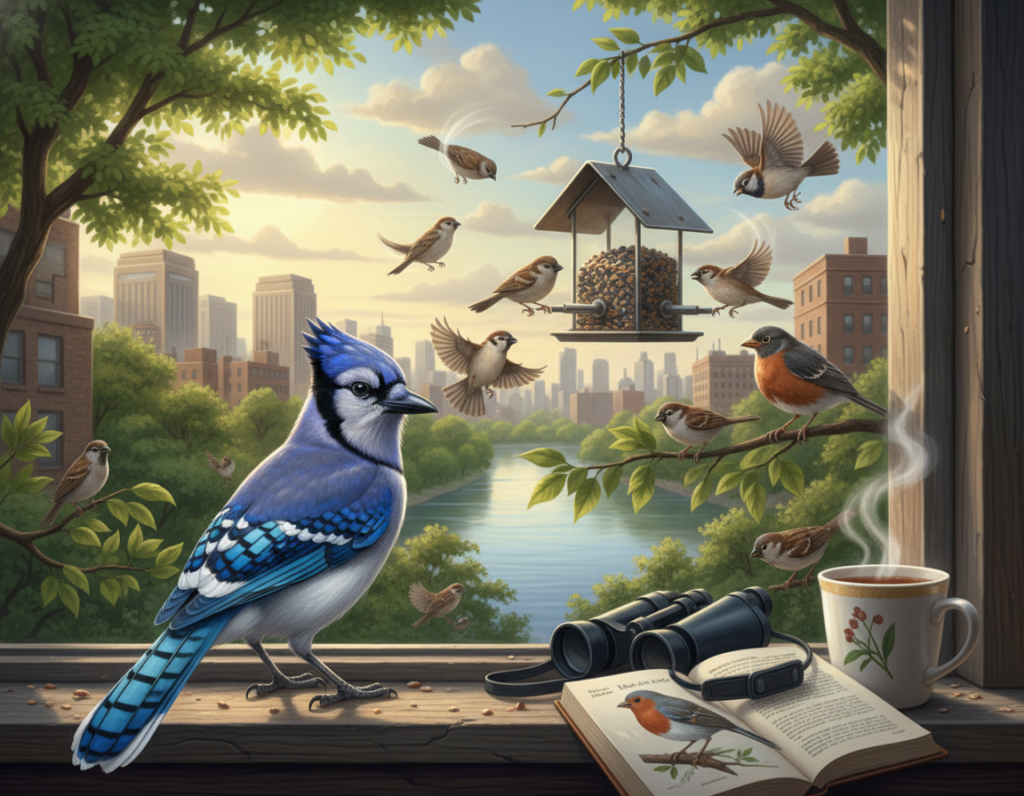
- Regular birdwatching from a window or roof offers a steady view of seasonal life.
For more on feathers and plumage clues, consult this concise field guide. These small habits give confident, repeatable results and make identification rewarding.
The Four Keys to Visual Recognition
Simple visual rules let an observer narrow possibilities in seconds. Focusing on four clear keys—size, shape, color patterns, and behavior plus habitat—makes recognizing species at a window much easier.
Size and Shape
Start by comparing size to a familiar species. Note if the creature has a large head, long bill, or short tail. For example, the Black-capped Chickadee is tiny with a large head and plump body, while the Chipping Sparrow is compact and flat-headed with a long, notched tail.
Color Patterns
Blocky color areas are faster to read than small details. A black cap or a yellow belly stands out immediately. The Cedar Waxwing shows sleek plumage and a square-tipped tail that helps separate it from other song species.
Behavior and Habitat
Watch how it moves and where it feeds. A Killdeer runs on the ground and shows two dark breast bands and a large eye. Habitat cuts the list further; water-loving species rarely appear in dry parking areas.
Quick rule: match size and shape first, add color patterns, then confirm with behavior and habitat to reach a confident field ID.
Essential Gear for City Birdwatchers
With the right gear, anyone can turn daily views into useful records and better sightings. A few items make the routine simple and satisfying.
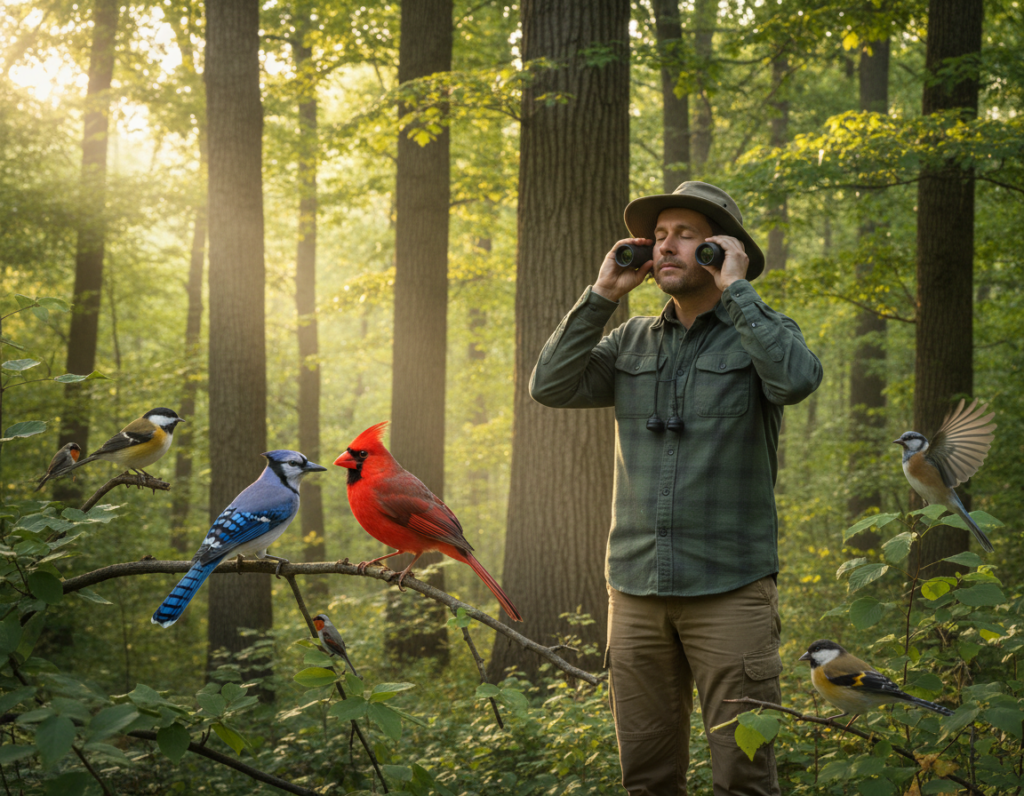
Optics first. Using a good pair of binoculars brings distant birds up close and protects the eye from strain. A quality pair binoculars is essential for clear detail during quick watches from a window.
Smartphone apps now handle many tasks once left to heavy field guides. The Merlin app from the Cornell Lab of Ornithology is excellent for beginners and pros alike. It helps log every bird seen this year and offers visual and sound help.
Other handy tools
- Haikubox: automatic birdsong ID notifies observers when a notable bird is nearby.
- Use reputable field guides on a tablet or website for deeper study when time allows.
- Combine apps and a steady pair of binoculars for reliable birdwatching and a richer experience.
Finding Feathered Friends in Urban Habitats
Small green spaces and water edges concentrate food and shelter, so they draw many common species. These spots let observers learn size, shape, and color without long trips.
Parks and Gardens
Parks and botanical gardens offer hiding spots, nesting habitat, and steady food sources for cardinals, robins, and other common birds. During the spring migration many species return to these areas, making the season lively for birdwatching.
Early mornings and late afternoons are the best times to watch behavior. He or she will see feeding, territorial displays, and ground foraging when birds search for food.
Water Bodies and Green Roofs
Rivers, lakes, and ponds attract ducks, herons, and kingfishers that rely on aquatic habitat. Green roofs and urban farms support finches and swallows by offering insects and seeds.
- Seasonal variety: Observing different seasons from spring to winter deepens the experience.
- Simple attractors: Provide food, water, and shelter in a garden to invite more species.
- Best times: Dawn and dusk reveal active feeding and social patterns.
Joining a local community can boost learning and share sightings. Small changes to a yard or balcony often bring noticeable life and richer birdwatching all year.
Conclusion
A short habit of watching size, shape, and movement turns casual sightings into steady learning. Focus on simple clues like head shape, wings, and color blocks to cut the list of possible species quickly.
Use tools such as binoculars and a reliable app or website to log what he or she sees. Keep a pocket guide and note behavior and sound when time allows.
Offer food and water in a yard or balcony to attract more birds. With steady practice, birding from a window becomes a richer, lasting experience that connects the community and sharpens the eye.