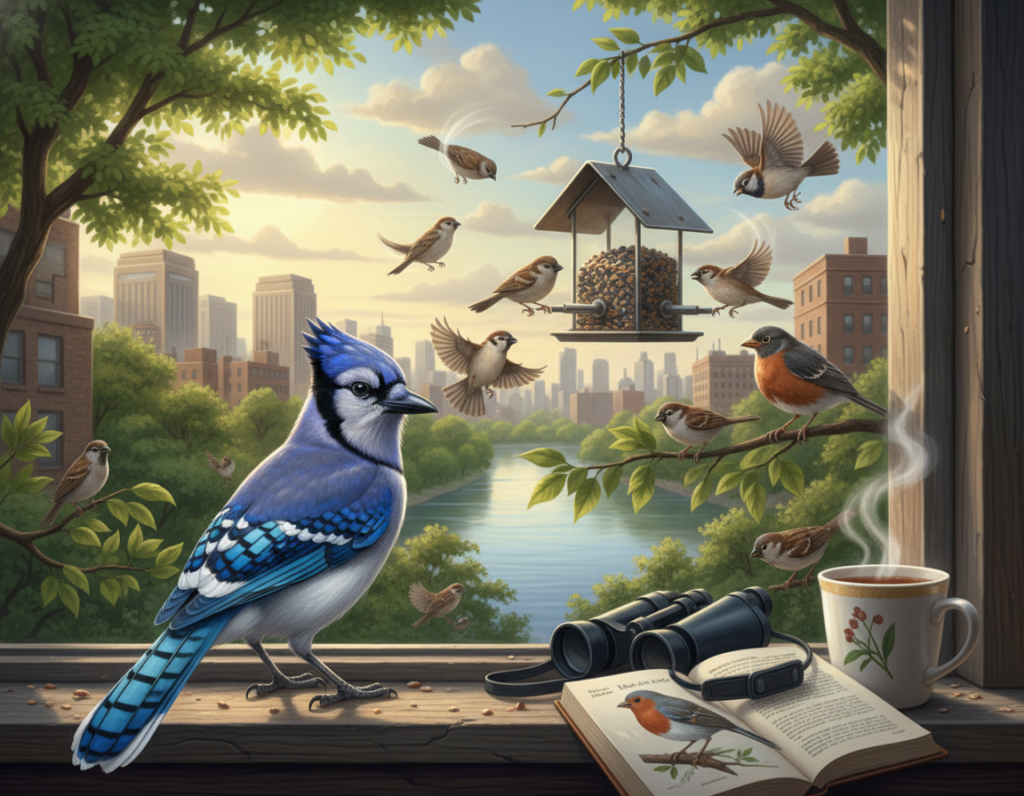
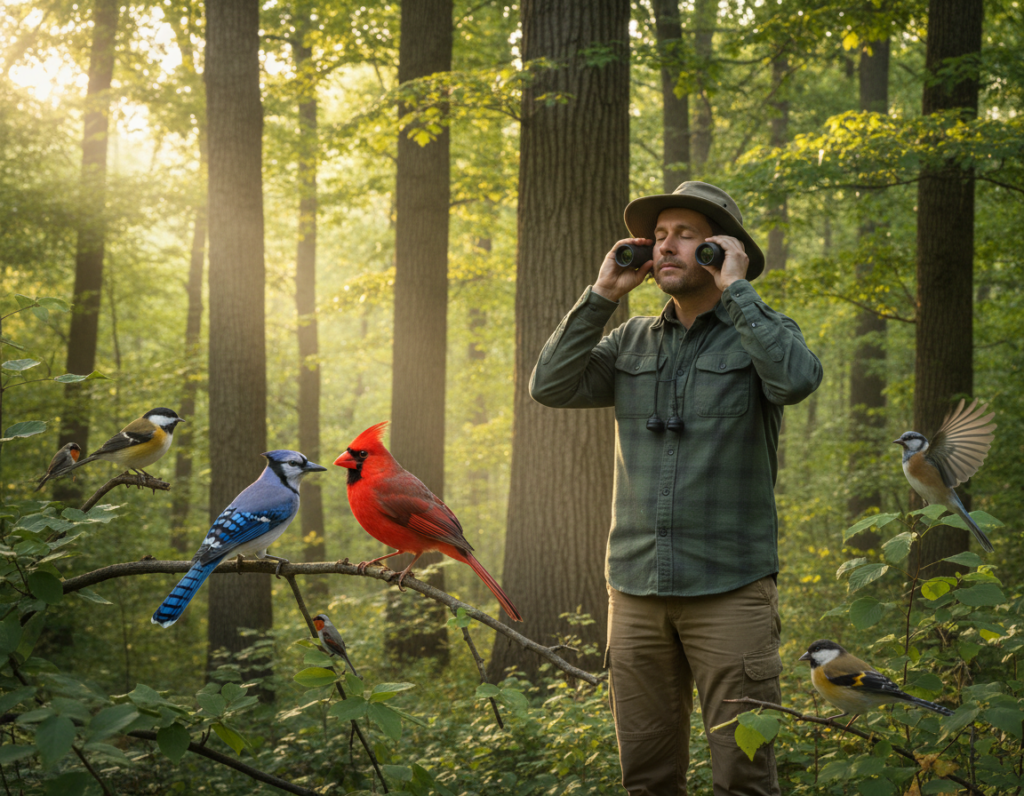
Not every sighting needs a heavy book. A quick note about song, color, and behavior can help people spot a Blue Jay, American Robin, or Northern Cardinal while grabbing mail or watching a game.
Short tips and a few sound cues turn ordinary walks into a mini birding lesson. Using an app or a pocket guide makes it easy to match plumage, call, and range on the spot.
Backyard feeders and suet attract Downy Woodpecker and other species, giving reliable chances to observe food preferences and flight style. For a practical start, the reader can follow a simple online primer like this quick guide to help identify birds by song and shape.
- Learn basic field tips for song, call, and plumage.
- Use backyard feeders and apps to practice in real time.
- Focus on a few species to build confidence quickly.
Understanding the Basics of Urban Birding
Simple habits—where a bird feeds or perches—say more than a single look. Observing food choice, flight pattern, and preferred trees helps narrow which species are nearby. Many birds thrive in cities, suburbs, and rural areas across North America, so early practice pays off.
The American Robin is a good example: it appears in every state of the Lower 48, every Canadian province, and Alaska. Its behavior—running on lawns for food and singing at dawn—makes it an easy starting point for anyone learning field techniques.
Beginners benefit from a reliable field guide and simple tools like backyard feeders and suet to attract visitors. A short checklist—water, seed, shelter—predicts where many birds will come each day.
- Tip: Try watching at sunrise when activity peaks.
- Tip: Record calls and notes to improve identification over time.
- Tip: Use a pocket guide or an online primer to learn range and habitat—get to know these species via this Audubon overview: get to know these species.
Visual Cues to Identify Common Urban Birds
A quick scan for plumage, head shape, and tail pattern narrows the field immediately.
Plumage and Coloration
The bright red crest and black face of the Northern Cardinal stand out at a glance. The female wears softer, tawny feathers that contrast with the male.
Noting the breast color helps too. A rusty orange belly often points to an American Robin, while white breasts mark other species.
Beak and Bill Shape
Bill shape reveals diet and behavior. A stout, conical beak hints at seed eaters, while thin bills suggest insect foragers.
Pay attention to the head and beak together; they offer a reliable clue when using a small field guide or app.
Wing and Tail Patterns
Observe wing bars, tail markings, and the way wings move in flight. The Blue Jay shows a mix of black, white, and blue across wings and tail that is easy to spot.
“Look for crests, clear breast colors, and bill shapes first—these details often seal the identification.”
- Tip: Males and females may differ; note both to avoid mistakes.
- Tip: Use habitat and trees where the bird perches to narrow the range of possible species.
- Tip: Combine these visual cues with a quick call when possible to confirm identification.
Recognizing Birds by Song and Call
Sound often gives away a species long before you catch a flash of color. Learning to read pitch, rhythm, and repetition turns audio clues into reliable field data. This skill helps when a bird stays deep in foliage, high on a branch, or on the ground.
Interpreting Vocalizations
Start with simple patterns. Note whether a call is a steady coo, a sharp chip, or a long melodic song. The Mourning Dove’s woeful cooing is a clear example; it often gets mistaken for an owl’s hoot but is softer and more mournful.
Some species, like the Northern Mockingbird, mimic dozens of songs and calls. That makes them tricky but also fascinating to learn.
- Listen for rhythm and pitch: these tips improve identification over time.
- Record what you hear: apps can match sounds later and confirm range.
- Note behavior: males often sing more during breeding time, while females call less frequently.
- Learn a few signatures: the House Wren’s bubbly chatter or a dove’s coo are quick wins for beginners.
“By building a small library of songs and calls, a watcher gains a reliable tool for field identification.”
Categorizing Species by Habitat and Behavior
Grouping species by where they live and how they behave makes field notes clearer. This approach helps watchers focus on likely visitors and speeds up quick identification during a short yard break or park stroll.
Backyard Feeder Visitors
Feeders attract a steady mix of birds that like seeds, suet, or nectar. The Northern Cardinal and Blue Jay often appear at seed trays, while hummingbird feeders draw tiny, fast wings for sugar water.
House finches and woodpeckers—both Downy Woodpecker and Hairy Woodpecker—visit yards with mature trees. Offering suet raises the chance of seeing woodpecker behavior and bill use at close range.
Forest and Park Dwellers
Forest edges and park areas favor ground-foragers and camouflaged species. The American Robin is common along paths and lawn edges, probing the ground for worms.
The adaptable European Starling spread across the United States after its 1890 release in Central Park and now occurs in many areas. Observers should note feathers, head shape, and social behavior to separate flocks from other species.
“Categorizing by habitat and habit narrows possibilities fast and makes later notes more useful.”
- Use habitat clues—trees, ground, or feeders—to narrow the field.
- Watch how males and females behave at feeders to learn social cues.
- Record a quick note on beak, breast color, and songs for later study.
Leveraging Digital Tools for Field Identification
Modern apps and online guides put real-time help in the palm of the hand. A smartphone can record a call, match plumage to photos, and suggest a likely species in seconds.
When a ruby-throated hummingbird hovers, its wings beat about 53 times per second; an app can use that note and plumage to confirm which hummingbird is present. Platforms like iNaturalist and the Audubon bird guide app speed up field identification and show high-resolution images of males and females for comparison.
Researchers such as Allison Shultz rely on public reports to track house finches and disease trends. Contributing sightings helps science—see a relevant citizen science study for more on data value.
- Record time and location to map range and habitat use.
- Upload a photo if the bill or tail is unclear—online peers can help.
- Use sound playback and guide calls to confirm a bird by call or song.
“Leveraging apps turns a phone into a compact field guide and a tool for conservation.”
Conclusion
With practice, casual watching can turn into confident recognition of local species. , Use a field guide or app to match plumage and song, then trust short notes and photos to confirm a sighting.
Time at a feeder helps. Watching males and females and noting a call or sound builds skill fast. Each brief outing adds to skill and to a personal log of range and behavior.
Mastering this simple routine makes birding rewarding. Keep exploring parks and neighborhoods; there is always a new bird to see and a new song to learn.