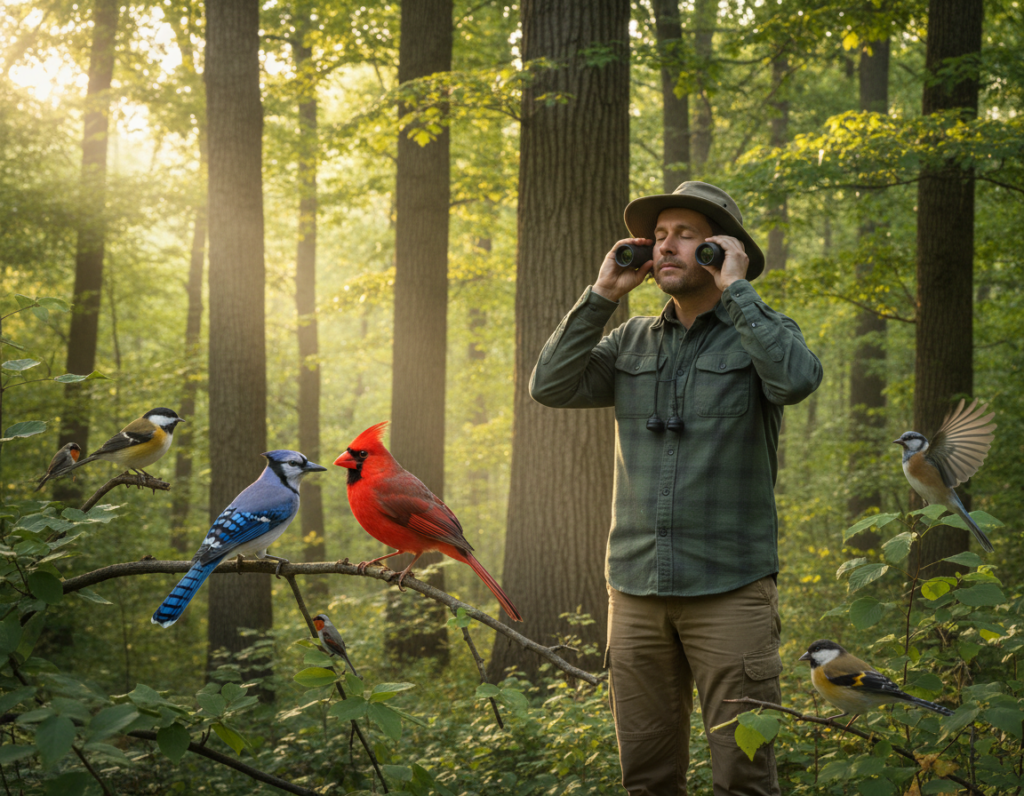
The United States and Canada host more than 800 species, so a beginner can feel overwhelmed fast. A short, steady routine in the local field helps make the task manageable.
Start by noting general shape, size and behavior. That first pass narrows the likely group before examining plumage or fine field marks. Using a good video guide builds a visual baseline for common species in the area.
A daily practice of watching and listening for a few minutes each day adds up. Over time, this simple approach speeds recognition and makes detailed marks easier to confirm.
Overcoming the Beginner Birding Hurdle
When winter species yield to spring migrants, many beginners find the change both exciting and disorienting. That shift replaces familiar songs and shapes with new faces that move fast in the canopy.
It is normal for even seasoned birders to be stumped by a fresh-plumaged warbler or a puzzling fledgling. Frustration can creep in, but it need not spoil the time spent in the field.
- Carry a trusted field guide and mark species you want to study later.
- Accept that not every bird will be named on the spot; note behavior and habitat instead.
- Use short practice sessions so learning stays fun and manageable.
Above all, remind beginners that birding is about enjoying birds, not perfection in identification. With time and steady effort, most birders find their confidence grows and spring migration becomes a favorite part of the season.
Mastering Binocular Handling Techniques
A smooth, practiced hand with binoculars turns fleeting flashes into steady sightings. Proper handling saves time and helps birders keep a clear track of fast-moving subjects.
Focusing on the Quick Draw
Before heading into the field, set the diopter and pre-focus the binoculars. This small step prevents wasted seconds when a bird appears.
- Keep the binoculars at chest level, eyes on the target, and bring them up in one steady motion.
- Do not look down at the binoculars before raising them; looking away often loses the bird.
- Consistent practice makes the quick draw almost reflexive for many birders.
Maintaining Visual Contact
Move the optics slowly to your face while keeping visual contact with the bird. If you break eye contact to adjust, the subject can vanish in brush or branches.
These simple tips help reduce missed sightings and speed up identification. Over repeated sessions, binoculars handling becomes fluid and reliable for attentive birders.
Proven Ways to Improve Bird Identification Skills
Observe first, consult later: that routine helps a watcher lock in marks and behavior before a guide distracts them. When someone turns to a book too soon, the subject often flies off and memory of plumage fades.
They should note a lot of field marks: plumage patterns, bill shape, leg color, and any distinct motion. A short list of clear traits makes narrowing down species far easier during field time.
- Study the subject while it remains visible; the guide will still be there afterward.
- Be methodical—scan head, back, underparts, then note posture and movement.
- Even one or two reliable marks can rule out many possibilities quickly.
Conscious observation is a reliable way to build better habits. Over time, this approach saves time and boosts confidence in the field.
Utilizing the Four Keys to Visual Identification
Using four clear visual keys turns a confusing sighting into a quick ID. This short method helps anyone working in the field spot reliable marks fast.
Size and Shape Analysis
Start with overall size and shape. Note a large head, plump body, or long legs to narrow the species group.
- The Black-capped Chickadee is tiny with a large head and narrow tail; it often visits a backyard feeder.
- Killdeer shows a round head, long legs, and a large bill—useful cues in open ground.
Color Pattern Recognition
Look for plumage patterns and simple stripes. Color placement on the back, wings, or tail often rules out many options.
- Cedar Waxwing has sleek plumage and yellow accents on wings and tail; that wing color is a quick clue.
- Chipping Sparrow shows a rufous cap and a dark stripe through the eye—small but distinct marks.
Behavioral Clues
Behavior often seals the call. How a species feeds, perches, or runs gives context that shape alone cannot.
When watching at a feeder, note the bill, head angle, and tail motion. Combining these four keys in practice speeds accurate identification.
Learn more about the method in this short guide on the four keys to bird identification.
Leveraging Digital Tools for Accurate Species Recognition
Digital tools let an observer pair a few simple notes with local data to narrow likely species quickly. These tools work well in the field, especially when sightings are brief or the image is imperfect.
Using Photo Analysis Features
The Merlin Bird ID app uses five questions to guide an ID: location, date, size, color, and behavior. Answering those prompts yields a short list of photo-focused options.
The app also analyzes an image to suggest likely species, even from a phone snap. It doubles as a digital guide, letting a user read about features such as the bill, head, wings, and tail.
“Quick, guided prompts plus image analysis can turn a fuzzy photo into a usable lead.”
- Select your place and date to limit species by range.
- Enter size, main colors, and behavior for targeted options.
- Cross-check the app’s suggestions with field marks like a wing bar or stripe to confirm the ID.
For solo watchers, this tech offers a reliable way to verify an observation and learn from each example in the field.
Developing Your Ear for Bird Songs
Sound recognition begins as a habit: short, daily listening sessions yield steady rewards. Start with one group, such as thrushes, and listen for unique phrase patterns each day.
Many learners pair field recordings and apps to make the process direct and repeatable. Larkwire.org turns practice into a game, which helps retention and keeps a learner engaged.
When in the field, link the call to what the watcher sees. Note a head movement, posture, or flight; pairing sound with sight strengthens memory.
- Use regional recordings recommended by fellow birders or a local guide.
- Practice brief sessions several times a week rather than long, infrequent drills.
- Ask questions of experienced observers; most will share useful regional recordings.
“Consistent exposure to different songs will eventually allow one to name species even when unseen.”
Tip: Keep a short log of songs learned each day. Over time the ear will sort calls faster, and casual listening at home will reinforce field gains.
Keeping a Field Journal for Better Retention
A simple notebook at the end of each outing turns fleeting looks into lasting notes. It is an easy way to lock in what they saw and heard that day.
Start at the head and work down to the tail when recording an unfamiliar bird. Note head shape, bill size, wing bars, back patterns, and tail length in short lines.
Use small sketches and short phrases. Memory devices help — for example, “Downy dinky, hairy huge” to tell similar woodpecker bill sizes apart.
- Sketch a Cooper’s hawk showing how the head protrudes ahead of the wings and the tail extends behind.
- Keep a seasonal list of birds seen through the year to learn what species visit each place.
- Jot behavior, bill shape, and wing notes for confusing groups like warblers.
“Writing and drawing are among the most effective ways to retain field clues.”
Tip: Review notes after each session. Over time, this small habit cements field marks and features into reliable memory.
Engaging with the Birding Community
Joining a local online community shortens the learning curve and adds friendly feedback to each sighting.
The American Birding Association hosts an active Facebook group where birders share photos and short clips from the field. A poster can upload an image or a brief video, and knowledgeable members often reply in minutes.
- Post clear shots and concise notes about behavior to get focused help.
- Ask how someone reached a conclusion — for example, “How did you know that was a chimney swift?” — to turn a reply into a lesson.
- Read and respect the group’s rules so members stay willing to assist.
The community rewards curiosity: many birders enjoy explaining their reasoning and will guide a beginner without judgment. By sharing observations and asking questions, one adds to the group’s collective knowledge while gaining real-world feedback.
“Engaging with other birders speeds learning and builds useful connections.”
Conclusion
Consistent, simple habits turn scattered sightings into lasting memory. Short outings, paired with a clear note or photo, make steady gains feel achievable for any observer.
Mastering binocular handling and watching key field marks builds confidence. Add modern apps and a small journal, and progress happens faster than many expect.
Even experienced watchers keep learning and sometimes get stumped. Community feedback and a patient mindset keep the pursuit rewarding. Above all, the greatest return is the joy of close moments with wild life.